 TEL +86-13923172919
High Frequency Welding Machine Global Market Trends 2025: Growth by Country and What Is Driving It
The global high frequency welding machine market is growing steadily. It reached approximately USD 1.2 billion in 2024 and is forecast to exceed USD 2.5 billion by 2033, growing at a compound annual rate of around 9%. That growth is not evenly distributed. Some regions are accelerating fast. Others are mature but innovating. This article breaks down market trends by country, explains the forces driving demand in each region, and identifies the patterns buyers and manufacturers need to understand in 2025.
The Global Picture: Why Demand Is Rising
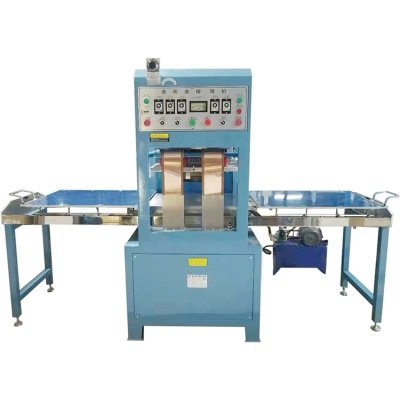
High frequency welding machines bond thermoplastic materials using electromagnetic energy at 27.12 MHz. They produce strong, clean, airtight seals without adhesives or stitching. Industries from automotive to medical rely on them daily.
Several structural shifts are driving demand upward across all regions right now.
The shift toward lightweight materials. Automotive and aerospace manufacturers increasingly replace metal components with engineered thermoplastics to reduce vehicle weight. HF welding handles these materials faster and more cleanly than most alternative joining methods. As lightweighting accelerates — especially in electric vehicle production — demand for HF welding equipment rises with it.
Rising automation in manufacturing. Factories worldwide are replacing manual assembly steps with automated welding systems. Rotary and automatic HF welding machines slot directly into these automated lines. The shift toward Industry 4.0 manufacturing amplifies this demand further — modern HF welders now integrate with PLC networks, data logging systems, and robotic handling equipment.
Medical device growth. Blood bags, IV pouches, orthopedic supports, and diagnostic device housings all require the clean, validated seals that HF welding produces. The global medical device industry is expanding steadily, and HF welding technology grows with it.
Solid-state technology replacing tube-based systems. The transition from vacuum tube oscillators to solid-state generators is accelerating globally. Solid-state HF welders use up to 50% less energy, produce more consistent output, and require less maintenance. This technology upgrade cycle is generating significant equipment replacement demand across every major market.

China: The World’s Largest Production Hub
China dominates global HF welding machine production. It is both the largest manufacturer and one of the largest consumers of this equipment worldwide.
Chinese manufacturers — concentrated in Wuxi, Guangdong, and Zhejiang — supply machines to domestic factories and export across Southeast Asia, the Middle East, and increasingly into Europe. Price competition among Chinese producers is intense. This has made HF welding technology accessible to smaller manufacturers who previously relied on manual or adhesive-based joining methods.
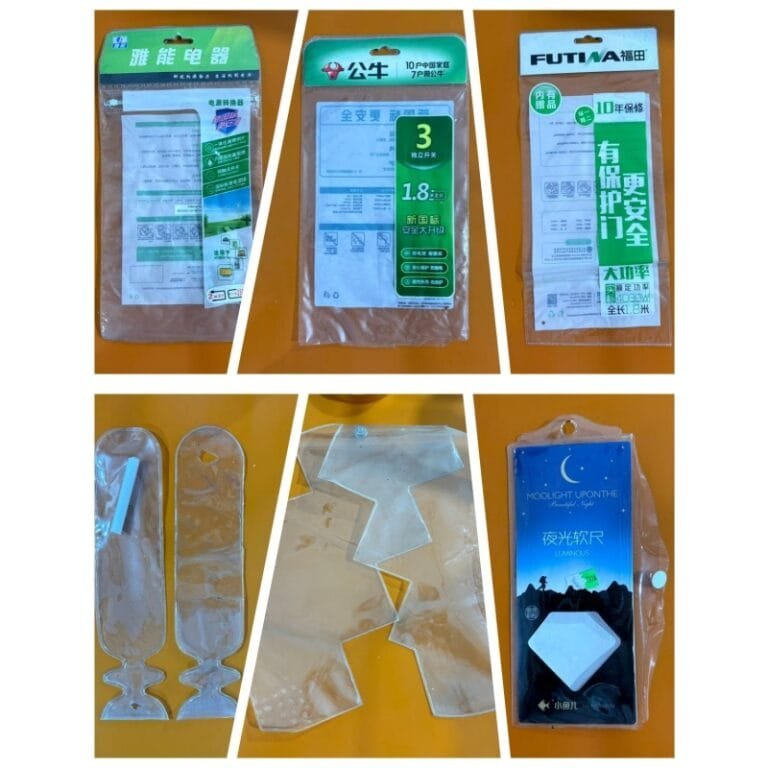
Domestic demand in China continues to grow for several reasons. The packaging industry consumes large volumes of HF welding capacity for PVC blister packs, stationery products, and retail packaging. The automotive sector — which produced over 30 million vehicles in 2023 — drives constant demand for PVC interior components and seat cover welding.
The government’s push toward electric vehicles adds a new dimension. EV battery pouches, cable insulation, and interior trim all use thermoplastic materials compatible with HF welding. As China’s EV output scales up, so does demand for compatible welding equipment.
The quality gap between premium Chinese machines and European competitors is narrowing. Several Chinese manufacturers have introduced solid-state HF welders and PLC-controlled rotary systems that compete directly with European equivalents at significantly lower price points. This is reshaping procurement decisions in cost-sensitive markets globally.
Germany: The Precision Standard-Bearer
Germany remains the global benchmark for high-end HF welding technology. Companies like Kiefel GmbH and their peers produce machines known for precision engineering, process reliability, and long operational lifespans.
German HF welding equipment dominates the medical device and automotive tier-1 supplier markets. These sectors demand validated processes, tight tolerances, and comprehensive documentation — requirements that German machinery handles well. A German-made HF welder typically costs two to four times more than a comparable Chinese machine, but buyers in regulated industries accept that premium for the process certainty it delivers.
Germany’s manufacturing sector — the largest in Europe — grows at a measured pace of around 3.5% CAGR through 2035 according to market estimates. Growth is driven less by volume expansion and more by technology upgrade cycles. Many German industrial buyers are currently replacing aging tube-based HF welders with solid-state systems that offer better energy efficiency and digital integration.
Germany also exports HF welding knowledge. German engineers consult on factory setups across Eastern Europe, Turkey, and the Gulf states — regions that are industrializing and adopting European production standards. This creates downstream demand for German-specification equipment in markets that want German quality without the full domestic price premium.
United States: Reshoring and Advanced Manufacturing
The US HF welding machine market is shaped by two dominant forces: the automotive industry and the reshoring of domestic manufacturing.
American automotive OEMs and their tier-1 suppliers consume large amounts of HF welding capacity for PVC components, seat covers, airbag housings, and interior trim. As US automakers invest heavily in EV platforms — Ford, GM, and Tesla have all announced major domestic production expansions — demand for thermoplastic welding equipment increases alongside it.
The reshoring trend is significant. US policy since 2022 has actively incentivized manufacturers to move production back from Asia. The CHIPS Act and the Inflation Reduction Act both direct capital toward domestic manufacturing buildout. New factories require new equipment. HF welding machines are part of that capital expenditure wave.
American buyers place a high premium on automation integration. US manufacturers favor HF welders with servo-driven presses, digital process control, and full Industry 4.0 data connectivity. Suppliers — both domestic and imported — who cannot deliver these features struggle to compete in the US market regardless of price.
The defense and aerospace sector also drives consistent HF welding demand in the US. Inflatable life rafts, protective gear, and aerospace cabin components all require the airtight, high-strength seals the technology provides. Increased US defense spending through the mid-2020s supports this segment.
India: The Fastest-Growing Major Market
India is the fastest-growing large market for welding equipment globally. One major market analysis projects India’s welding equipment sector growing at a 5.2% CAGR through 2035 — the highest rate among all major economies tracked.
The drivers are structural and powerful. India’s government has committed to raising manufacturing’s share of GDP from approximately 17% toward 25% through its Make in India initiative. Large-scale infrastructure investment continues — roads, railways, metro systems, and smart city projects all consume industrial production capacity. As manufacturing capacity expands, demand for welding equipment — including HF welders — grows with it.
The automotive sector is particularly important. India is now the third-largest vehicle market in the world. Domestic and international automakers are building new production capacity in Maharashtra, Gujarat, and Tamil Nadu. Each new assembly line creates demand for thermoplastic welding equipment for interior trim, seat covers, and instrument panels.
The packaging sector is also expanding fast. India’s growing consumer economy drives packaging production at scale. PVC blister packs, stationery products, and medical packaging all require HF welding capacity. Many Indian manufacturers currently operate older equipment — the upgrade cycle toward solid-state HF welders and automated rotary systems represents a significant near-term opportunity for equipment suppliers.
Price sensitivity remains high in India. Chinese-made HF welders dominate the entry and mid-range segments. European and Japanese machines hold share in regulated industries like medical and pharmaceutical packaging, where process validation requirements favor premium equipment.
Japan and South Korea: Precision and Electronics
Japan and South Korea are mature, technically sophisticated markets. Both countries use HF welding extensively in electronics manufacturing, automotive production, and medical devices.
Japan’s HF welding demand concentrates in high-precision applications. Japanese manufacturers apply strict quality standards to every production process. They favor domestically produced or European equipment with well-documented performance specifications. Seidensha Electronics is among the recognized domestic HF welding equipment providers serving this market.
South Korea’s market is shaped by its dominant electronics and automotive industries. Samsung, LG, and Hyundai supplier networks all consume welding equipment at scale. South Korea is also investing heavily in EV battery production — both domestic brands and as a global supplier to international automakers. Battery pouch manufacturing and cable insulation for EV components represent growing application areas for HF welding technology in the country.
Both markets are relatively stable in volume terms but active in technology adoption. The transition to solid-state HF generators and digitally integrated welding systems is well advanced in both Japan and South Korea compared to emerging markets.
Southeast Asia: A Fast-Rising Demand Center
Vietnam, Thailand, Indonesia, and Malaysia collectively form one of the most dynamic growth zones for HF welding machine adoption.
Manufacturing investment has shifted significantly into Southeast Asia over the past five years. Supply chain diversification — accelerated by geopolitical tensions between the US and China — has pushed apparel, electronics, and automotive component production into the region. New factories need new equipment. HF welding machines serve the PVC bag, stationery, automotive trim, and packaging sectors that are expanding rapidly across the region.
Vietnam in particular has attracted large volumes of foreign direct investment in electronics and apparel manufacturing. Both sectors use HF welding. Thailand’s established automotive manufacturing base — serving Japanese and American OEMs — drives steady demand for thermoplastic welding equipment.
Most machines in this region currently come from Chinese suppliers due to proximity and price. European and Japanese equipment holds positions in the medical and high-precision segments. As local manufacturers upgrade their quality standards — often driven by export customer requirements — the market for mid-to-premium HF welders is expanding.
Europe Beyond Germany: Medical, Packaging, and Green Manufacturing
Beyond Germany, key European HF welding markets include the UK, France, Italy, Sweden, and the Nordic countries. Each has a different demand profile.
The UK market is expanding — one market analysis projects the UK registering the highest CAGR among all countries tracked in the broader welding equipment sector through 2030. This growth reflects the UK’s expanding medical device manufacturing sector and ongoing investment in advanced manufacturing infrastructure.
Sweden and the Nordic countries are notable for early adoption of energy-efficient and sustainable manufacturing technologies. Solid-state HF welders — with their significantly lower energy consumption compared to tube-based systems — align well with Scandinavian manufacturing sustainability targets. ESAB, headquartered in Sweden, is among the prominent players in the broader welding equipment space in this region.
Italy’s strength lies in packaging machinery and leather goods manufacturing. Both sectors use HF welding for PVC and PU bonding. Italian machinery manufacturers integrate HF welding into broader automated production lines for the fashion and consumer goods industries.
Across Europe, the push toward green manufacturing and carbon reduction is accelerating the replacement of older, less efficient welding equipment. This creates a sustained replacement demand cycle that benefits suppliers of modern solid-state HF systems.
Middle East and Africa: Infrastructure-Led Growth
The Middle East and Africa represent an emerging opportunity rather than an established market. HF welding machine adoption is growing from a low base, driven primarily by construction, infrastructure, and manufacturing diversification projects.
Gulf states — particularly Saudi Arabia and the UAE — are investing heavily in non-oil manufacturing capacity as part of economic diversification programs. New factories in plastics, packaging, and automotive components create fresh demand for welding equipment. Turkey, positioned at the intersection of Europe and the Middle East, has a developed manufacturing sector and is an active consumer of HF welding machines for automotive interior and packaging production.
Africa’s market is nascent but growing. South Africa has the most developed industrial base on the continent. North African countries — Egypt, Morocco, Tunisia — are attracting manufacturing investment from European companies looking for near-shore production alternatives. HF welding demand follows this investment as new facilities come online.
Key Trends Shaping the Global Market Through 2030
Solid-state adoption accelerates everywhere. The shift from tube-based to solid-state HF welders is the single most consistent trend across all markets. Energy efficiency, reduced maintenance, and better process control make solid-state systems the default choice for new installations in every region. Replacement demand from existing tube-based machine operators adds a significant second wave of sales opportunity.
Automation integration becomes a baseline requirement. Buyers in developed markets no longer consider manual or basic pneumatic HF welders for new production lines. PLC control, servo presses, data logging, and Industry 4.0 connectivity are becoming standard expectations rather than premium features. Suppliers who do not offer these capabilities are losing relevance in the US, European, and advanced Asian markets.
EV manufacturing creates new application demand. Electric vehicles use more thermoplastic components than conventional vehicles. Battery pouch manufacturing, cable insulation, and lightweight interior components all create new HF welding applications. Every major automotive market — China, the US, Germany, South Korea — is scaling EV production rapidly, and HF welding demand scales with it.
Medical manufacturing expands consistently. The global medical device industry grows at roughly 5–6% annually. Every major market — US, Germany, Japan, India, China — has a growing medical manufacturing base. HF welding holds a critical position in blood bag, IV pouch, and medical packaging production. This application area provides stable, recession-resistant demand for the equipment.
Competitive pressure from Chinese manufacturers intensifies globally. Chinese HF welder producers are no longer confined to the low-end segment. They are entering mid-market and technically demanding segments with solid-state machines and PLC-controlled systems that compete on specification as well as price. This pressure is reshaping margins and market share dynamics for European and Japanese suppliers in cost-sensitive emerging markets.
Frequently Asked Questions
What is the current size of the global high frequency welding machine market?
The market stood at approximately USD 1.2 billion in 2024. Forecasts project it to reach USD 2.5 billion by 2033, growing at a CAGR of around 9.2% over that period. Other estimates place the broader high-frequency welding machines market — which includes both plastic and metal welding applications — at a larger figure of approximately USD 4.2 billion in 2024.
Which region has the largest share of the HF welding machine market?
North America and Europe combined account for over 50% of global demand. Asia-Pacific — led by China — is the fastest-growing region and holds the largest share in terms of production volume.
Which country has the fastest-growing HF welding machine market?
India shows the highest growth rate among major individual markets, driven by manufacturing expansion, infrastructure investment, and automotive sector growth. In Asia-Pacific broadly, Vietnam and other Southeast Asian markets are also growing very fast from a lower base.
What industries drive the most HF welding machine demand?
Automotive, medical devices, packaging, and textiles are the four largest end-use sectors globally. Electric vehicle production is the fastest-growing new application area as of 2025.
Why are solid-state HF welders replacing tube-based machines?
Solid-state machines use up to 50% less energy than tube-based equivalents. They require less maintenance because they have no vacuum tubes to replace. They deliver more stable output, reduce arcing risk, and support digital integration with modern production line control systems. The total cost of ownership over a machine’s lifespan is significantly lower for solid-state systems.
How does EV adoption affect the HF welding machine market?
Electric vehicles use significantly more thermoplastic components than conventional vehicles — including battery cell pouches, cable insulation, lightweight interior panels, and seat assemblies. All of these applications use HF-compatible materials. As EV production scales globally, it creates sustained new demand for high frequency welding equipment across every major manufacturing market.