 TEL +86-13923172919
What Materials Can a High Frequency Welding Machine Weld? PVC, PU, EVA, TPU, PETG and Full Material Compatibility Guide
Every manufacturer considering HF welding faces the same first question. Will the machine weld my material? The answer determines whether thousands of dollars in equipment becomes a production asset or an expensive paperweight. High frequency welding does not work on every plastic. It demands specific molecular characteristics that only certain materials possess.
A HF welding machine compatible materials list starts with the fundamental requirement. The material must be a polar thermoplastic. Polar molecules respond to the alternating electromagnetic field by vibrating and generating internal heat. Non-polar molecules simply ignore the field, remaining cold no matter how much power you apply.
This article provides a definitive guide to what plastics can be RF welded. We examine each compatible material in detail, explain why certain common plastics cannot be welded, and address special cases like nylon and PET that require preheating.
The Science of Polarity: Why Some Plastics Weld and Others Refuse
High frequency welding relies on dielectric heating. When RF energy passes through a material, polar molecules attempt to align with the rapidly alternating field. This molecular agitation creates friction, which generates heat. The greater the material’s dielectric loss factor, the more efficiently it converts RF energy into heat.
PVC possesses a high dielectric loss factor due to its chlorine atoms creating strong dipoles. This makes PVC the most responsive material for HF welding. PU and TPU contain urethane groups that also respond well. EVA carries polar acetate groups. PETG includes polar ester linkages.
By contrast, polyethylene and polypropylene consist entirely of carbon and hydrogen atoms arranged symmetrically. They have virtually no dipole moment. Passing RF energy through PE is like trying to heat soup with a magnet. The field passes through without effect. This fundamental physics explains the entire RF welding material compatibility landscape.
Complete List of HF-Weldable Materials and Their Characteristics
PVC (Polyvinyl Chloride) – The Industry Standard
PVC dominates HF welding applications. It responds rapidly to RF energy and welds at temperatures between 120°C and 150°C. The material flows easily under pressure, creating homogeneous bonds with tensile strength often exceeding the parent sheet.
Flexible PVC with plasticizers welds even faster than rigid formulations. The plasticizer molecules add mobility to the polymer chains, accelerating molecular entanglement during fusion. Manufacturers achieve weld times as short as 2 seconds on 0.5mm flexible PVC film.
Applications span medical bags, inflatable products, stationery, automotive interiors, and tarpaulins. When someone asks about high frequency welding PVC vs PET, the answer reflects PVC’s broader processing window and higher tolerance for parameter variation. PVC forgives minor adjustments. PET demands precision.
PU (Polyurethane) – Flexible and Abrasion-Resistant
A common question arises: can you HF weld PU? The answer is yes, but with important considerations. Polyurethane welds effectively under RF energy, typically requiring temperatures between 150°C and 180°C. The material exhibits excellent flow characteristics once molten, producing strong, flexible bonds.
PU demands slightly higher power than PVC of equivalent thickness. The welding time runs approximately 20-30% longer. This occurs because PU’s dielectric loss factor sits lower than PVC’s, converting RF energy less aggressively. Operators dial in higher power settings or extended dwell times to compensate.
PU-welded seams maintain exceptional flexibility and abrasion resistance. Medical device manufacturers favor PU for blood pressure cuffs and inflatable splints that require repeated folding. Life jacket producers select PU-coated fabrics for cold-weather flexibility and chemical resistance.
TPU (Thermoplastic Polyurethane) – Premium Performance
TPU combines thermoplastic processability with elastomeric properties. It welds similarly to PU but with enhanced control over the melt phase. TPU transitions cleanly from solid to molten and back, producing precise weld lines with minimal flash.
The material requires careful temperature control between 150°C and 180°C. Overheating causes degradation and discoloration. Undershooting temperature produces weak, chalky welds. Closed-loop pyrometer feedback on the welding machine addresses this sensitivity by maintaining consistent interface temperature.
Premium inflatable boats, whitewater rafts, and high-end air beds increasingly use TPU. The material offers 30% weight reduction compared to PVC equivalents while delivering superior tear strength. An HF welding machine compatible materials guide would be incomplete without ranking TPU among the highest-value options.
EVA (Ethylene Vinyl Acetate) – Versatile and Soft
EVA welds readily with HF energy thanks to its polar acetate groups. The material melts between 80°C and 100°C, significantly lower than PVC or PU. This low melting point requires careful power management. Overshooting temperature melts through the material or causes excessive flash.
EVA finds extensive use in footwear components, foam padding, and children’s products. The material’s softness makes it ideal for applications requiring cushioning. EVA also bonds effectively to itself and to compatible fabrics in multi-layer constructions.
Foamed EVA presents unique welding challenges. The trapped gas cells insulate heat and create uneven energy absorption. Successful EVA foam welding requires slower ramp-up times and lower pressures compared to solid films.
PETG (Polyethylene Terephthalate Glycol) – Crystal Clear
PETG offers exceptional optical clarity combined with RF weldability. The glycol modification introduces enough polarity for effective dielectric heating. PETG welds between 130°C and 160°C, producing joints that maintain transparency without yellowing.
The material requires tighter parameter control than PVC. The processing window narrows to approximately ±5°C for optimal strength without discoloration. PETG also absorbs moisture readily. Welding damp PETG produces bubbles and voids at the weld line. Material storage in dry conditions before welding prevents these defects.
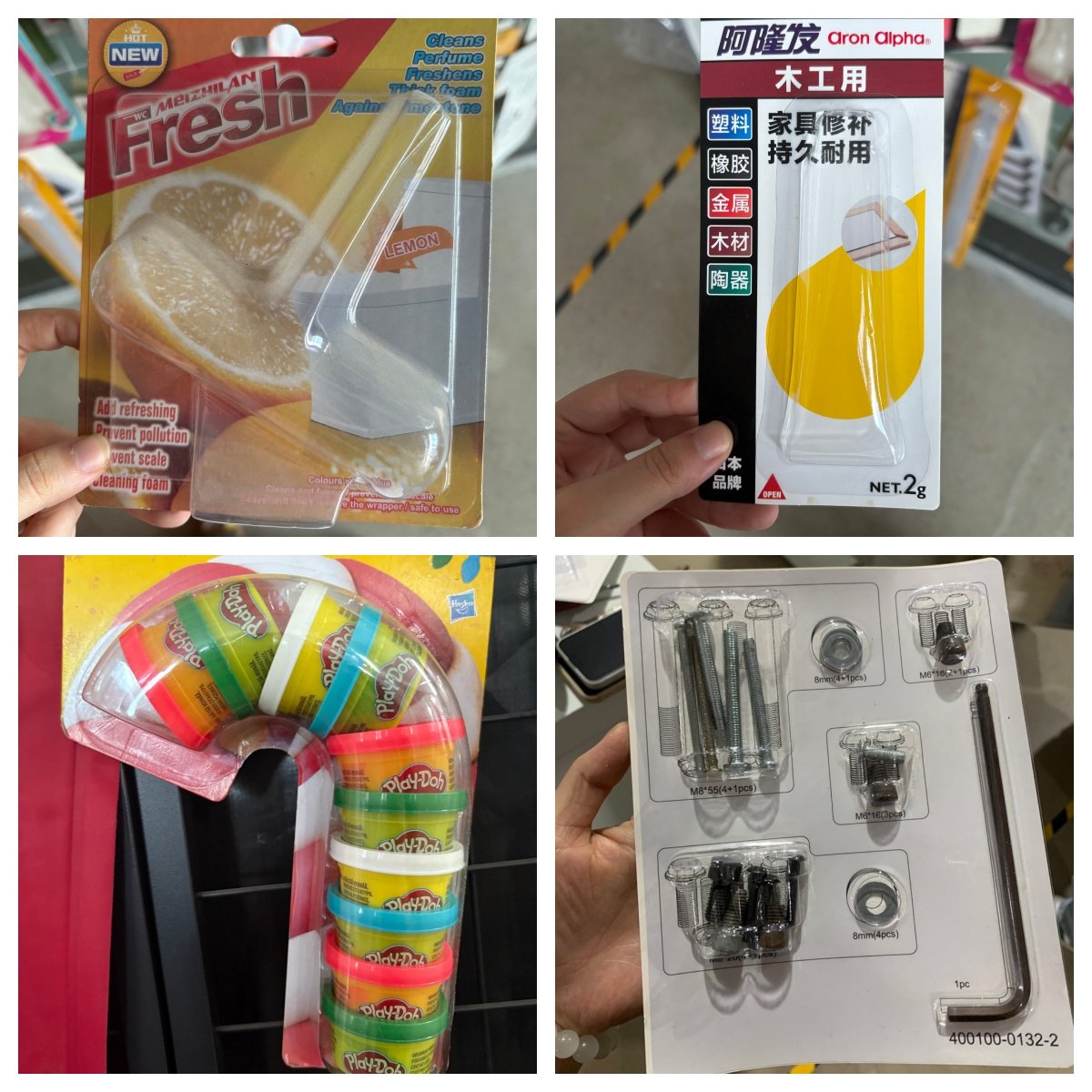
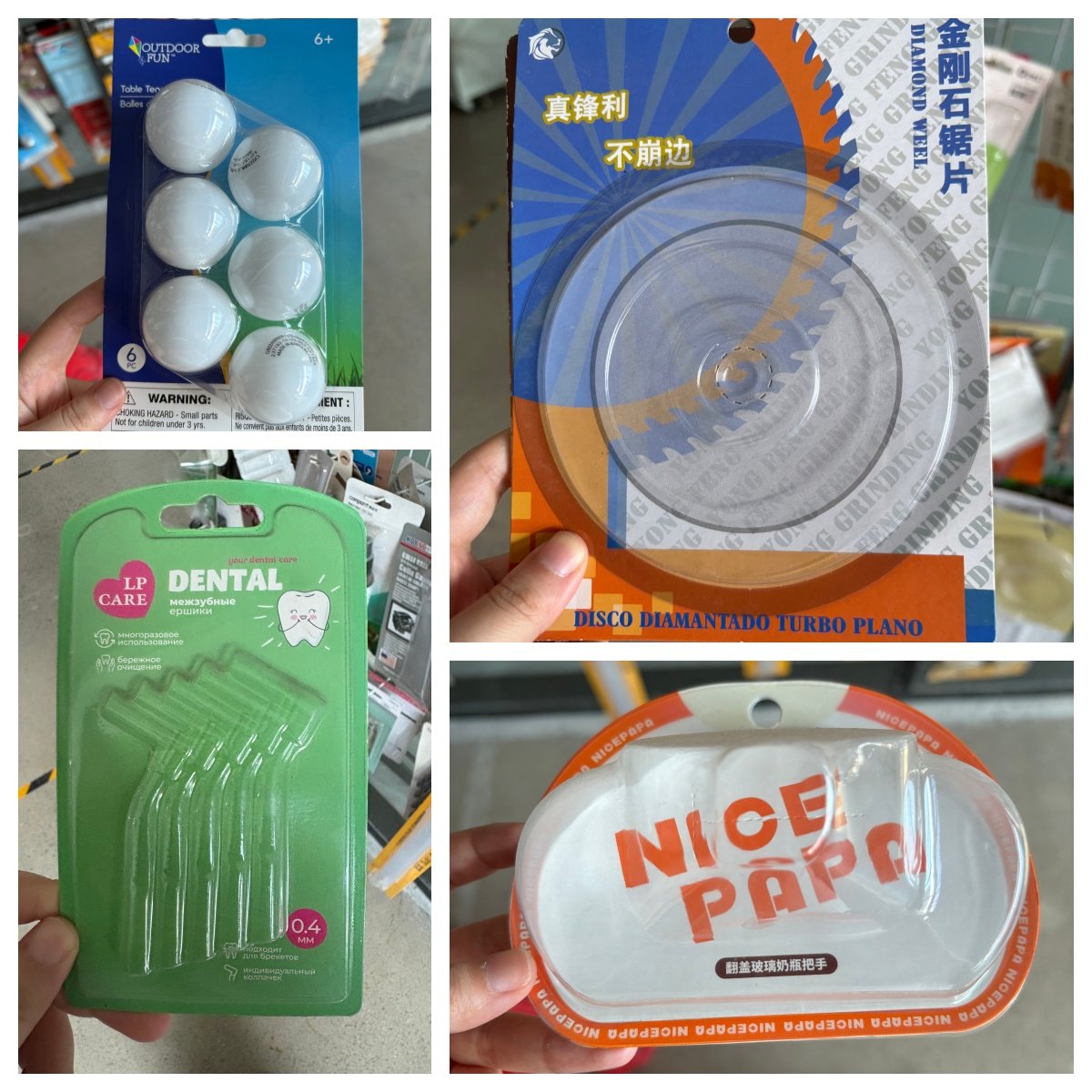
Blister packs, medical device enclosures, and clear display products benefit from PETG’s combination of weldability and optical quality. The material also offers superior impact resistance compared to standard PET.
PET (Polyethylene Terephthalate) – Requires Special Handling
Standard PET presents a borderline case for what plastics can be RF welded. Crystalline PET exhibits low dielectric loss, responding poorly to RF energy. Amorphous PET (APET) responds better but still lags significantly behind PVC and PU.
Successful PET welding typically requires preheating the material to 80-100°C before RF exposure. Preheating brings the material into a temperature range where dielectric loss increases, enabling sufficient energy absorption. Without preheating, standard PET often fails to achieve full melt penetration.
The extra processing step adds cost. Many manufacturers using PET components select ultrasonic welding or laser welding instead. However, when HF welding is preferred for production line integration, machines with integrated preheating stations make PET welding viable.
Materials That Cannot Be HF Welded: PE and PP Explained
Polyethylene and polypropylene represent the two most common plastics that completely resist HF welding. Understanding this limitation prevents costly equipment purchases for incompatible applications.
Both materials consist of non-polar hydrocarbon chains. PE is essentially long strings of CH₂ groups. PP adds methyl side groups to the same backbone. Neither structure creates a significant dipole moment. RF energy passes through without generating heat. The dielectric loss factor for PE and PP measures near zero across the entire industrial frequency range.
Some manufacturers attempt workarounds by inserting polar films between PE layers. This approach can create a partial bond, but the PE itself never melts. The joint relies entirely on the inserted film bonding to each PE surface through conduction heating from the film. The result achieves only a fraction of proper HF weld strength and fails peel testing consistently.
When a project requires welding polyethylene or polypropylene, alternatives include hot wedge welding, hot air welding, or ultrasonic welding. Each of these methods applies heat externally rather than relying on internal dielectric heating.
Nylon and PET: The Preheating Exception
Nylon and certain PET grades occupy a gray zone in RF welding material compatibility. Both materials can be welded under specific conditions that differ markedly from standard PVC processing.
Nylon Welding Requirements
Nylon fabrics often carry PU or PVC coatings for HF welding compatibility. Bare nylon responds minimally to RF energy at room temperature. Its dielectric loss factor sits too low for effective self-heating. However, preheating nylon to 90-110°C changes this behavior. At elevated temperatures, nylon’s dielectric loss factor increases substantially.
Machines equipped with integrated preheating stations bring nylon components to temperature before RF application. The preheating uses infrared radiation, hot plates, or convection. Once hot, the material responds to RF energy and completes the weld. This two-stage process adds 5-10 seconds to the total cycle time but makes nylon welding commercially viable for applications like military webbing and industrial slings.
PET Preheating Protocol
Amorphous PET follows a similar pattern. Preheating to 80-100°C activates sufficient dielectric response for effective welding. The preheating must remain uniform across the weld zone. Hot spots cause premature melting. Cold spots produce incomplete fusion.
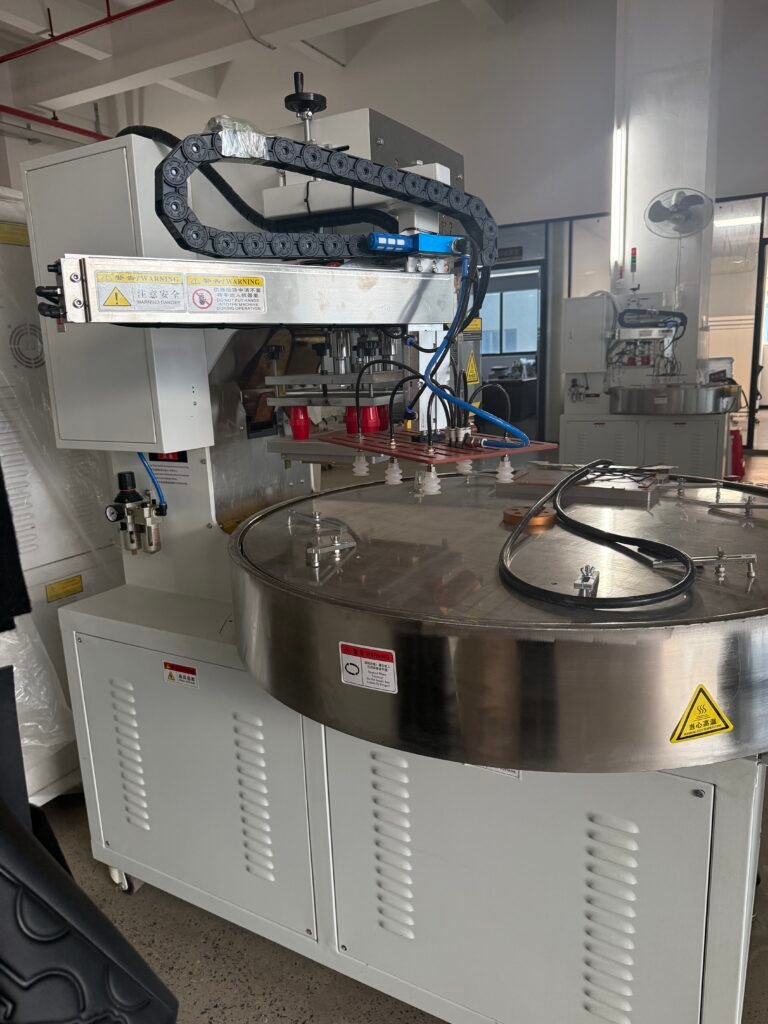
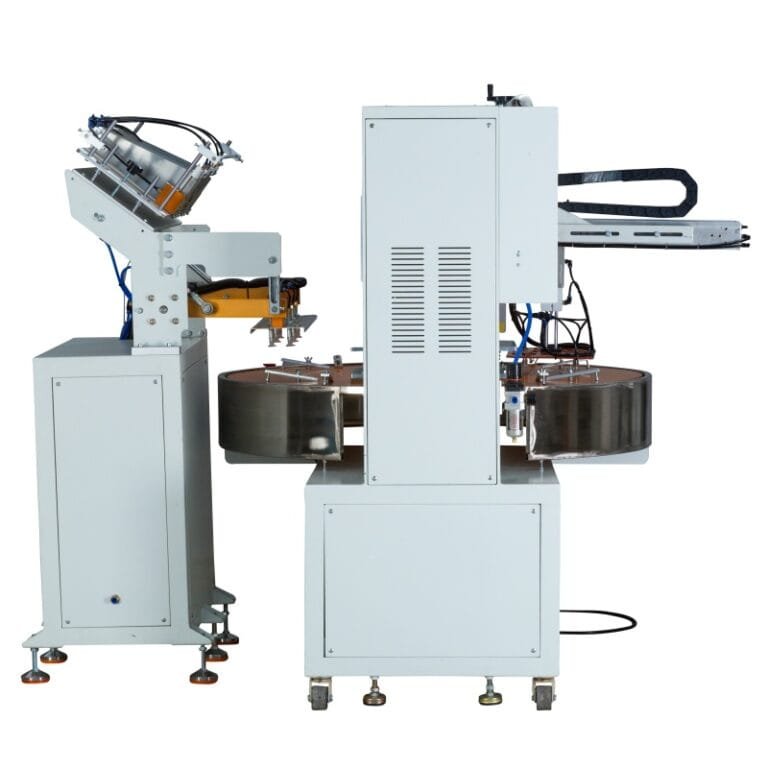
Production lines welding PET components integrate preheating stations directly into the automated workflow. A shuttle machine configuration works well here, with one table preheating while the other welds. This parallel processing minimizes the cycle time penalty.
Material Compatibility Quick Reference Guide
| Material | HF Weldable | Ease of Welding | Typical Weld Temp | Special Requirements |
|---|---|---|---|---|
| Flexible PVC | ✓ Yes | Excellent | 120–150°C | None |
| Rigid PVC | ✓ Yes | Good | 130–160°C | Slightly higher power |
| PU | ✓ Yes | Good | 150–180°C | 20–30% longer weld time |
| TPU | ✓ Yes | Good | 150–180°C | Temperature control recommended |
| EVA | ✓ Yes | Good | 80–100°C | Low power, avoid overheating |
| PETG | ✓ Yes | Moderate | 130–160°C | Narrow parameter window, dry storage |
| APET | ✓ Conditional | Difficult | 130–160°C | Preheating required |
| Nylon | ✓ Conditional | Difficult | 160–200°C | Preheating 90–110°C |
| PE | ✗ No | Impossible | N/A | Use hot wedge or ultrasonic |
| PP | ✗ No | Impossible | N/A | Use hot wedge or ultrasonic |
Selecting Your Machine Based on Material Compatibility
Material choice directly influences equipment specification. A shop welding primarily PVC and EVA operates successfully with an 8kW push plate HF welding machine. Adding PU or TPU to the mix may push requirements to 10kW. When PETG or nylon enters production, preheating capability becomes essential. A shuttle HF welding machine with integrated preheating stations handles these higher-demand materials efficiently.
Power supply frequency also matters. Standard 27.12 MHz works for most materials. Some thick nylon or PET applications benefit from 13.56 MHz, which penetrates thicker sections more effectively. Discussing your full material range with equipment suppliers ensures correct frequency and power specification from the start.
Testing remains the gold standard. Every material batch varies slightly in formulation, plasticizer content, and moisture level. Running sample welds with peel and burst testing validates compatibility before committing to full production. A reputable machine builder provides application testing services using your actual materials.
Making Informed Material Decisions for HF Welding
The question can you HF weld PU has a clear yes answer with specific parameter adjustments. The question of what plastics can be RF welded narrows to polar thermoplastics, excluding the hydrocarbon-based polyolefins entirely. Understanding this material science transforms equipment selection from guesswork into engineering.
PVC, PU, TPU, EVA, and PETG form the core of HF-weldable materials, each with distinct processing windows and performance characteristics. PE and PP remain firmly outside the technology’s reach. Nylon and PET straddle the boundary, accessible through preheating protocols that expand the technology’s application envelope.
Manufacturers who master high frequency welding PVC vs PET distinctions and apply the correct power, time, and preheating parameters unlock the full potential of RF welding technology. The reward is consistent, high-strength bonds across a versatile material portfolio that supports products from medical devices to marine equipment to everyday stationery.