 TEL +86-13923172919
How High Frequency Welding Machines Are Used in Stationery Manufacturing: Binders, File Folders, and ID Card Holders
Stationery products seem simple. A file folder holds papers. A binder organizes documents. An ID card sleeve protects a badge. Yet modern consumers expect these items to withstand daily abuse without tearing, yellowing, or falling apart. Stitching punctures the plastic. Glue degrades and loses grip. Both methods limit production speed and create visible defects.
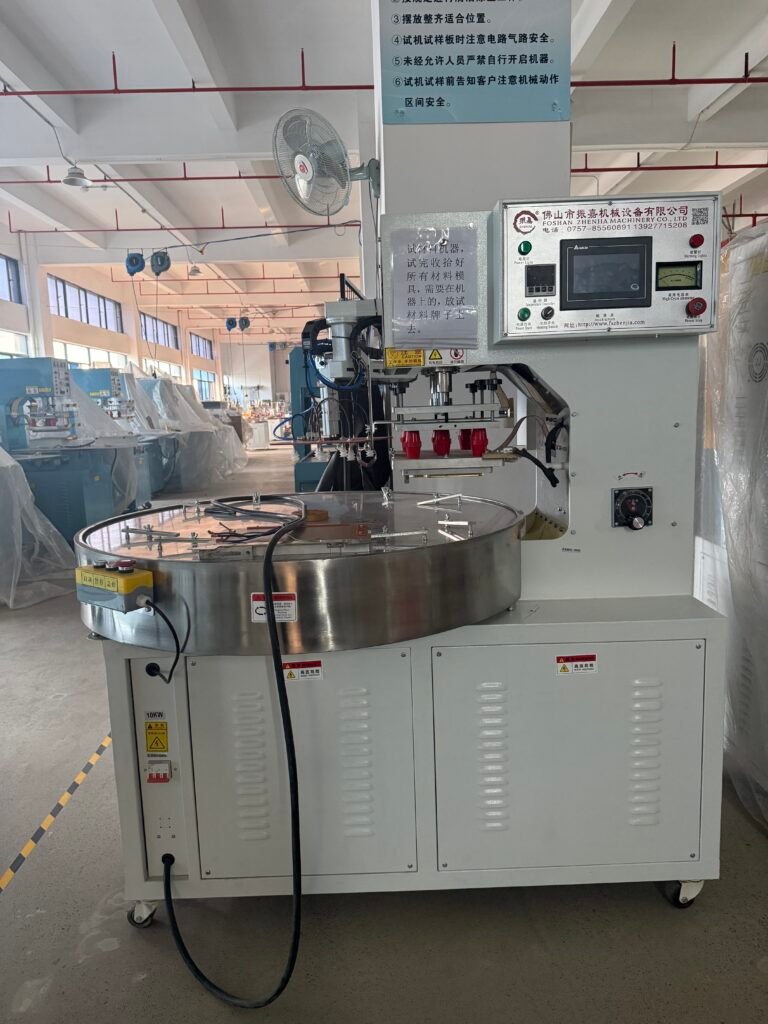
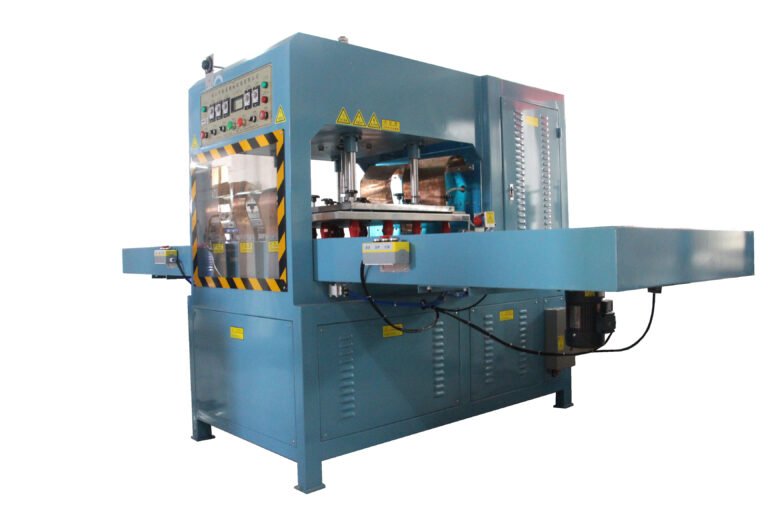
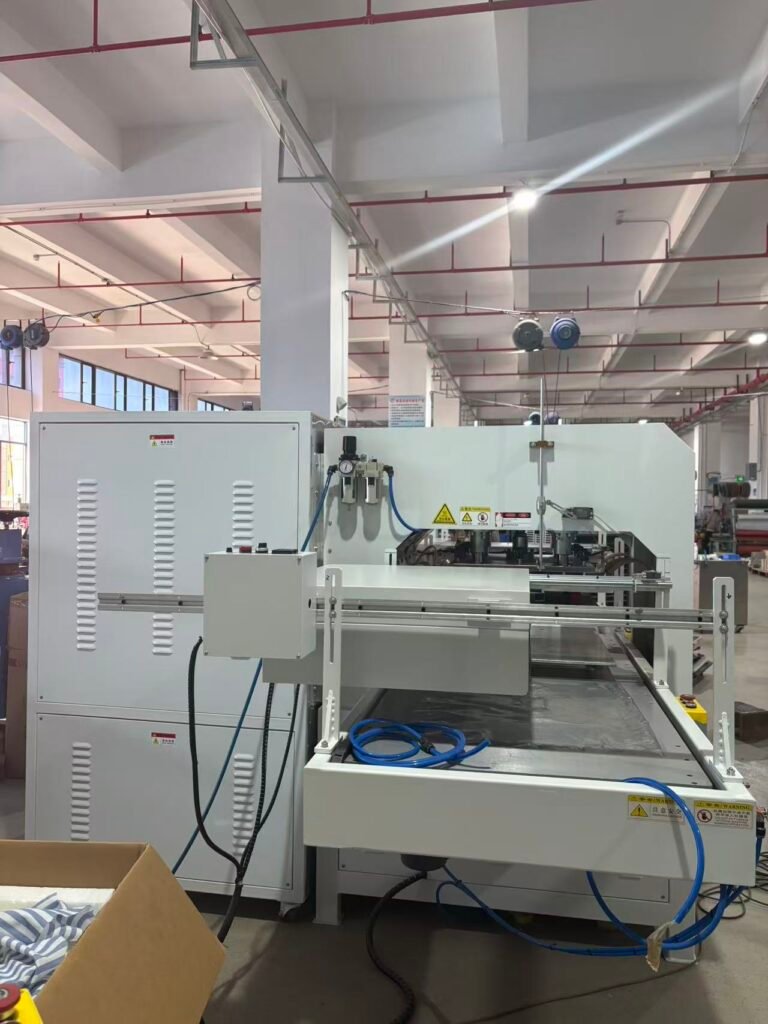
A high frequency welding machine for stationery solves these challenges permanently. It fuses PVC, TPU, and EVA at the molecular level. The process delivers a seamless, airtight join while simultaneously cutting and embossing. This article explores how HF welding dominates stationery manufacturing. We focus on the high-capacity rotary HF welder stationery configuration and the precision tooling that makes flawless products possible.
Why HF Welding Outperforms Traditional Methods in Stationery Assembly
An HF welder binders and folders machine operates on a simple principle. Radio frequency waves excite polar molecules inside the plastic material. Heat generates from within, melting the layers exactly at the joint interface. No external heat source touches the surface.
This internal heating delivers three key advantages. First, the weld achieves the strength of the base material without any added adhesive. Pull tests on a welded binder seam typically show failure in the material itself, not the join. Second, the process eliminates stitch holes. This makes products waterproof and prevents dirt ingress on items like luggage tags and badge holders. Third, HF welding creates crystal-clear joints on transparent PVC. Unlike glue that clouds over time, the fused area maintains perfect optical clarity.
A PVC file folder welding operation also benefits from single-cycle processing. The die simultaneously welds the seams, trims the outer profile, and embosses the brand logo. One machine replaces three separate operations. This integration drastically cuts handling time and reduces labor costs.
The Rotary HF Welding Machine: Unlocking High-Volume Stationery Production
Stationery manufacturing often operates on razor-thin margins. Profitability depends on maximizing output per hour. The rotary HF welder stationery is purpose-built for this demand.
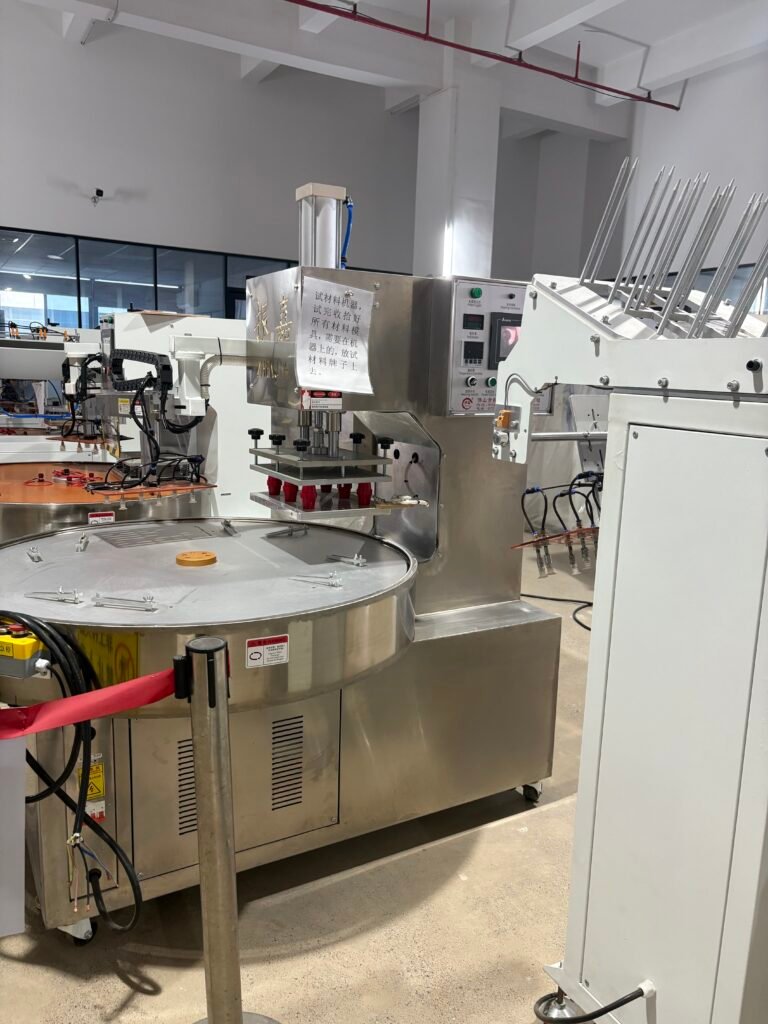
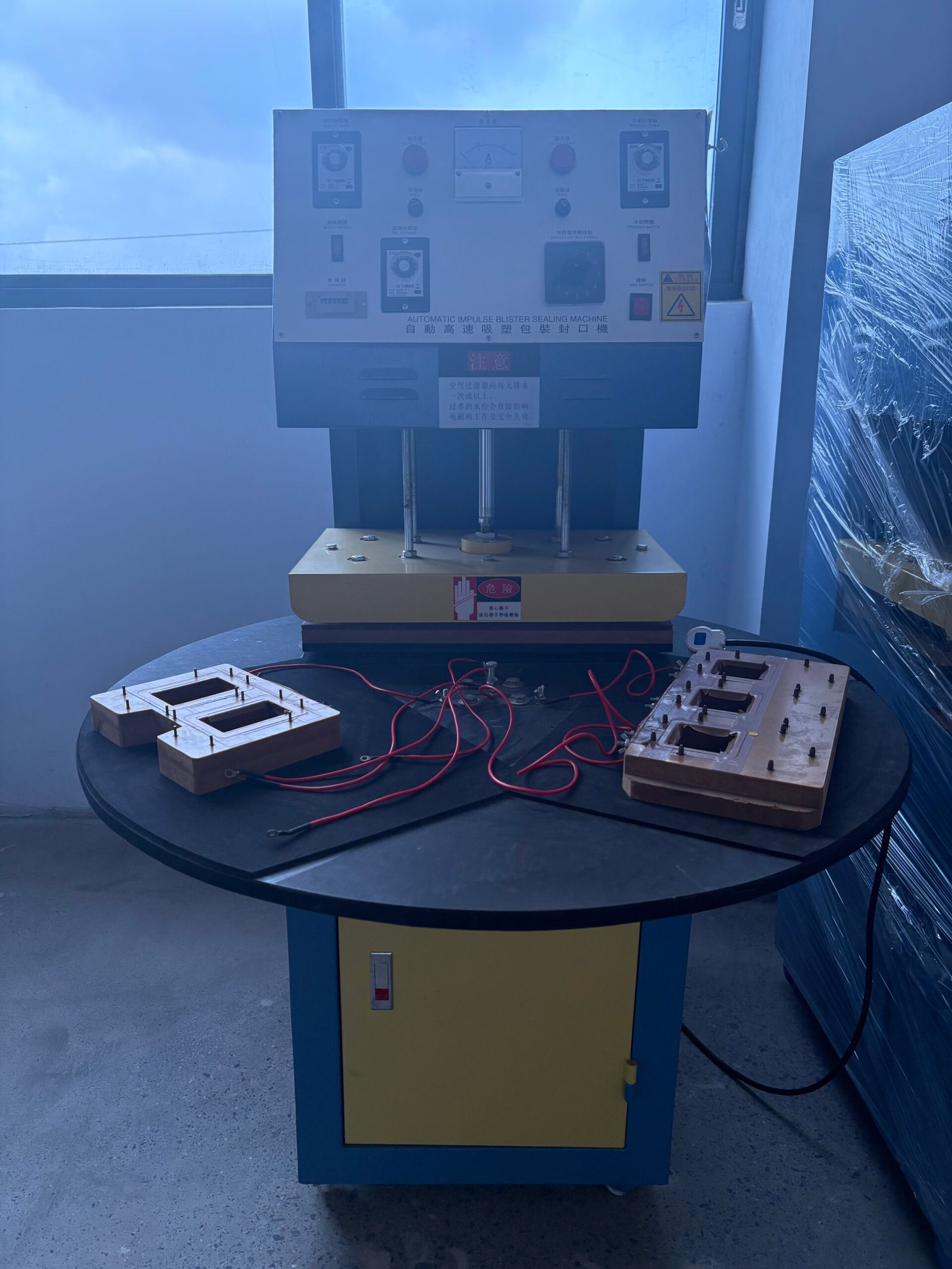
A rotary machine features a multi-station turntable that indexes continuously. Common configurations use four to six stations. At the first station, an operator places pre-cut PVC sheets into a cavity. As the table rotates, the material moves under the welding head. The press descends, fuses the product, and retracts within seconds. At subsequent stations, parts cool under pressure before an operator unloads the finished piece.
This overlapping workflow eliminates idle time. A standard push plate machine may produce 200 to 300 ID card sleeves per hour. A four-station rotary machine comfortably produces 800 to 1,200 units per hour. Some dedicated ID card sleeve welding machine lines exceed 1,500 parts per hour. For a factory racing to fulfill back-to-school orders, this output difference defines market leadership.
Rotary systems also maintain weld consistency across long runs. The indexing table locks rigidly at each station. Electrode pressure, power delivery, and dwell time remain identical for every cycle. Operators focus purely on material handling, not machine adjustment. This process control delivers rejection rates below 0.5% even on multi-layer transparent products.
Precision Tooling: The Micron-Level Detail Behind Every Perfect Product
HF welding dies demand much tighter tolerances than many manufacturers expect. A binder spine label pocket requires a flat weld zone 180mm long and 8mm wide. Die flatness must stay within 0.05mm across that entire length. Any undulation creates a weak weld on one edge and a burn mark on the other.
Multi-cavity tooling multiplies the precision challenge. A single die for ID card sleeves may hold 12 or 16 cavities. Every cavity needs identical sealing edge height, flash trap groove depth, and tear-seal protrusion. One undersized cavity produces a leaky sleeve. One oversized cavity scorches material and jams the line. Quality tooling uses precision-ground aluminum alloy hardened to HRC 28–32 to maintain these dimensions over millions of cycles.
Tear-seal die edges add cutting capability. The cutting blade projects 0.6–0.8mm above the sealing face. During the press stroke, it trims the article from the surrounding flash while the flat face simultaneously completes the weld. This design leaves a smooth, rounded edge on the finished product. No secondary trimming is needed. For clear ID card holders, this means no sharp corners and no frayed film.
Key Stationery Applications and How HF Welding Transforms Them
Binders and Document Organizers
Ring binders with clear overlay pockets rely on HF welder binders technology. The machine welds transparent PVC sheets onto the binder board or spine, creating label windows or document sleeves. The weld must hold securely without wrinkling the cover material. Multi-layer welding capability also attaches reinforcement hinges and handles, ensuring the binder survives years of heavy use.
File Folders and Expanding Pockets
Expanding file folders require strong side and bottom seals that resist bursting. HF welding replaces stitched gussets with flexible, hermetic seams. A folder welding machine produces a V-shaped or accordion-fold pocket in one press cycle. The weld penetrates through multiple layers of fabric-backed PVC without scorching. The result holds dense document stacks without splitting.
ID Card Sleeves and Badge Holders
This represents the highest-volume application. An ID card sleeve welding machine welds two transparent PVC layers around a paper insert or card. The die must create a perfectly straight opening for inserting the card. Advanced tooling includes floating stripper plates that hold the opening in place during welding and eject the finished sleeve smoothly. High-output rotary lines printing card sleeves for convention badges, transit passes, and membership cards depend entirely on this process.
Other applications include luggage tags with welded straps, menu covers with sealed insert pockets, and stationery pouches. Each product benefits from the same combination of speed, strength, and seamless appearance.
Equipment Selection: Push Plate Versus Rotary for Your Product Mix
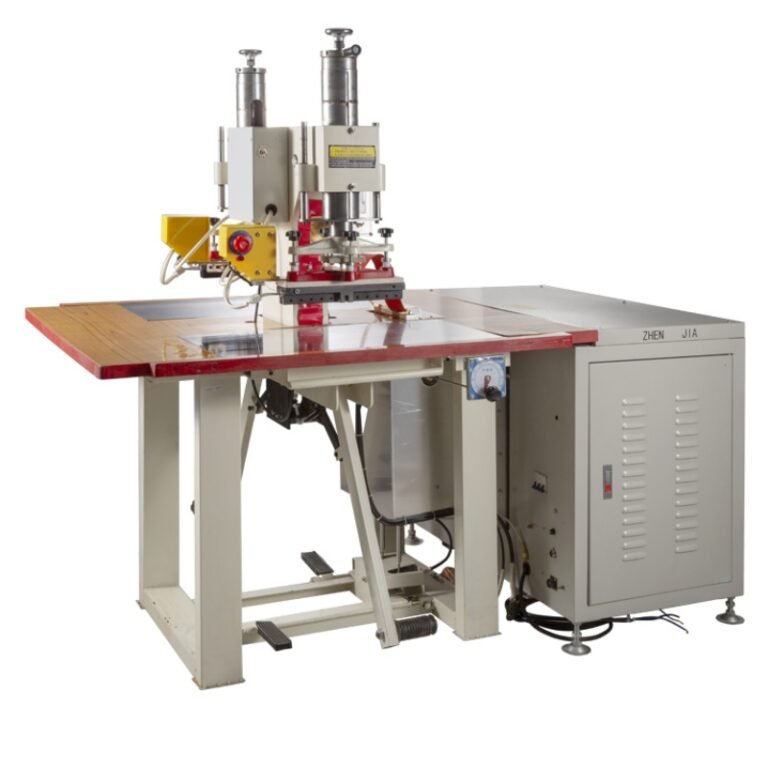
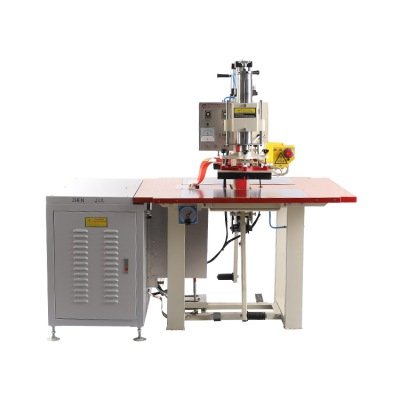
A push plate HF welding machine still plays a role in stationery manufacturing. It suits short-run production, prototype development, and oversized products. Welding an A3 presentation folder or a custom binder with stitched-in EVA foam benefits from the open access and flexible tool setup of a push plate system. Mold changeover takes minutes.
For established product lines with annual volumes in the millions, the rotary machine dominates. The speed advantage is undeniable. Labor efficiency improves because one operator manages a rotary machine that does the work of three push plate stations.
Many mid-sized factories adopt a hybrid strategy. They install a single rotary machine for high-volume ID sleeves and card holders. They maintain one or two push plate machines for specialty binders and low-volume customer orders. This flexibility ensures capacity matches demand without over-investment.
The Quiet Revolution in Office Product Manufacturing
High frequency welding continues to reshape how the world makes stationery. A seamless binder pocket. A crystal-clear ID holder that never delaminates. An expanding file folder that holds its shape through thousands of opens and closes. These everyday product qualities originate from precise RF energy, high-accuracy tooling, and efficient machine configurations.
Manufacturers who deploy a high frequency welding machine for stationery with rotary automation and micron-precision dies position themselves at the front of the market. They deliver the quality that retailers require and the defect-free volume that profitability demands. From the simplest ID card sleeve to a fully featured conference folder, HF welding provides the technology backbone for modern office life.