 TEL +86-13923172919
Blister Sealing Machine Guide 2026: Medical & Battery
A blister sealing machine bonds a thermoformed plastic blister to a backing material such as paperboard, aluminum foil, or medical-grade paper, creating a sealed, tamper-evident package. These machines serve pharmaceuticals, medical devices, electronics, batteries, cosmetics, hardware, and consumer goods. This 2026 guide explains how sealing works, compares machine types and sealing methods, reviews material considerations, and provides a selection matrix and checklist to help you match equipment to your application.
How a Blister Sealing Machine Works
Sealing is a controlled heat-and-pressure process. A pre-formed blister holding the product is placed against a lidding material, and a heated platen or roller presses the two together for a set dwell time. The heat activates the coating or softens the plastic flange so that the blister and backing fuse into a continuous seal around the product cavity.
Three parameters dominate seal quality:
- Temperature — must match the flange material and any adhesive coating. Too low produces weak, peelable seals; too high can distort the blister or scorch paperboard.
- Pressure — ensures full contact across the flange. Pneumatic systems are common; heavier medical applications may use hydraulic pressure boosting.
- Dwell time — the duration heat and pressure are applied. It must be long enough to fuse the materials without letting heat reach and damage the product.
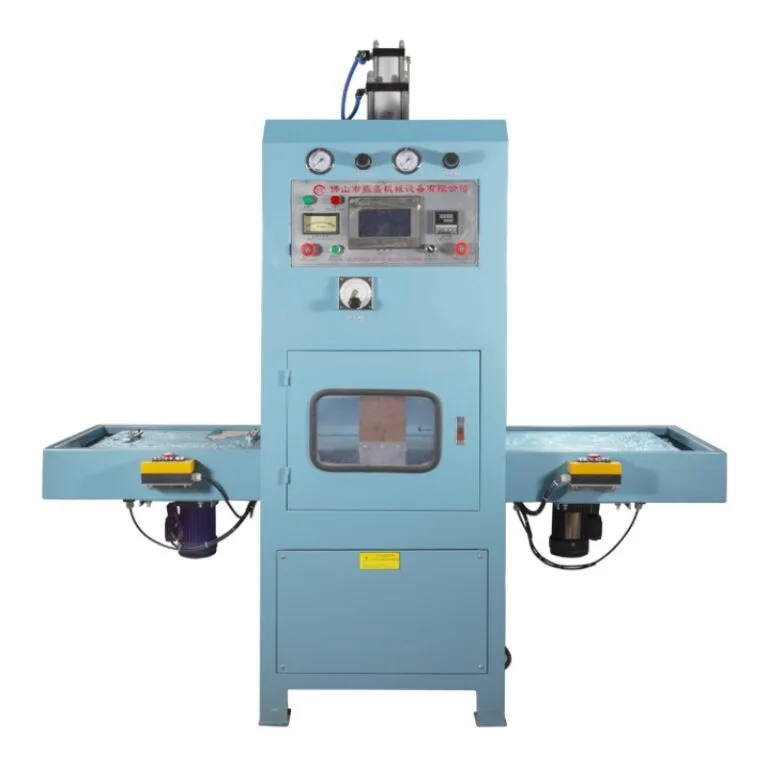
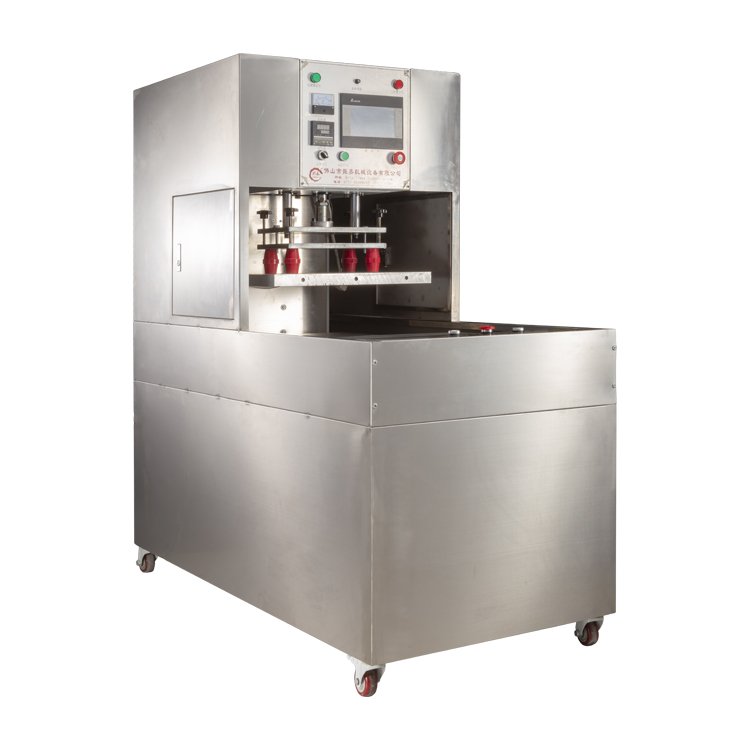
Sealing direction also matters. Top-heating machines apply heat through an upper platen, which suits large sealing areas and carded formats. Bottom-heating machines apply heat from below, which can be preferable when the lidding material is sensitive to direct contact with a hot upper surface. Zhenjia Machine offers both configurations in its ZJ-50 platform: the ZJ-50 3 kW top-heating blister sealing machine uses a pneumatically driven upper platen with electronic temperature control, while the ZJ-50 3 kW bottom-heating blister sealing machine provides adjustable electronic temperature control for PVC, PET, and PP blisters.
Machine Types and Sealing Methods
Blister sealers fall into two sealing-method families and several automation levels.
Platen (flat) sealing
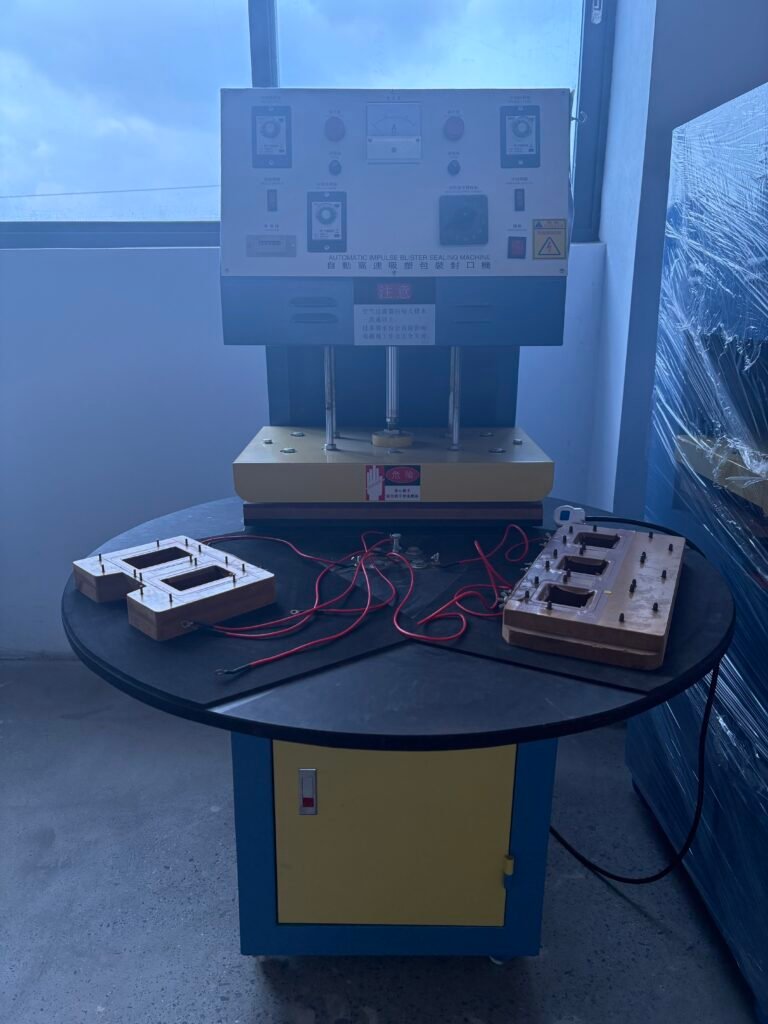
A flat heated plate contacts the entire sealing area at once. Dwell time is longer, pressure distribution is uniform, and the method handles complex flange shapes and heat-sensitive products well. Platen machines are typically intermittent: the table indexes, stops, seals, and advances.
Rotary (roller) sealing
A heated roller makes linear contact as the web moves continuously. Sealing time per point is shorter, throughput is higher, and the rolling action reduces wrinkling of the lidding material. Rotary sealing suits high-volume runs of uniform products.
Automation levels
Manual benchtop sealers require the operator to load, position the foil, and trigger the cycle; they suit labs, sample kits, and very low volumes. Semi-automatic machines automate the seal cycle while the operator loads and unloads fixtures, fitting small and mid-sized production and clinical trial packaging. Automatic machines integrate loading, sealing, and unloading into a continuous cycle and are the choice for volume production.
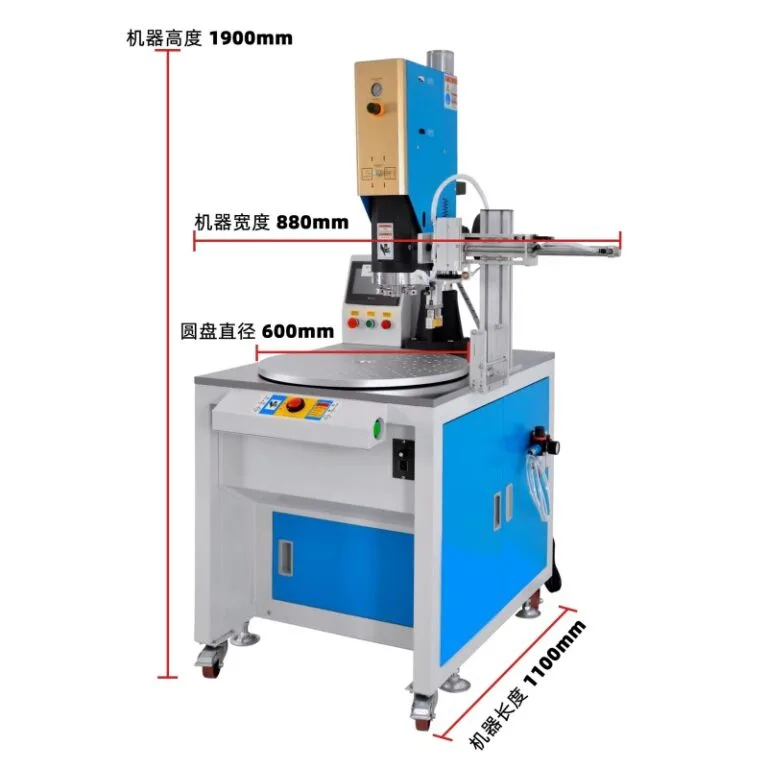
Within automatic sealing, carousel and shuttle designs are common. Zhenjia Machine’s automatic range illustrates the options. The ZJ-50A 5 kW single-manipulator automatic blister sealing machine uses a single robotic arm for automatic pick-and-place, PLC touchscreen control, and a 1000 mm or 1200 mm rotary table in three- or four-station configuration. The ZJ-50A 5 kW four-station dual-manipulator blister sealing machine adds a second arm and a 1200 mm table for automatic loading and unloading with continuous rotation, supporting around-the-clock operation. Both are pneumatically driven and run on 220 V.
Medical Packaging: Tyvek and DuPont Paper
Medical blister packaging typically pairs a thermoformed tray with a porous lidding material such as Tyvek or medical-grade DuPont paper. The porous backing allows ethylene oxide sterilization gas to enter and leave the package while blocking bacteria and particulates, and it must be sealed without compromising the sterile barrier.
Medical sealing therefore demands tight temperature and pressure control, cleanable surfaces, and validation-friendly process monitoring. Zhenjia Machine’s medical range addresses these needs. The ZJ-5235AB 7.5 kW medical blister sealing machine combines PLC touchscreen control with electronic temperature control for sterile medical packaging on a 380 V supply. The ZJ Six 8 kW six-station medical blister sealing machine adds six-station indexing and dual indicator lights for work-status monitoring. For heavier sealing force, the ZJ-6540AB 9 kW pressure-boost medical blister sealing machine uses hydraulic pressure boosting and a stainless steel design suited to medical device packaging.
When specifying a medical sealer, confirm that the machine’s platen size and pressure range match your tray flange, and that temperature control is precise enough for your chosen Tyvek or paper grade. Seal strength and peel characteristics should be verified on your actual material combination before production.
PVC, PETG, and Other Blister Materials
The blister material determines the sealing window. PVC seals readily to coated paperboard and foil and remains the most common choice for carded consumer goods. PETG offers improved clarity and is often selected where PVC is being phased out; it generally requires higher sealing temperatures and careful pressure control. PET is strong and recyclable-friendly, while PP offers chemical resistance and a higher softening point.
Material compatibility should be confirmed with the machine supplier. Zhenjia Machine’s ZJ-50 top- and bottom-heating models list PVC, PET, and PP as applicable materials, and the ZJ-50A automatic models are specified for blister shells and paper cards. For PVC and PETG carded packaging, a platen sealer with electronic temperature control and adjustable pressure is a practical starting point; for high-volume carded runs, an automatic rotary-table machine reduces labor and improves consistency.
Two related processes are worth noting. The ZJ-4050 blister three-side folding machine folds the card around the sealed blister for retail presentation, with smooth folding, an automatic protection system, and customizable molds. For products that need to be held directly against a card without a pre-formed cavity, the ZJ-5439 skin packaging machine uses direct vacuum forming over the product, requires no dedicated mold, and runs on 380 V.
Battery and Electronics Packaging
Batteries and small electronics are frequently packaged in blister or clamshell formats on printed cards. The seal must be strong enough to resist tampering and retail handling while protecting contacts and terminals from moisture and contamination. Because many of these products are heat-sensitive, short dwell times and controlled pressure matter, and bottom-heating configurations can help keep direct heat away from the product side.
For battery and electronics carded packaging, a semi-automatic or automatic platen sealer with electronic temperature control is a sensible fit. The ZJ-50 bottom-heating model’s adjustable temperature control and pneumatic drive support repeatable seals on PVC, PET, and PP blisters, while the ZJ-50A automatic models suit higher volumes where consistent cycle times and reduced operator handling are priorities.
Cosmetic Packaging
Cosmetics packaging places a premium on appearance. Blisters must seal cleanly without wrinkles, clouding, or flange distortion, and the card print must remain undamaged. Rotary sealing reduces wrinkling of the lidding material, while platen sealing with uniform pressure gives a clean, full-surface bond on shaped flanges.
For cosmetic and personal-care items, select a machine whose platen or table size accommodates your largest card, whose temperature control is stable at the lower end of the PVC or PETG window, and whose pressure can be tuned to avoid marking the card. The ZJ-50 top-heating model’s pneumatic upper platen and electronic temperature control are suited to large-area sealing where a flat, even bond is required.
Carded Packaging and Retail Formats
Carded blister packaging remains the dominant retail format for hardware, toys, accessories, and consumer healthcare. The workflow usually combines sealing with card folding. A typical line pairs a blister sealer with a three-side folding machine so that sealed blisters are folded onto printed cards for hanging or shelf display.
For carded production, consider the card size and caliper, the blister flange width, and whether the card is printed on one or both sides. Automatic rotary-table machines such as the ZJ-50A single- and dual-manipulator models handle repetitive carded runs with PLC touchscreen control and quick format changes, while the ZJ-4050 folding machine completes the retail-ready package.
Selection Matrix
| Application | Recommended model(s) | Why |
|---|---|---|
| Medical sterile barrier packaging (Tyvek/DuPont paper) | ZJ-5235AB 7.5 kW; ZJ Six 8 kW | PLC touchscreen and electronic temperature control; six-station indexing with status monitoring for sterile packaging |
| Heavy medical device trays requiring high sealing force | ZJ-6540AB 9 kW | Hydraulic pressure boosting and stainless steel design for medical device packaging |
| High-volume carded consumer goods | ZJ-50A dual-manipulator; ZJ-50A single-manipulator | Automatic pick-and-place, rotary table, PLC control; dual-arm version supports continuous operation |
| PVC/PET/PP blisters, general purpose | ZJ-50 top-heating; ZJ-50 bottom-heating | Electronic temperature control, pneumatic drive, listed for PVC, PET, and PP |
| Battery and electronics carded packaging | ZJ-50 bottom-heating; ZJ-50A single-manipulator | Controlled heat and pressure for heat-sensitive products; automatic option for volume |
| Cosmetic and personal-care blisters | ZJ-50 top-heating; ZJ-50A single-manipulator | Uniform flat sealing for clean appearance; automatic consistency at volume |
| Retail card folding after sealing | ZJ-4050 three-side folding machine | Smooth folding, automatic protection, customizable molds |
| Skin packaging without a pre-formed blister | ZJ-5439 skin packaging machine | Direct vacuum forming, no dedicated mold required |
Automation Levels and Throughput Planning
Automation should follow volume and variability, not the reverse. Manual and semi-automatic machines make sense when runs are short, formats change often, or products require careful handling. Automatic machines pay back when a small number of formats run at steady volume and labor availability is a constraint.
When comparing automatic options, look at station count, table diameter, drive type, and control architecture. A three- or four-station single-arm machine such as the ZJ-50A single-manipulator model offers a compact footprint with PLC touchscreen control. A four-station dual-arm machine such as the ZJ-50A dual-manipulator model separates loading and unloading and supports 24-hour continuous operation. Medical lines may favor six-station indexing, as in the ZJ Six, for process visibility and status monitoring.
Power supply is a practical constraint: the ZJ-50 and ZJ-50A models run on 220 V, while the medical ZJ-5235AB, ZJ Six, and ZJ-6540AB models require 380 V. Confirm facility power, compressed air availability, and floor space before finalizing a model.
Selection Checklist
- Material system: Confirm the blister plastic (PVC, PETG, PET, PP) and lidding material (coated paperboard, foil, Tyvek, DuPont paper) and verify the machine is specified for that combination.
- Sealing method: Choose platen sealing for complex flanges and sensitive products; rotary sealing for high-volume uniform formats.
- Heating direction: Select top-heating for large flat sealing areas; bottom-heating where product-side heat exposure must be limited.
- Size capacity: Match platen or table dimensions to your largest card or tray, including flange width.
- Automation level: Manual for labs and samples, semi-automatic for variable mid-volume work, automatic for steady high volume.
- Controls: Prefer PLC touchscreen control and electronic temperature control for repeatability and fast changeovers.
- Drive and pressure: Pneumatic drive for standard work; hydraulic pressure boosting for heavy medical trays.
- Utilities: Verify 220 V or 380 V supply, compressed air, and power rating (3 kW to 9 kW across the range).
- Downstream steps: Plan for card folding or skin packaging if the retail format requires it.
- Validation and support: For medical work, confirm process monitoring, cleanable construction, and supplier support for installation and training.
Conclusion
Blister sealing looks simple—heat, pressure, and time—but the right machine depends on a careful match between material, format, volume, and regulatory context. Medical Tyvek and DuPont paper packaging demands precise temperature control and validation-friendly design; PVC and PETG carded goods reward uniform platen sealing and efficient folding; battery, electronics, and cosmetic products benefit from controlled heat and clean seals. Use the selection matrix and checklist above to narrow the field, then confirm specifications with the manufacturer against your actual materials and production plan. Zhenjia Machine’s range, from the 3 kW ZJ-50 top- and bottom-heating models to the 9 kW pressure-boost medical sealer, provides a starting point for that evaluation.