 TEL +86-13923172919
High Frequency Welding Machine Maintenance Schedule: Daily, Weekly, Monthly, and Annual Checklists for Tube and Solid State Hf Welders
A high frequency welding machine represents a significant capital investment. It runs thousands of cycles per shift. It handles kilowatts of RF power and tons of mechanical force. Every cycle stresses electrical components, mechanical linkages, and cooling circuits. Machines that receive regular, scheduled maintenance deliver consistent weld quality for decades. Machines that run until they break cost far more in emergency repairs, lost production, and scrapped product.
High frequency welding machine maintenance is not complicated. It does not require an engineering degree. It requires a schedule, a checklist, and the discipline to perform the checks whether the machine appears to need them or not. This guide provides a complete HF welder maintenance schedule organized by frequency. It addresses the different requirements of vacuum tube generators and solid state generators separately where their needs diverge.
Daily Maintenance Checks: Ten Minutes That Prevent Most Breakdowns
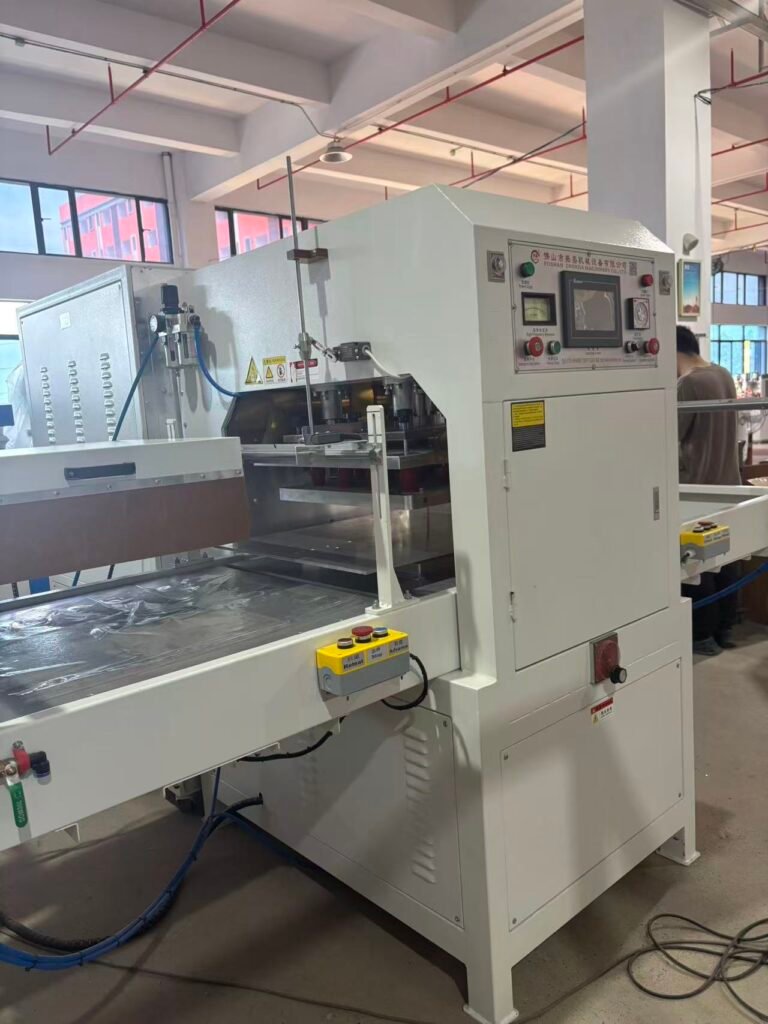
Daily checks catch the small problems before they grow. A loose connection found on Monday prevents an arc-over failure on Wednesday. A low cooling water flow caught in the morning prevents a tube replacement in the afternoon.
Inspect Cooling Water Circuit
The cooling system removes heat from the generator, the press, and the electrodes. Without adequate cooling, components overheat and fail rapidly. Check the chiller or cooling water supply at the start of every shift.
Verify that the water pressure gauge reads within the green band. Confirm that flow switches actuate when the machine starts. Look for water leaks at every hose connection, fitting, and quick-disconnect coupling. A small drip indicates a failing seal that will become a large leak under pressure. Feel the water lines with your hand. The return line should feel warm but not hot. A cold return line suggests no flow, a potentially catastrophic condition.
Check the chiller reservoir level if your system uses a closed-loop chiller. Top up with the correct coolant mixture. Plain water promotes corrosion and algae growth. Use the coolant specified by the chiller manufacturer.
Examine Electrodes and Die Surfaces
Electrodes and dies accumulate plasticizer residue, degraded polymer, and carbon tracking with every cycle. A dirty electrode causes arcing, pinholes, and surface defects on the product.
Visually inspect the sealing face of each die. Remove any visible debris with a brass brush or non-woven abrasive pad. Wipe the sealing face with isopropyl alcohol and a lint-free cloth. Look for arc pits, scratches, or uneven wear patterns. A damaged die produces defective product until it is re-ground or replaced.
Check Press Operation and Safety Systems
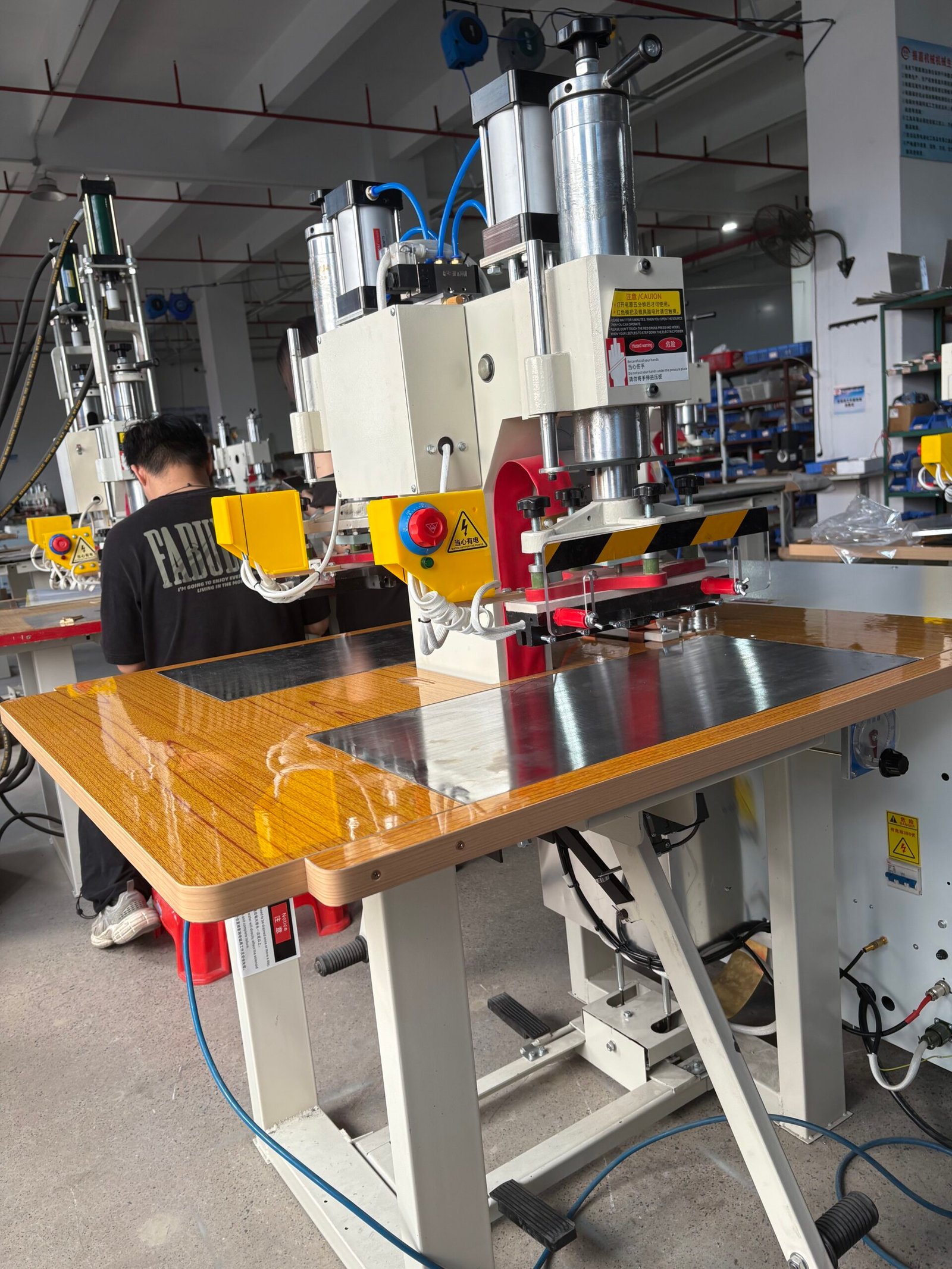
Cycle the press without RF power and without material. Listen for unusual mechanical noises. Squealing indicates a dry bearing. Clunking suggests a loose bolt or worn bushing. The press should close and open smoothly with no hesitation or vibration.
Test both emergency stop buttons at the start of the shift. Press each E-stop and verify that the machine immediately stops all mechanical and RF output. Reset the E-stop and confirm that the machine requires a deliberate restart sequence. Never operate a machine with a bypassed or faulty safety system.
Verify RF Shielding and Interlocks
Open and close every access door and panel. The interlock switches should prevent RF generation when any door is open. A damaged interlock allows operators to access live RF components. Replace any interlock switch that sticks, arcs, or fails to actuate reliably.
Visually inspect the door gaskets and RF shielding mesh. Bent panels, missing screws, and torn gaskets create gaps where electromagnetic radiation escapes. This is both a safety hazard and a regulatory compliance failure.
相关产品

Weekly Maintenance Checks: Deeper Inspection of Mechanical and Cooling Systems
Weekly checks examine components that wear more slowly but still require regular attention. These items take longer to inspect than daily checks but prevent unscheduled downtime.
Clean or Replace Air Filters
High frequency welding machines pull cooling air through filters. Clogged filters reduce airflow. Reduced airflow causes overheating. Most machines have air filters on the generator cabinet, the control enclosure, and sometimes on the press cooling fans.
Remove each filter element. Tap out loose dust or wash the filter if it is the washable type. Replace disposable filters when they show visible discoloration or when the pressure drop across them exceeds the manufacturer’s specification. A clean filter protects sensitive electronics from dust accumulation that causes arcing and component failure.
Inspect All Cables, Connectors, and Ground Straps
RF energy demands low-resistance, continuous electrical connections. A loose ground strap creates a high-resistance path that generates heat, causes arcing, and shifts the impedance match.
Inspect the coaxial cable from the generator to the press. Look for cuts, kinks, or crushed sections in the outer jacket. Check that both connectors are tight and show no signs of arcing or corrosion. Inspect every ground strap in the machine. Bolted connections must be tight. Flexible braid straps must show no broken strands. Replace any ground strap that is corroded, frayed, or discolored from overheating.
Check Hydraulic or Pneumatic Systems
Most HF welding presses use either hydraulic cylinders or pneumatic actuators to apply clamping force. Check the hydraulic oil level and top up if needed. Inspect hydraulic hoses for cracks, bulges, or leaks. A hydraulic leak inside a press drips oil onto hot electrodes and creates a fire hazard.
For pneumatic systems, drain the moisture trap on the air preparation unit. Water in the compressed air corrodes valves and cylinders. Check the air lubricator oil level if the system uses lubricated air. Confirm that the pressure regulator maintains consistent pressure during press actuation.
Verify PLC Backup and Parameter Storage
A PLC controlled HF welder stores all welding recipes in memory. If the PLC battery fails, those recipes disappear. Check the PLC battery status indicator weekly. Replace the battery at the interval specified by the PLC manufacturer, typically every two to three years.
Export and back up all welding recipes to a USB drive or network location. Store the backup in a location separate from the machine. Recipe loss causes hours of downtime while parameters are re-developed and re-tested.
Monthly Maintenance Checks: Component-Level Inspection
Monthly checks look inside enclosures and examine individual components. These checks require the machine to be powered down and locked out.
Vacuum Tube Generator Monthly Checks
Tube-based generators contain several wear items that require regular inspection. Remove the generator covers and visually inspect the oscillator tube. Look for signs of overheating on the anode cooler and the tube envelope. A tube that has lost vacuum shows a white, milky getter deposit instead of a shiny silver mirror.
Check the tube socket and filament connections. Loose socket contacts cause intermittent filament current and erratic operation. Tighten all socket connections to the specified torque. Inspect the high-voltage rectifier stack for signs of overheating or cracked insulation. Measure the high-voltage filter capacitors for bulging cases or electrolyte leakage.
Clean the inside of the generator cabinet with low-pressure compressed air and a vacuum cleaner. Dust accumulation on high-voltage components creates conductive paths that cause arcing and flashover. Never use compressed air on energized equipment. Lock out and discharge all high-voltage capacitors before cleaning.
Solid State Generator Monthly Checks
Solid state generators require different monthly checks. Inspect the IGBT or MOSFET power modules for signs of overheating. Look for discolored circuit boards, cracked solder joints, or bulging electrolytic capacitors. Check that all cooling fans inside the generator enclosure are operating. A single failed fan creates a hot spot that shortens the life of the adjacent power module.
Verify that the automatic tuning system operates correctly. Check the variable capacitors or inductors in the matching network for free movement and absence of arcing marks. Lubricate actuator bearings according to the manufacturer’s specification.
Press and Electrode System Monthly Checks
Measure platen parallelism with a dial indicator or pressure-sensitive film. Platens that are out of parallel produce uneven welds and accelerate die wear. Adjust the platen leveling screws if necessary and re-measure.
Inspect all press guide bushings and bearings for wear. Excessive clearance allows the upper platen to tilt under load. Replace worn bushings before they damage the platen rods or cylinder seals.
Annual Maintenance: Comprehensive Overhaul and Fluid Replacement
Annual maintenance is the most extensive service interval. Many manufacturers schedule this during a planned plant shutdown to avoid production disruption. Annual service often involves a qualified service engineer from the equipment supplier.
Replace Cooling Fluids
Drain and replace the coolant in the closed-loop cooling system. Old coolant loses its corrosion inhibitors and anti-algae additives. Flush the system with clean water before refilling with fresh coolant at the correct concentration. Inspect all cooling hoses and replace any that show signs of hardening, cracking, or internal deposits.
Replace Hydraulic Oil and Filters
Drain the hydraulic power unit reservoir. Replace the hydraulic oil with fresh oil of the grade specified by the press manufacturer. Replace all hydraulic filters. Inspect the inside of the reservoir for sludge or contamination and clean if necessary. Bleed air from the hydraulic system after refilling.
Inspect High-Voltage Components
On tube machines, test the high-voltage transformer insulation resistance with a megohmmeter. Compare the readings to the transformer manufacturer’s specifications. A declining trend over successive annual tests indicates insulation deterioration that will eventually fail.
Replace the oscillator tube if it has reached 80% of its rated service life, even if it is still functioning. Preventive tube replacement during planned downtime costs far less than an emergency replacement that stops production. The old tube becomes a tested spare for emergency use.
Calibrate Instruments and Sensors
Temperature sensors, pressure transducers, and power meters drift over time. Annual calibration returns them to specified accuracy. Calibrate the RF power meter against a known reference. Calibrate temperature sensors in a calibrated bath. Verify that pressure gauges read correctly against a master gauge. Document all calibration results for quality system compliance.
Maintenance Differences: Vacuum Tube vs. Solid State
The RF welding machine service checklist differs fundamentally between tube and solid state machines in three areas.
Tube machines require consumable component replacement. The oscillator tube is a wear item with a finite life. It must be budgeted for and replaced on a schedule. Solid state machines have no consumable high-power components. The IGBT modules are designed to last the life of the machine under normal operating conditions.
Tube machines require more frequent internal cleaning. The high voltages inside a tube generator attract dust electrostatically. Dust buildup directly causes arcing and flashover. Solid state generators operate at lower internal voltages. Dust accumulation still matters but does not cause the same catastrophic failure modes.
Solid state machines require cooling fan maintenance that tube machines may not need. Solid state power modules depend on forced-air cooling. A single fan failure can destroy an expensive power module. Tube generators often use water cooling for the tube anode, which is monitored by flow switches that shut down the machine if flow fails.
Implementing Your Preventive Maintenance HF Welding Program
A preventive maintenance HF welding program only works when it is followed. Post the schedule at the machine. Assign specific responsibilities to named individuals. Use a logbook or digital maintenance management system to record every completed check.
Create a simple flagging system. A red tag on the machine means a defect was found during a check and the machine must not run until corrected. A green tag means all checks passed and the machine is released for production. This visual system prevents a shift change from losing critical maintenance information.
Train every operator to perform the daily checks. The operator who runs the machine eight hours a day notices subtle changes that a weekly inspector might miss. Empower operators to tag the machine and call for maintenance without fear of production pressure overriding their judgment.
A well-maintained machine is not a cost center. It is a predictable, reliable asset that delivers consistent welds, meets production targets, and avoids the emergency calls that disrupt weekends and destroy production bonuses. Ten minutes of daily inspection buys eight hours of trouble-free operation.