 TEL +86-13923172919
Rotary HF Welding Machine Stations: Choosing Between 2, 3, 4, or 6 Stations
In high-volume manufacturing lines producing TPU inflatable items, medical fluid bags, or heavy-duty PVC tarpaulin reinforcements, machine productivity is rarely limited by the actual high-frequency (HF) welding cycle (rotary HF welding machine). A typical dielectric melt takes only 3 to 6 seconds. Instead, the real bottleneck occurs during manual material handling: positioning multi-layer components, smoothing out wrinkles, aligning custom brass dies, and unloading finished parts while the expensive generator sits idle.
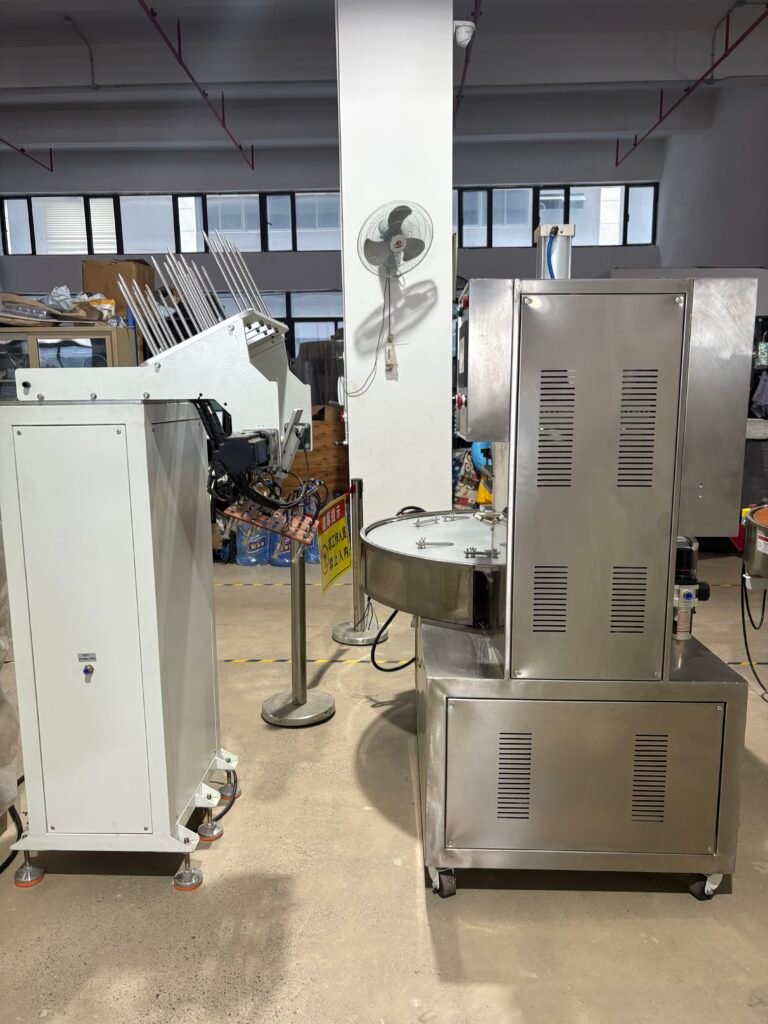
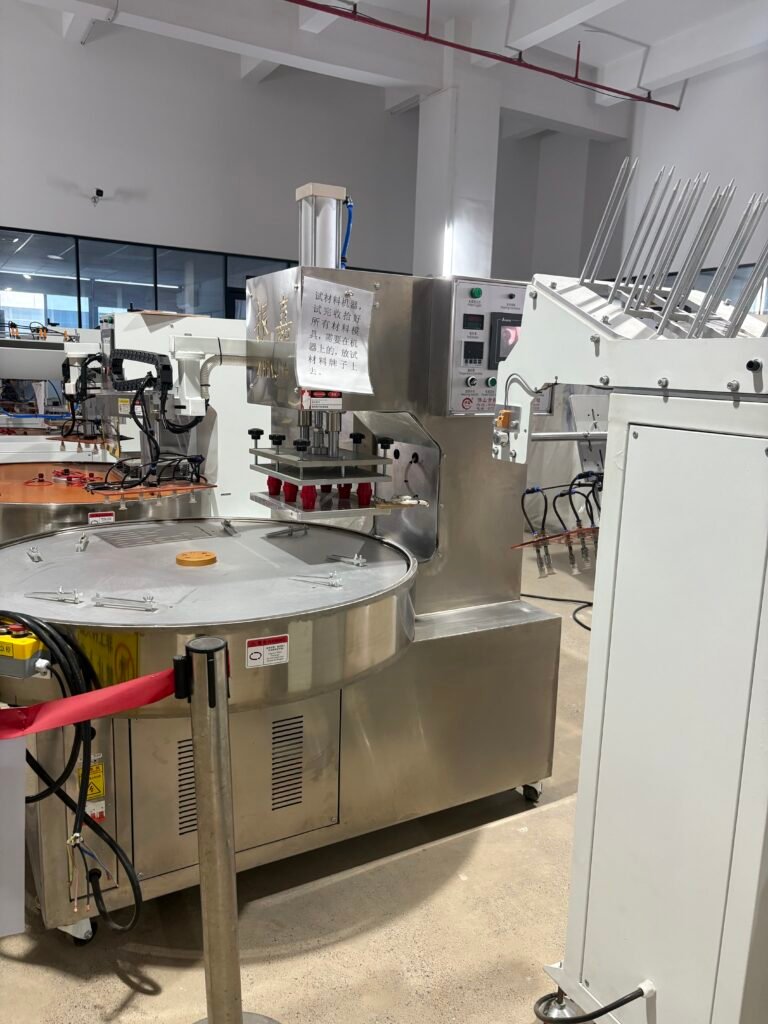
An automatic rotary table HF welding machine solves this efficiency gap by overlapping operator loading time with machine welding time. However, choosing the correct number of working stations—whether 2, 3, 4, or 6 stations—requires a rigorous look at your production volume, cycle times, part complexity, and operator workflow.
The Production Bottleneck: Why Multi-Station Rotary Tables Matter
On a standard single-station or sliding-tray HF machine, the workflow is strictly sequential:
- Operator loads and aligns material (15–30 seconds)
- Table slides in and press descends (welding + cooling: 5–8 seconds)
- Tray slides out, operator unloads finished part (5–10 seconds)
This means the generator and hydraulic press remain idle for up to 75% of the total operating cycle. By mounting multiple tooling fixtures onto a rotating indexing table, the machine enables continuous operation: the operator loads Station A while Station B is inside the press undergoing HF welding, and Station C is cooling or undergoing manual auxiliary checks.
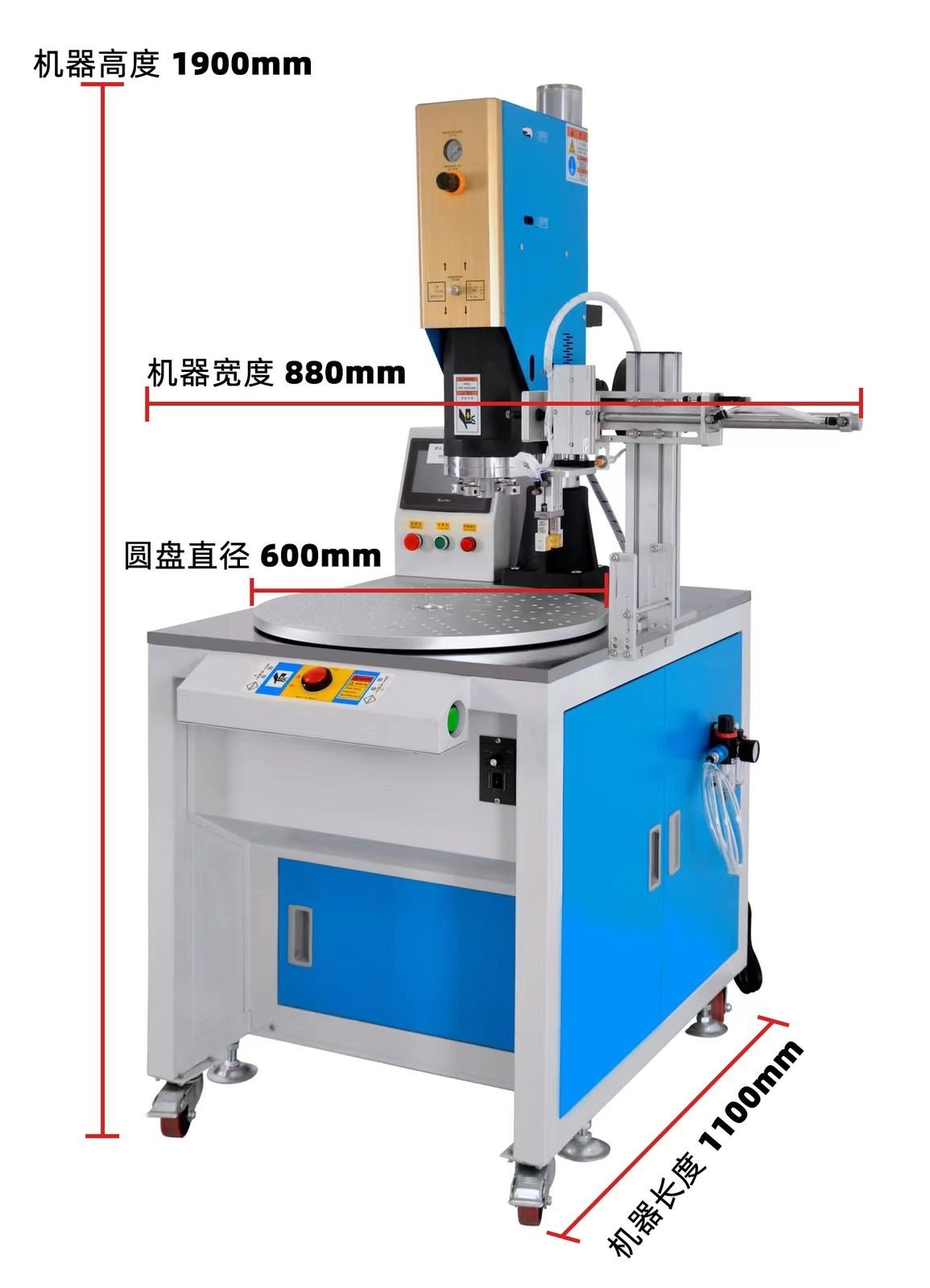
Station Breakdown: Matching Station Count to Production Needs
1. Two-Station Rotary / Shuttle Machines
- Configuration: Dual tooling platforms alternating under a single or dual-head press via a shuttle or 180-degree rotation.
- Ideal Application: Large-format products with extended loading or precise manual placement requirements (e.g., large medical blood bags, heavy-duty tarpaulin patches, or structural inflatable panels).
- Production Characteristic: Best suited when loading and alignment take significantly longer than the welding cycle (e.g., 20 seconds of loading vs. 5 seconds of welding). It provides the core benefit of eliminating operator wait time without demanding a high-speed multi-person crew.
2. Three and Four-Station Rotary Machines
- Configuration: A circular indexing turntable divided into 3 or 4 equal segments (90° or 120° intervals).
- Ideal Application: Medium-to-high volume continuous production of mid-sized TPU/PVC products (e.g., inflatable toys, outdoor gear components, packaging pouches).
- Production Characteristic: This configuration creates an optimized balance of workflow steps:
- Station 1: Material loading & component alignment
- Station 2: Pre-check / auxiliary placement (or direct welding position depending on 3 vs 4 station layout)
- Station 3/4: High-frequency welding & controlled cooling hold
- Operational Benefit: Allows a single operator to maintain a steady, ergonomic rhythm without rushing placement, significantly reducing alignment errors and defective seals caused by hurried loading.
3. Six-Station Rotary Machines
- Configuration: A large-diameter precision indexing turntable with 6 peripheral work stations.
- Ideal Application: Ultra-high-volume mass production of smaller components or multi-step assembly items where automated feeding or robotic pick-and-place can be integrated alongside manual stations.
- Production Characteristic: Designed for multi-phase operations—such as loading base film in Station 1, adding reinforcement tabs in Station 2, welding in Station 3, cooling/setting in Station 4, automatic stripping in Station 5, and quality inspection or unloading in Station 6.
- Operational Benefit: Transforms a standard HF press into a semi-automated rotary production cell, maximizing output per square meter of factory floor space.
Quick Reference: Station Selection Matrix
| Station Count | Typical Cycle Balance (Load / Weld / Cool) | Operator Involvement | Primary Production Fit |
| 2 Stations | Long load time / Short weld time | 1 Operator | Large parts, complex positioning, moderate daily output |
| 3–4 Stations | Balanced load-to-weld ratio | 1–2 Operators | Standard commercial inflatable items, pouches, medium-to-high volume |
| 6 Stations | Short automated steps / Multi-phase assembly | 2+ Operators (or automated integration) | High-volume mass production, small repetitive components |
Key Selection Factors Beyond Station Count
When evaluating a multi-station rotary HF welding machine for your plant, keep these operational boundaries in mind:
- Turntable Diameter and Inertia: More stations require a larger rotary table diameter, which increases rotational inertia. Ensure the indexing drive uses a precision cam-indexer or servo-driven mechanism to prevent vibration or shifting of delicate components during table rotation.
- Operator Ergonomics: If loading requires reaching across large dies or handling heavy multi-layer coated fabrics, too many stations can crowd the workspace. Match the station count to the physical dimensions of the product.
- Cooling Time Requirements: Thick TPU materials or critical airtight seams require a sustained cooling hold under pressure. Multi-station tables allow the cooling phase to occur naturally across intermediate idle stations before the part reaches the unloading zone, preventing elastic spring-back and seam distortion.