 TEL +86-13923172919
Push Plate HF Welding Machine: Components and Material Flow
Solving Large-Area Flat Welding Challenges
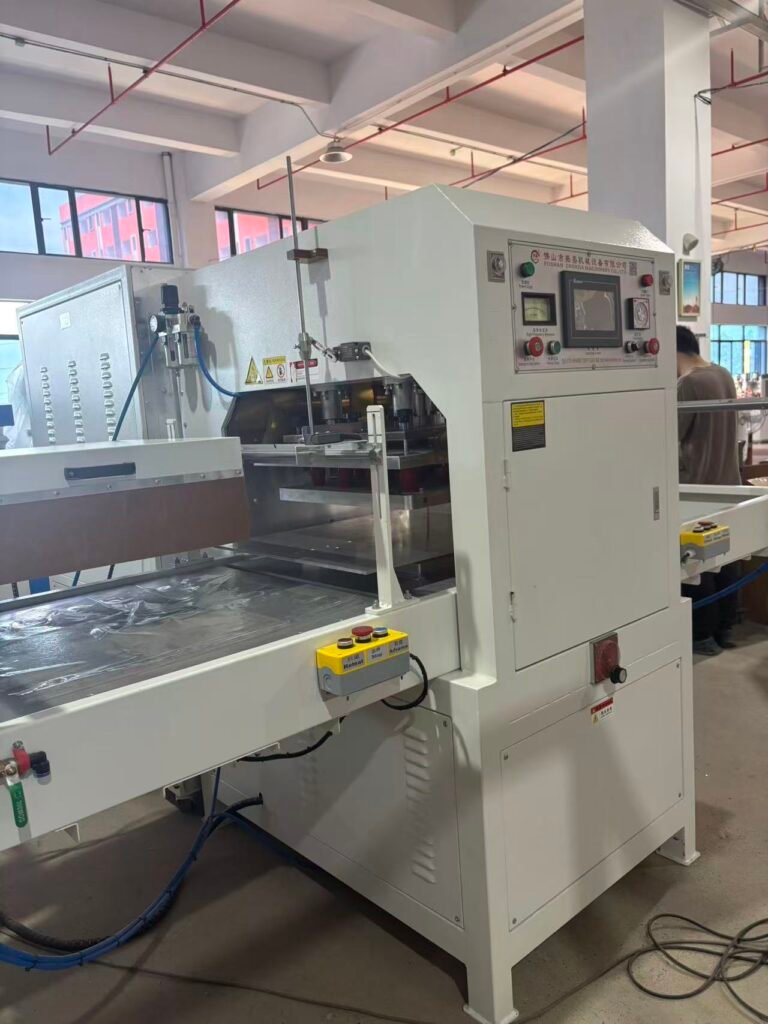
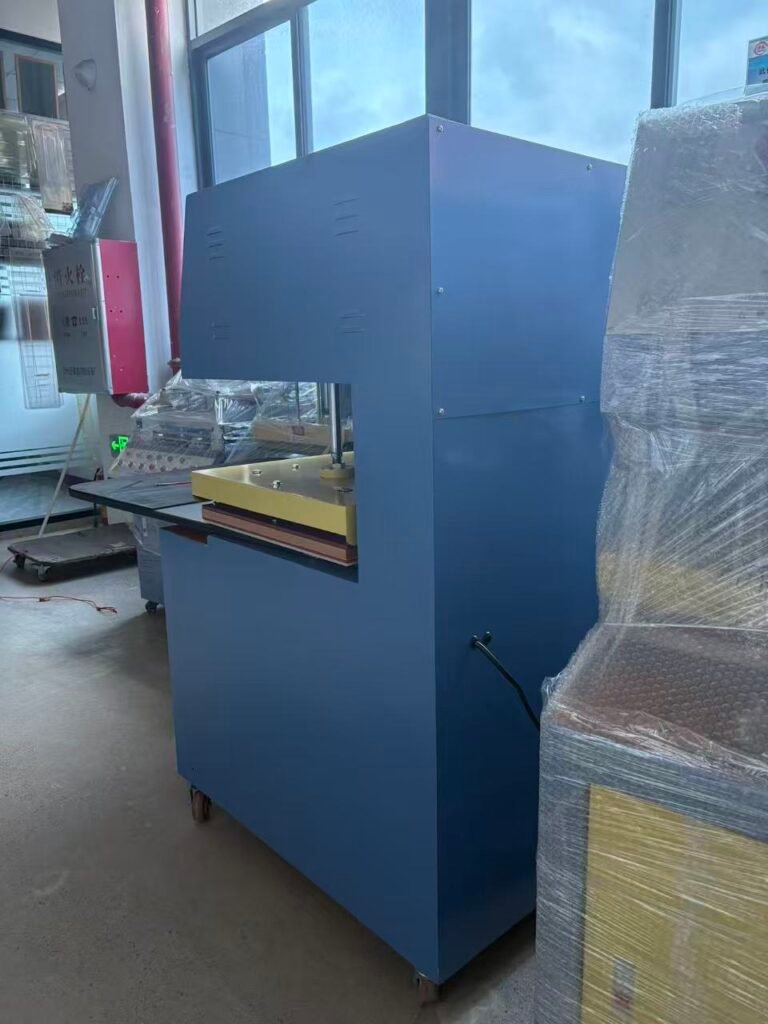
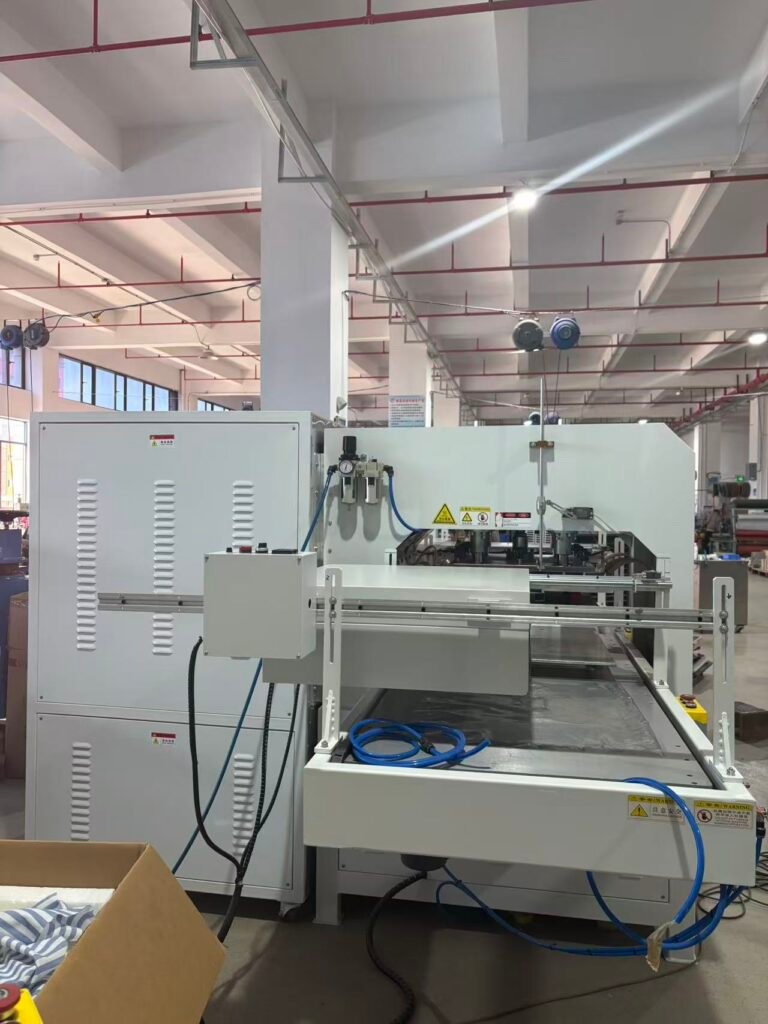
In many Southeast Asian manufacturing facilities, producing large-format items like motorcycle seat cushions, car door panels, or large PVC bags presents a specific mechanical challenge. Standard stationary high-frequency machines often lack the bed size or the accessibility required for operators to position large material sheets accurately. This is where the push plate HF welding machine becomes a critical asset. By utilizing a sliding tray system, the machine allows for external material preparation, which is then moved into the welding zone under the RF welding press. This structure minimizes operator fatigue and ensures that large-area leather or plastic sheets remain flat during the fusion process.
The High Frequency Generator: The Power Core
The heart of any push plate welder structure is the high frequency generator. For machines like the ZJ-12K-15K-25K-SB Push-Table HF Welding Machine, this component converts standard factory power into high-frequency electromagnetic energy, typically at 27.12MHz. This frequency is chosen because it falls within the industrial, scientific, and medical (ISM) bands, minimizing interference with communication equipment. The generator consists of a large vacuum tube (oscillator tube) and a series of capacitors and inductors. In a push plate configuration, the generator must be robust enough to handle the high capacitance of large-area electrodes without losing frequency stability. If the generator is underpowered for the surface area of the mold, the weld will be inconsistent across the seam.
Electrode Design and Pressure Distribution
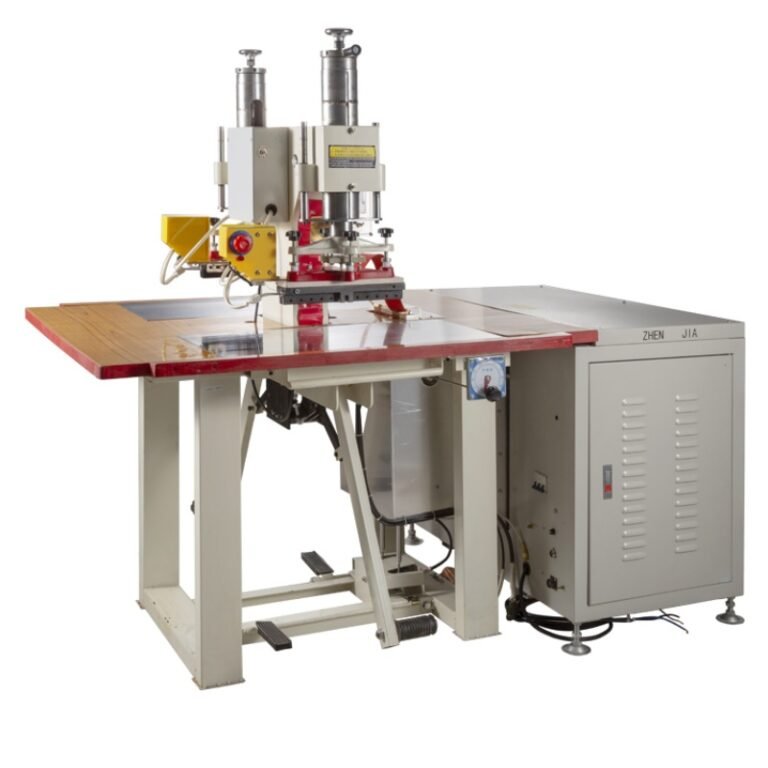
The upper electrode, often referred to as the welding mold, is the component that directly contacts the material. In push plate HF welding machine applications, these electrodes are frequently large and complex. Because the push plate moves the material into position, the electrode must be perfectly aligned with the lower plate. Zhenjia Machine emphasizes that machine selection and mold design need to be considered together; a large electrode requires a machine with sufficient pneumatic or hydraulic pressure to ensure even contact. Without uniform pressure, the HF energy will concentrate in areas with better contact, leading to localized burns or weak spots in the weld. For smaller, precision tasks such as blister sealing, the ZJ-5K-SB Single-Head Push HF Welding Machine provides a more compact electrode setup suitable for high-sensitivity work.
Material Flow: The Push Plate Mechanism
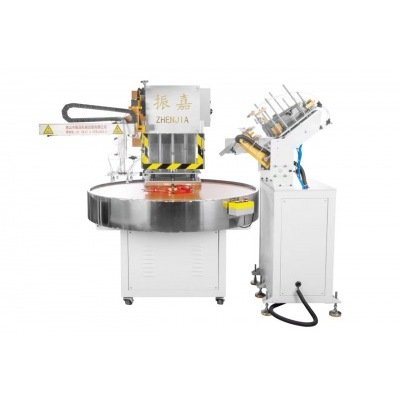
The defining feature of this machine type is the material flow. Unlike rotary machines where the material travels in a circle, the push plate system uses a linear motion. The operator places the PVC, PU, or TPU sheets onto the lower tray while it is outside the welding head. This provides a clear, unobstructed view for alignment. Once the material is set, the tray is pushed—either manually or pneumatically—into the press area. This linear flow is particularly beneficial for long or wide materials that would be difficult to rotate. It reduces the risk of material shifting during the transition from the loading station to the welding station.
Why Push Plates Suit Large-Area Flat Welding
Large-area welding, such as motorcycle cushions or large inflatable mats, requires a stable platform. The push plate design offers several advantages for these specific production problems:
- Flatness Retention: Because the material is supported by a large, flat tray throughout the movement, there is less risk of wrinkling compared to manual feeding.
- Accessibility: Operators can reach all sides of a large mold when the tray is in the out-position.
- Safety: The welding zone is physically separated from the loading zone, reducing the risk of hands entering the high-voltage area during the cycle.
Technical Specifications Comparison
When selecting a machine, the power-to-area ratio is vital. The following table outlines the general capabilities of the push-type series from Zhenjia Machine.
| Model Series | Power Range | Drive Type | Primary Application |
|---|---|---|---|
| ZJ-5K-SB | 5KW | Pneumatic | Small blister, PVC bags |
| ZJ-8K-10K-SB | 8KW – 10KW | Pneumatic | Blister sealing, PVC trimming |
| ZJ-12K-25K-SB | 12KW – 25KW | Push-Table | Motorcycle seats, large leather |
The Role of the RF Welding Press
The RF welding press is the mechanical assembly that provides the downward force. In a push plate HF welding machine, the press must be rigid. Any deflection in the press frame under high pressure will result in uneven welding depth. For high-power applications like the 25KW models, the press is designed to withstand several tons of force. This is necessary to compress the material layers (such as foam and leather in car seats) so that the HF energy can effectively vibrate the molecules at the interface. For specialized packaging, the ZJ-8K-10K-SB Single-Head Push HF Welding Machine utilizes high-quality components to ensure the press remains consistent over thousands of cycles.
Material Compatibility and Sample Testing
While push plate machines are versatile, they are primarily designed for polar plastics like PVC and TPU. For manufacturers in Southeast Asia looking to weld new composite materials or thick TPU structures, we strongly recommend sample testing. The interaction between the high frequency generator and the material’s dielectric constant determines the weld strength. Factors such as material thickness, surface texture, and even the color pigments can affect the welding time and power requirements. Never assume a material is weldable without a physical proofing process.
Safety Boundaries and Electrical Requirements
Operating a push plate HF welding machine involves high-voltage and high-frequency energy. It is mandatory to follow these safety protocols:
- Confirm your factory voltage, phase, and frequency (typically 380V for these models) before installation.
- Never operate the machine with safety guards removed or bypass the dual-start buttons.
- Prohibit reaching into the dangerous movement area while the tray or press is in motion.
- Ensure the machine is properly grounded to prevent RF interference and electrical shock.
- Maintenance must only be performed after full power isolation and discharge of capacitors.
Maintenance of the Push Plate System
To maintain production consistency, the sliding tracks of the push plate must be kept clean and lubricated. Dust or debris on the tracks can cause the tray to stutter, leading to misalignment with the upper electrode. Additionally, the spark protection system—a standard feature on the ZJ-5K-SB and larger models—must be checked regularly. This system detects the initial arc of a spark and cuts the power instantly to protect the expensive mold and the vacuum tube. If you notice frequent tripping of the spark protector, confirm the mold condition and material cleanliness with our team.
Conclusion on Machine Selection
Choosing between a single-head push machine and a large push-table system depends on your specific product dimensions and production volume. For large-area flat welding, the push plate HF welding machine provides the necessary stability and material flow to ensure high-quality bonds. Always consider the machine and mold as a single integrated solution for your factory floor.