 TEL +86-13923172919
What Is the Difference Between High Frequency Welding and High Frequency Induction Welding?
A factory manager in Vietnam runs a line that makes PVC medical fluid bags. Another plant in Thailand churns out galvanized steel pipes for construction scaffolding. Both facilities use a process called “high frequency welding,” and both assume they understand what the term means. That shared assumption has caused more than a few equipment purchasing disasters. One shop orders a HF welding machine expecting to seal blood bags, only to discover it arrives with a set of induction coils designed for fusing steel tubes. The other buys a plastic welding press, imagining it can somehow join metal pipe edges.
Behind this confusion sit two completely different physical phenomena. Dielectric heating agitates polar molecules inside plastic films. Electromagnetic induction drives eddy currents into the surface of conductive metal strips. They share a frequency band but nothing else. Grasping the high frequency welding vs induction welding distinction prevents expensive mismatches, reduces procurement risk, and ensures the right technology lands on the right production floor. This article maps the principles, materials, equipment, and application territories of each method for Southeast Asian manufacturers expanding their joining capabilities.
Core Principle Differences: Dielectric Heating vs. Electromagnetic Induction
Both processes operate in the radio frequency spectrum, typically between 100 kHz and 30 MHz. That is where the similarity ends. One heats the inside of an insulator by shaking its molecules. The other heats the surface of a conductor by pushing current against its own magnetic field.
How Dielectric Welding Fuses Plastic
Dielectric welding, often called RF or HF plastic welding vs HF induction welding when contrasting with metal processes, applies an alternating electric field across a stack of polar thermoplastics. A generator feeds 27.12 MHz energy to a pair of electrodes. Polar molecules within the plastic attempt to align with the rapidly reversing field. Their collective vibration generates heat simultaneously through the entire material thickness. The center of the stack reaches welding temperature just as fast as the outer layers.
Once the material melts, pressure from the press consolidates the layers into a single homogeneous seam. No external heat source touches the plastic. No filler rod introduces foreign material. The bond achieves parent-material strength because polymer chains entangle across the original boundary. This mechanism works only with plastics that carry a permanent dipole: flexible PVC, PU, TPU, EVA, and PETG all respond well. Polyethylene, polypropylene, and polystyrene remain cold no matter how much RF energy passes through them.
How Induction Welding Joins Metal
High frequency induction welding, widely known as ERW high frequency welding in the pipe and tube industry, operates on an entirely different principle. An induction coil carries high-frequency alternating current. The coil does not touch the workpiece. Current flowing through the coil generates a rapidly alternating magnetic field, which passes through the metal strip or tube edges positioned nearby.
Faraday’s law dictates what happens next. The alternating magnetic field induces eddy currents in the conductive metal surface. Those currents concentrate along the edges where the strip forms a V‑shape approaching the weld point. Resistance to current flow generates heat directly in the metal. The edges reach forging temperature in seconds. Squeeze rolls then press the softened edges together, expelling molten oxides and contaminants in a characteristic flash of hot metal.
This process requires an electrically conductive workpiece. Steel, stainless steel, aluminum, and copper all respond. Plastic does not. An induction coil placed next to a PVC sheet produces precisely zero heating, because no current can flow through the insulating material.
Material Compatibility: Plastics vs. Metals
Material choice alone usually answers the dielectric welding vs induction welding question before any other factor enters the discussion. The two technologies occupy almost completely separate material territories.
A side‑by‑side comparison makes the boundaries clear.
| Material | Dielectric (Plastic) HF Welding | Induction (Metal) HF Welding |
|---|---|---|
| Flexible PVC, PU, TPU, EVA | ✓ Excellent weld strength | ✗ No heating |
| PETG, Nylon (preheated) | ✓ Weldable with parameters | ✗ No heating |
| Polyethylene, Polypropylene | ✗ Non-polar, no heating | ✗ Not applicable (insulator) |
| Carbon steel, Stainless steel | ✗ No heating | ✓ ERW pipe production |
| Aluminum, Copper | ✗ No heating | ✓ Requires higher frequency |
This chart underscores the practical reality. A factory running PVC film for medical pouches needs a dielectric welding equipment setup. A plant manufacturing ERW steel pipe for structural applications needs a high frequency induction welder. No amount of parameter adjustment crosses the line between them. The physics forbids it.
Equipment Design and Application Territories
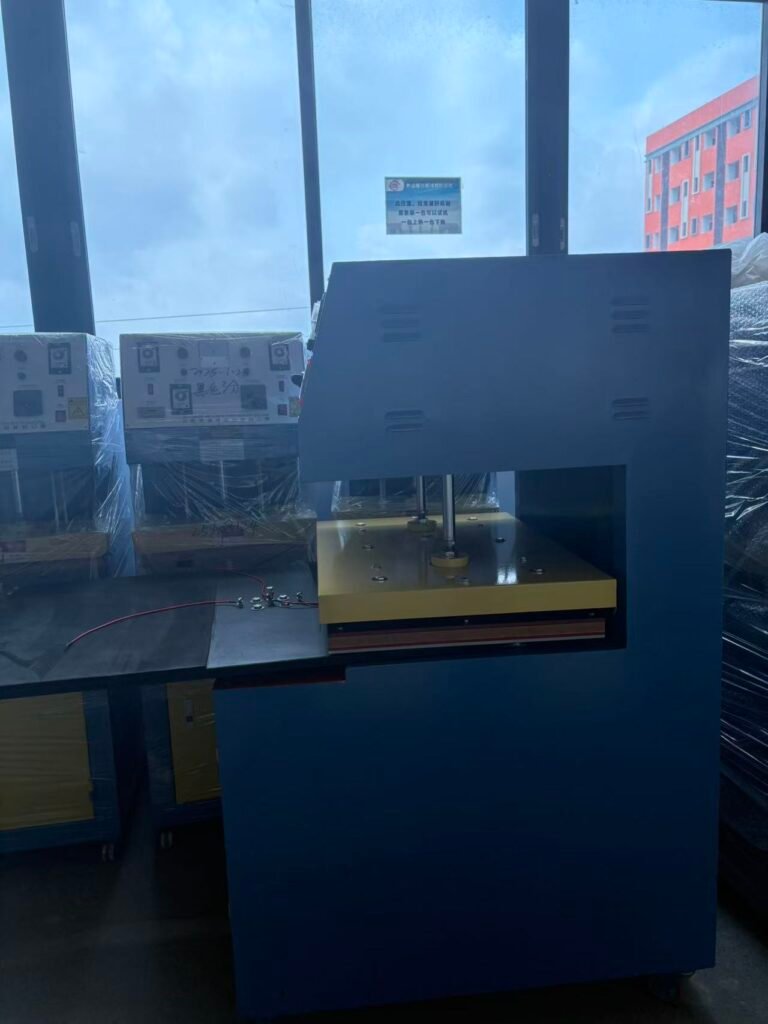
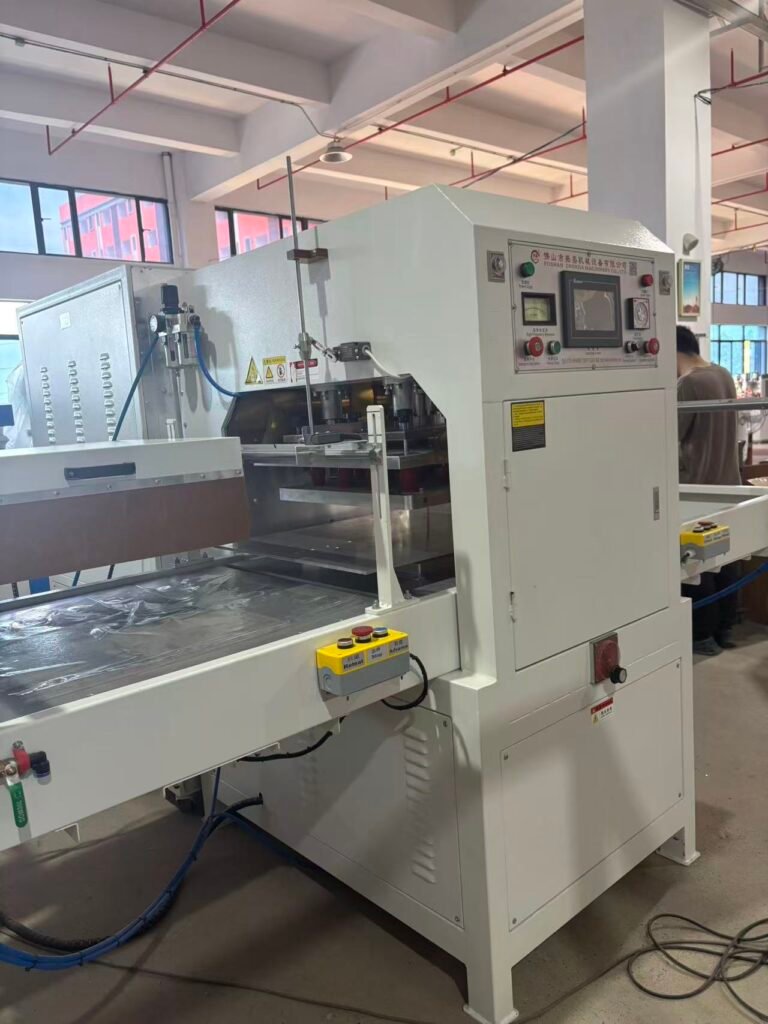
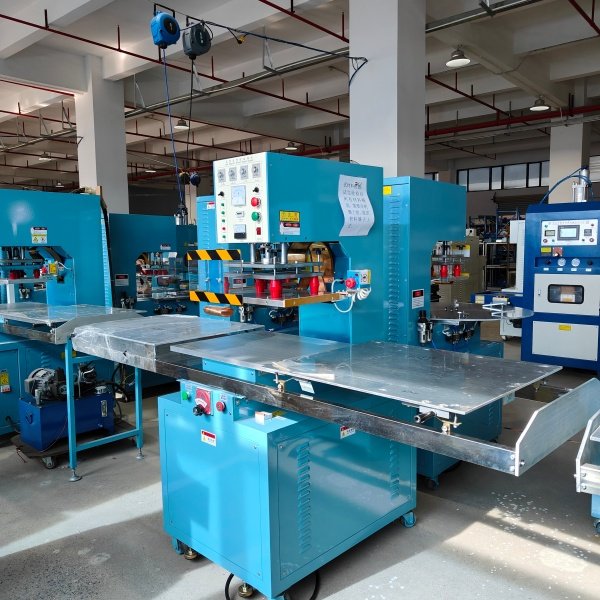
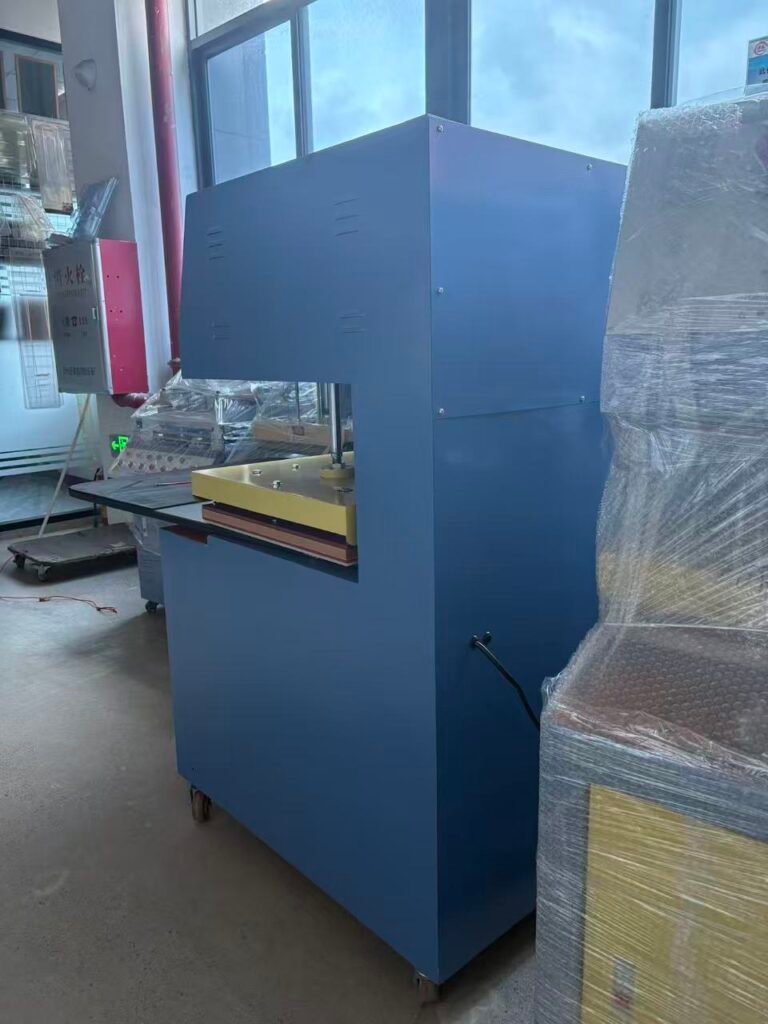
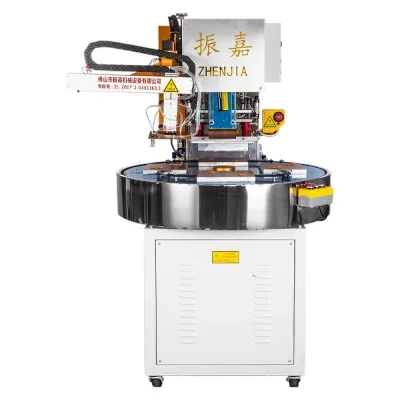
Walk onto a production floor that uses dielectric plastic welding and you see a vertical press. The operator, or an automated shuttle table, positions flat material layers between two large platens. A brass or aluminum die shapes the seal and often trims the part simultaneously. The generator sits in a nearby cabinet, connected by a coaxial cable. The entire system is designed for area sealing: welding the perimeter of a pouch, embossing a logo, or bonding multiple film layers in a single cycle.
A pipe mill using induction welding looks nothing like that. A strip of coiled steel feeds continuously through forming rolls that gradually bend it into a tube shape. As the open edges approach the weld point, they pass through or near an induction coil. The coil heats them to bright orange forging temperature. Squeeze rolls immediately follow, pressing the edges together to form a solid-state bond. A scarfing tool then trims the external flash bead while the weld is still hot. The process runs continuously at speeds measured in meters per minute.
Application territories reflect these design differences. Dielectric HF welding dominates flexible plastic product manufacturing. Medical bag production in Malaysia, automotive interior component lines in Thailand, inflatable boat fabrication in Vietnam, and stationery welding across Southeast Asia all run on dielectric presses. Induction HF welding owns the steel pipe industry. ERW pipe mills around the world produce millions of tons of tubular product annually using induction or contact resistance welding. Structural tubing, water pipe, oil country tubular goods, and scaffolding tube all emerge from this continuous process.
Avoiding Costly Selection Mistakes
Procurement errors happen when someone searches for a high frequency welding machine without understanding the dielectric‑induction divide. A buyer who specifies only “HF welder” on a purchase requisition might receive the wrong technology entirely. The consequences extend beyond the purchase price.
⚠️ CRITICAL NOTICE: A dielectric plastic welding machine cannot weld metal. An induction pipe welding line cannot seal PVC film. Attempting either misapplication risks equipment damage, production loss, and serious operator injury. Always verify the material compatibility and equipment type before issuing a purchase order.
Verify the technology by asking suppliers to describe the physical heating mechanism their machine uses. A dielectric welder manufacturer talks about polar molecules, electrode fields, and material compatibility charts. An induction welder manufacturer discusses eddy currents, V‑angle geometry, squeeze pressures, and steel strip grades. The language they use reveals which technology they sell.
Request a test weld on your material before committing to a machine. A dielectric welder should produce a peel‑test‑ready seam on your PVC, PU, or EVA film within a few parameter adjustments. An induction welder should produce a flash‑welded steel tube section that passes flattening and drift expansion tests. The test tells the truth more reliably than any specification sheet.
Summary: Two Technologies, One Frequency Band
High frequency welding and high frequency induction welding share nothing but a name and a spectrum allocation. One uses dielectric heating to fuse polar plastic films into permanent, airtight seams. The other uses electromagnetic induction to forge steel strip edges into continuous tube. One builds medical pouches, car door panels, and inflatable boats. The other builds scaffolding pipe, structural hollow sections, and oil country tubular goods.
Southeast Asian manufacturers who understand this divide purchase with confidence. A plastic medical bag producer in Ho Chi Minh City specifies a dielectric RF welding machine and receives a press that seals pouches from day one. A steel pipe mill in Rayong specifies an ERW high frequency welding line and receives a mill that churns out tube to API specifications. The confusion that traps uninformed buyers becomes a solved problem for those who know the difference. Let the material decide. Plastic goes to the press. Metal goes to the mill. The physics never gets it wrong.