 TEL +86-13923172919
How to Validate a High Frequency Welding Process for Medical Device Manufacturing (IQ/OQ/PQ)
Medical device manufacturers operate under a simple mandate. Prove it. Prove the machine works when installed. Prove it performs consistently across its full operating range. Prove it produces safe, effective products day after day. A high frequency welding machine sealing blood bags in Thailand or IV pouches in Malaysia cannot rely on operator testimony. It must deliver documented, auditable evidence at every stage.
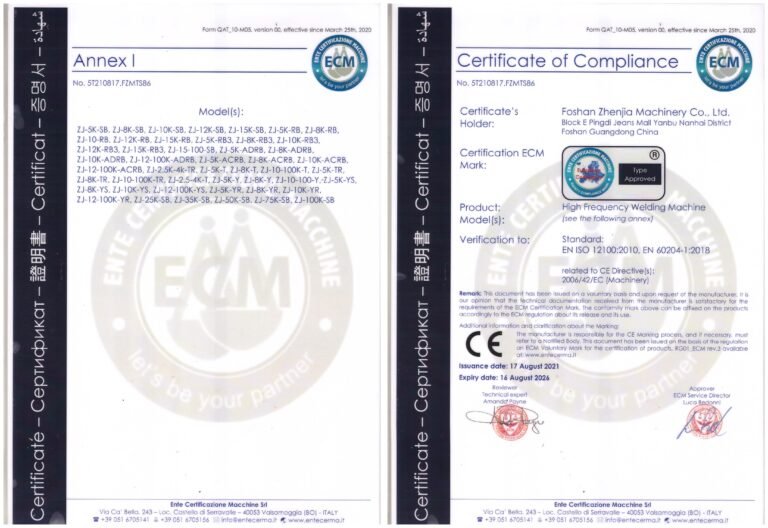
Validation turns a well-tuned HF welder into a regulatory-compliant production asset. Without it, even the most advanced RF welding process validation delivers nothing more than unverifiable output. Regulators view an unvalidated process as an uncontrolled process. This guide walks through the three-phase framework—Installation Qualification, Operational Qualification, and Performance Qualification—that satisfies ISO 13485, FDA 21 CFR Part 820, and the expectations of notified bodies across Southeast Asia’s growing medical manufacturing sector.
Why HF Welding Demands Formal Process Validation
Thermal welding processes occupy a special category in medical device regulation. The final seam quality cannot be verified by inspection alone. You cannot look at a sealed blood bag and know it will hold pressure through centrifugation. You cannot measure a drainage pouch seam and predict its behavior after ethylene oxide sterilization. These are processes where the output must be validated through control of the inputs.
An IQ OQ PQ HF welder protocol addresses this uncertainty systematically. Installation Qualification confirms the machine arrived intact and operates within its design specifications. Operational Qualification maps the safe, effective parameter ranges for each material and product configuration. Performance Qualification proves the process runs stably under real production conditions. Together they form the evidentiary backbone that auditors expect.
Southeast Asian medical manufacturers face particular scrutiny here. Export markets in Europe and North America send auditors to inspect Thai, Vietnamese, and Malaysian facilities directly. A complete validation package demonstrates that the production line, wherever it sits geographically, meets the same standards as one in Germany or the United States.
Installation Qualification: Documenting the Machine from Day One
IQ establishes the foundation. A medical device welding machine validation package begins the moment the equipment enters the facility, not the moment the first product is welded.
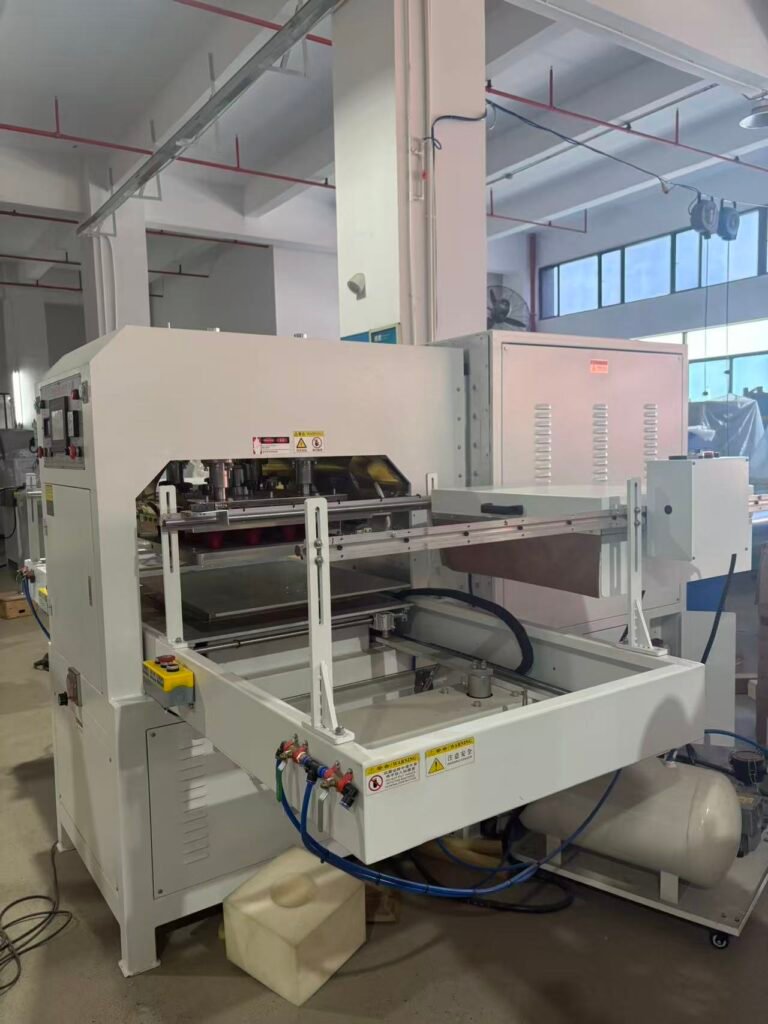
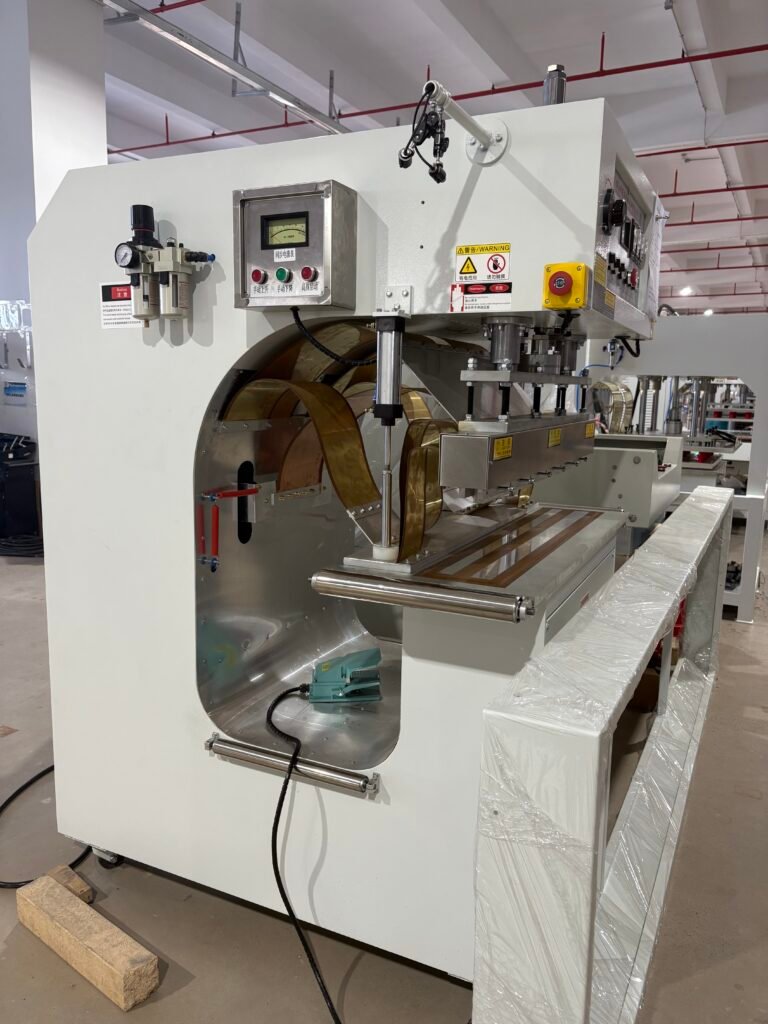
The installation protocol verifies physical completeness. Every component on the packing list must be accounted for, including dies, cables, cooling hoses, and documentation. The machine serial number, generator model, and PLC firmware version all enter the validation record. Photographs capture the as-installed condition from multiple angles.
Utility connections demand documented verification. Electrical supply voltage, phase balance, and grounding resistance must match the manufacturer’s specifications. A loose ground connection that creates arcing later will trace back to an incomplete IQ if the resistance measurement was never taken. Cooling water flow rate, inlet temperature, and chiller capacity all require measurement and recording. Pneumatic supply pressure and air quality confirm the press actuation system receives clean, dry air at the specified pressure.
Calibration status extends to every instrument the machine uses for process control. The RF power meter, the temperature sensors, the pressure transducer, and the cycle timer must carry current calibration certificates traceable to national or international standards. An instrument with an expired certificate invalidates the data it generates.
The IQ concludes with a documented operational check. Apply power, cycle the press without material, verify the RF generator produces output at a low power setting, and confirm all safety interlocks function correctly. Each check receives a pass or fail designation with the responsible technician’s signature and date. The completed IQ provides documented assurance that the HF welding machine medical validation journey starts from a known, controlled baseline.
Operational Qualification: Defining the Process Window
Operational Qualification answers a specific question. What parameters produce acceptable welds, and what are the boundaries beyond which quality degrades? This phase requires deliberate, methodical testing designed to challenge the process.
The OQ protocol for an RF welding process validation typically employs a designed experiment approach. Select three to five power levels spanning the expected operating range. Run replicate welds at each setting while holding time and pressure constant. Measure peel strength, visual appearance, and seal integrity for each sample. Plot the results. The acceptable range is the power band that produces consistent, specification-meeting seals with comfortable margins to the failure edges.
Repeat the same exploration for weld time, holding power and pressure at their center points. Then repeat for pressure, holding power and time constant. Multi-variable interactions require testing combinations near the corners of the parameter space. A power setting that works at 3 seconds might scorch the material at 4 seconds, or the same power that seals at 5 bar pressure might produce a weak seal at 4 bar.
Material variability enters the OQ at this stage. Test each material lot separately if the product uses multiple film sources. Verify that the parameter window accommodates the thickness tolerance range of incoming material. A window that only works with film at the minimum thickness specification will fail when the next shipment arrives at the maximum thickness.
Challenge testing pushes the process to its limits. Weld samples at the upper and lower edges of the established window and subject them to the full sterilization cycle the product will encounter. Ethylene oxide exposure, gamma irradiation, or steam autoclaving all stress the seal. A parameter set that produces beautiful welds on the bench but fails after sterilization needs to be narrowed or rejected.
Output from the OQ includes traceable records for every test run. Power settings, times, pressures, and temperature readings pair with the corresponding peel test results, visual inspection notes, and seal integrity outcomes. A signed summary report defines the approved operating window for each product configuration. This document becomes the controlling reference for production.
Performance Qualification: Proving Stability Under Production Conditions
Performance Qualification moves from the laboratory bench to the production floor. The question shifts from can the process make good parts to will the process keep making good parts, shift after shift, operator after operator.
PQ runs representative production batches under normal operating conditions. Operators load material, trigger cycles, and handle finished product as they will during routine manufacturing. The batch size should be large enough to expose any drift or instability. Three separate runs on three separate days provides statistical confidence and addresses the variability introduced by shift changes, equipment warm-up cycles, and ambient temperature swings.
Every sample in the PQ batch undergoes the full inspection protocol. Visual examination under magnification checks for scorching, pinholes, delamination, or incomplete fusion. Peel testing on a defined sampling frequency provides quantitative strength data. Pressure decay or burst testing on finished assemblies confirms hermetic integrity. The inspection data compiles into control charts that demonstrate process stability.
A stable process shows random variation around a central mean within the established control limits. A process trending upward in peel strength may indicate electrode contamination building up. A process trending downward may signal generator aging or cooling degradation. The PQ must run long enough to detect these patterns if they exist.
The completed PQ package includes the production run data, the inspection results, the control charts, and a signed conclusion that the process operates in a state of control. It also includes the approved standard operating procedure, which locks in the validated parameters and the inspection requirements. Any future parameter change outside the validated window triggers a re-validation requirement.
Parameter Traceability: The PLC as a Compliance Asset
Modern medical HF welding machines integrate data logging deeply into the control architecture. A PLC controlled HF welder captures the actual power, time, and pressure delivered during every single weld cycle. This record is not a selected average or a best-case snapshot. It is the complete cycle-by-cycle history of the machine’s output.
Traceability links this cycle data to individual product units. A barcode scanner at the welding station assigns a unique identifier to each finished pouch or bag. The identifier writes to the data log alongside the weld parameters that produced it. Three years later, when a hospital reports a leaking blood bag, the manufacturer queries the database and retrieves the exact power curve, seal time, and press force that formed that specific seal.
Auditors value this traceability highly. They expect to see a clear chain connecting a finished product, through its batch record, to the validated process parameters that produced it. A paper logbook filled in by operators does not satisfy this requirement in modern medical manufacturing. Automated electronic records with user access controls and audit trails do.
The same data stream supports ongoing process monitoring. Statistical process control software reads the cycle data directly from the HF welder data logging PLC and flags any parameter drift before it approaches the validated window boundary. The production line catches the problem in minutes, not in the next batch inspection.
Southeast Asian Medical Manufacturing Context
Thailand, Malaysia, Vietnam, and Indonesia have all invested heavily in medical device manufacturing capacity over the past decade. These facilities produce everything from examination gloves to complex fluid management systems, and the quality requirements match those of any European or North American factory.
A medical device welding machine validation process conducted in Bangkok or Ho Chi Minh City must meet the same ISO 13485 and FDA requirements as one conducted in Stuttgart or Minneapolis. Notified body auditors from Europe and FDA inspectors from the United States travel to Southeast Asian facilities regularly. They review validation packages with the same scrutiny they apply anywhere else.
Local infrastructure realities sometimes influence validation planning. Electrical supply stability varies by industrial zone. A voltage sag during a weld cycle changes the delivered power. The OQ should include power line disturbance testing or, alternatively, the machine should include a line regulation circuit that maintains consistent output despite input fluctuations. Factory ambient temperature and humidity swing more widely in tropical environments. The PQ must run during the hottest part of the day and the most humid season to prove the process tolerates these conditions.
Summary Validation Sequence
A complete validation follows a logical progression that builds each phase on the one before it. IQ confirms the machine is installed correctly and ready to operate. OQ defines the parameter window that produces acceptable product. PQ proves that window works consistently under production conditions. Each phase generates documented, signed records. Each phase must complete successfully before the next begins.
The completed validation package forms a permanent part of the device master record. Any future change to the machine, the tooling, the material, or the parameters triggers a review against the original validation. Minor changes may require only a documented justification. Major changes demand a full or partial re-validation.
A HF welding machine medical validation is not a one-time paperwork exercise. It is the documented proof that a critical sealing process operates under control, every cycle, every shift, for every patient who depends on the product. Medical device manufacturers who treat validation as a compliance burden miss the point. Those who treat it as an engineering discipline gain regulatory confidence, production efficiency, and the peace of mind that comes from knowing exactly what their machines are doing. The auditors appreciate it. More importantly, the patients never have to think about it at all.