 TEL +86-13923172919
Entry Level RF Welding Machine Guide: How a Manual High Frequency Welder Meets Small Production HF Welding Needs
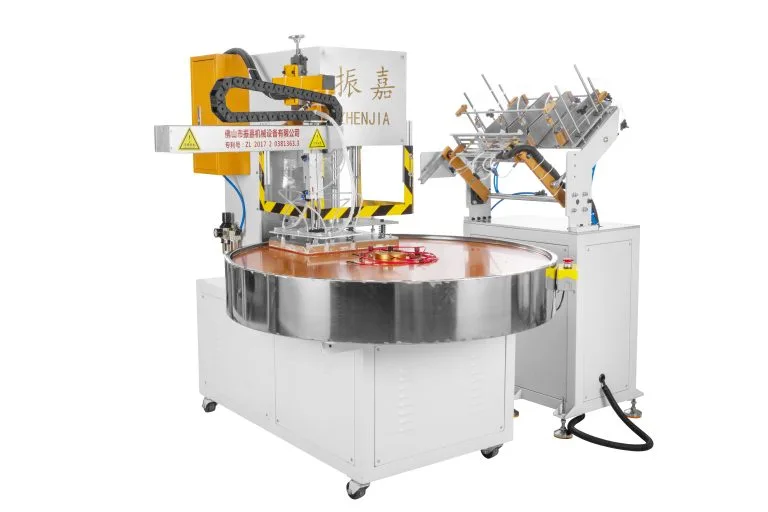
A high frequency welding machine for small business does not need to fill a shipping container. It does not need a six-station rotary table or a robotic loading arm. It needs to weld your product reliably, switch to the next job in minutes, and fit within a budget that leaves room for growth. For most low-volume manufacturers, that definition points directly to a manual push plate machine.
Confusing the needs of a startup with the needs of a mass producer leads to expensive mistakes. An oversized machine burns capital that could fund materials, marketing, or a second product line. An undersized machine cannot weld the product at all. The right low volume HF welder sits precisely at the intersection of capability and affordability.
This guide examines why the entry level RF welding machine category, specifically the manual push plate configuration, matches the realities of small-batch production. It covers the investment threshold, the flexibility advantage, and the practical questions to ask before buying.
Why Small Batch Production Rejects Automation
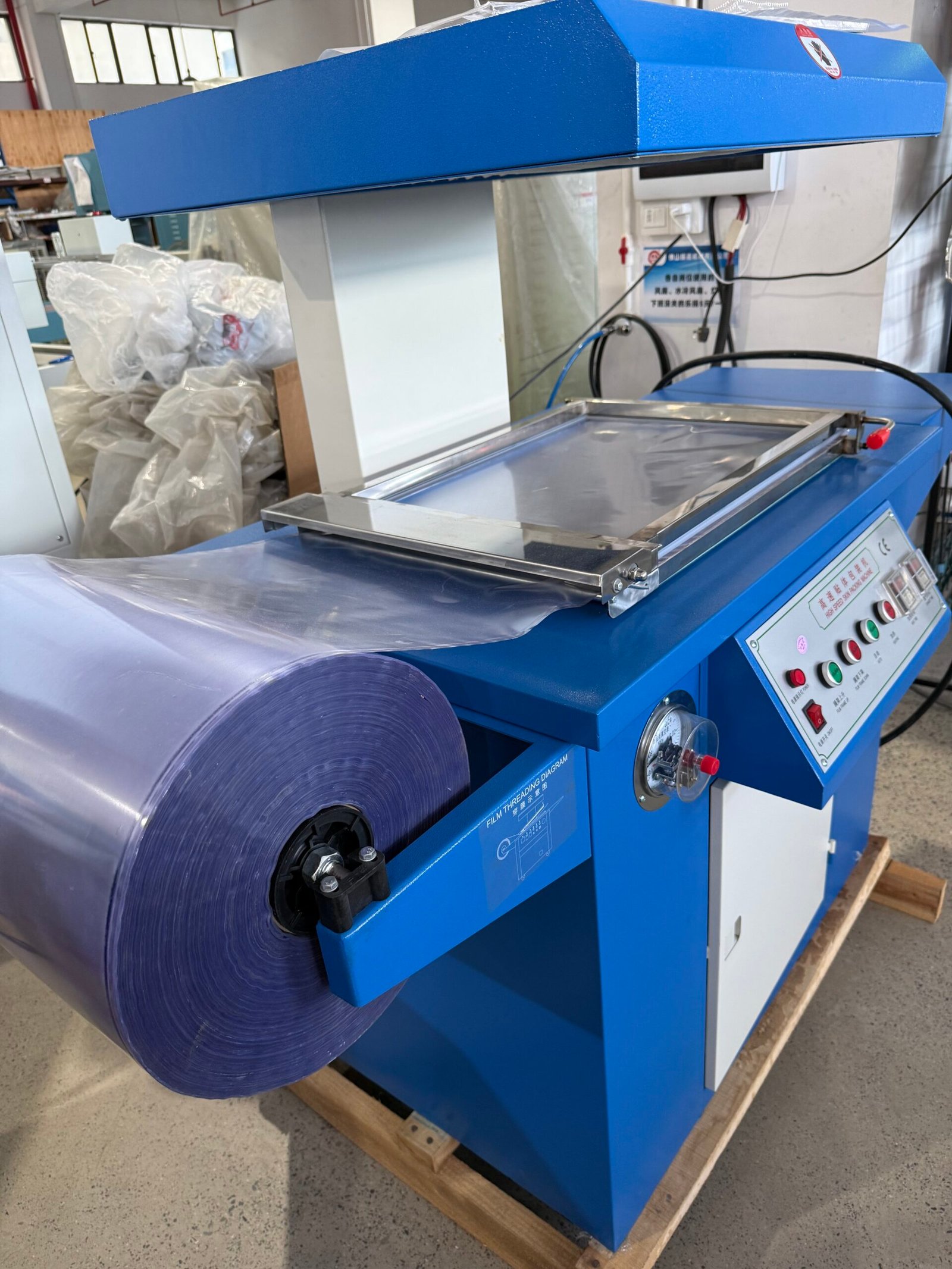
A fully automatic welding cell excels at making the same part thousands of times without variation. A small business rarely operates under those conditions. A contract manufacturer may run medical pouches on Monday, luggage tag sleeves on Wednesday, and prototype automotive trim on Friday. Each product demands a different die, different material, and different welding parameters.
Automated feeding and ejection systems designed for one product become obstacles when the product changes. The time required to reconfigure an automated line between jobs eats away the speed advantage it was bought to provide. A machine that spends more time being adjusted than welding is not an asset. It is a bottleneck.
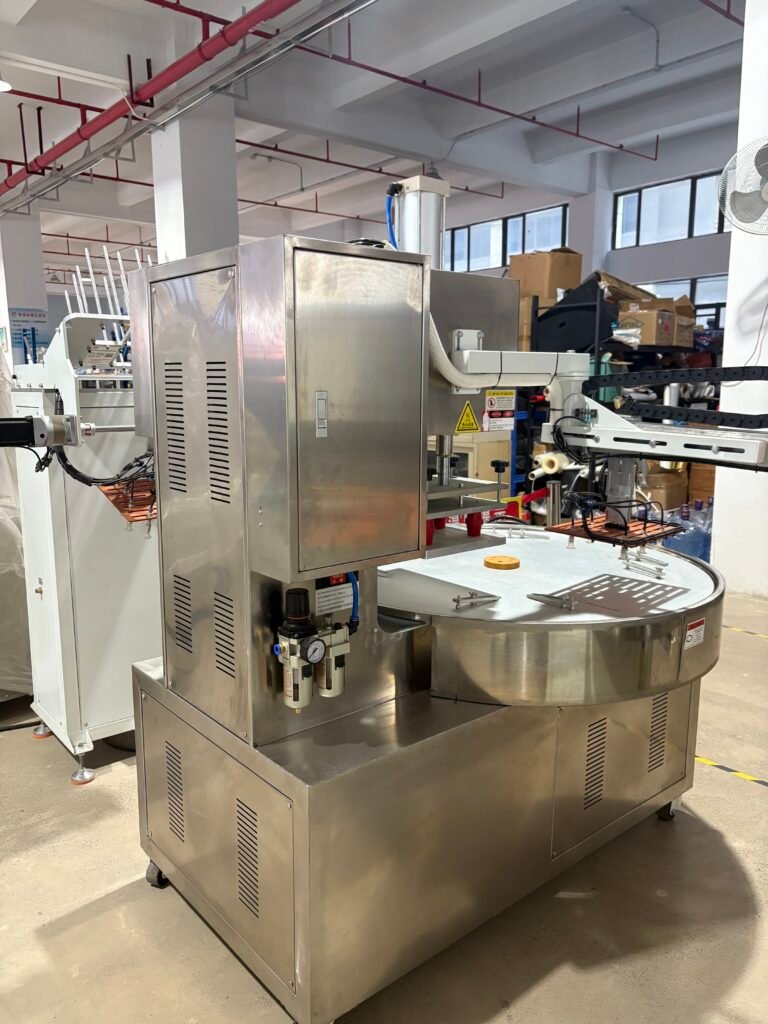
Space and power infrastructure also favor simplicity. A small production HF welding setup often occupies a corner of a workshop rather than a dedicated industrial bay. A compact manual machine plugs into a standard outlet or a modest three-phase supply. It does not demand compressed air lines, chilled water loops, or reinforced flooring. This infrastructure advantage lowers the true cost of getting started well below the machine price alone.
The Manual Push Plate Machine: Designed for Flexibility
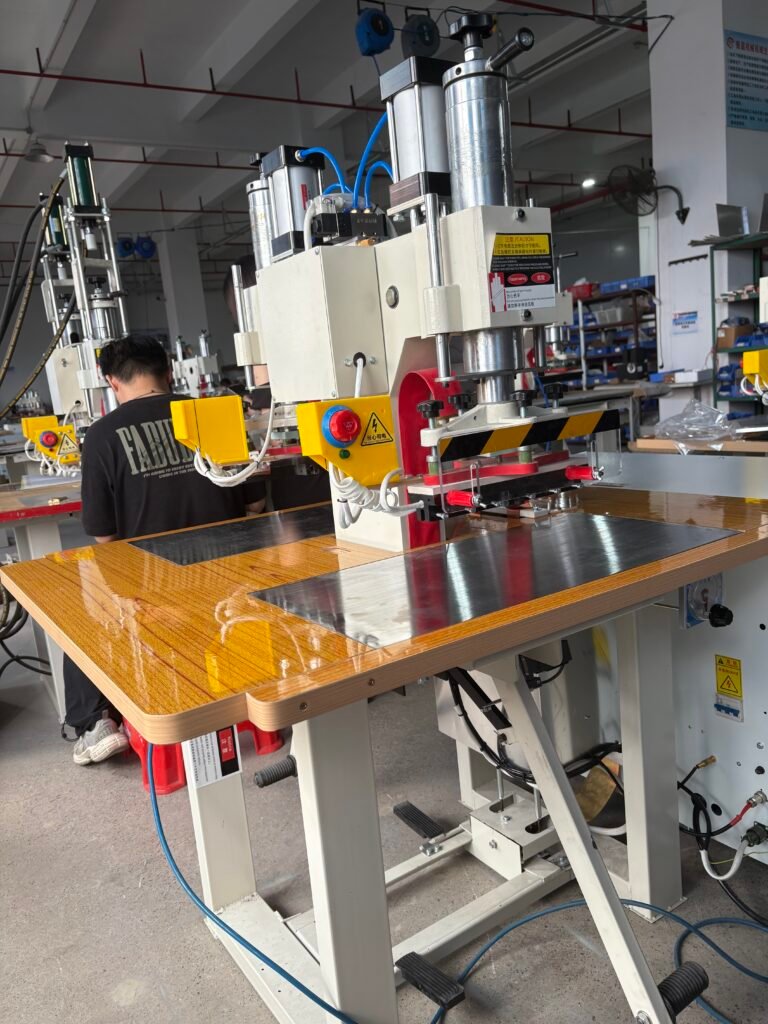
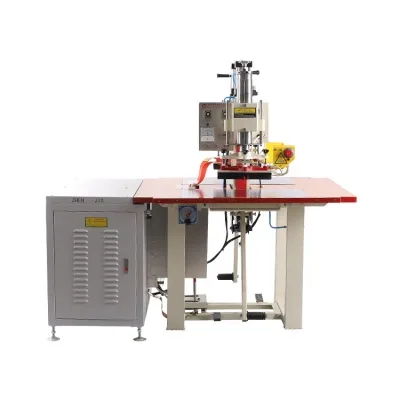
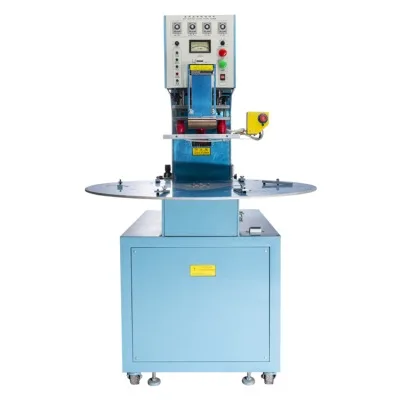
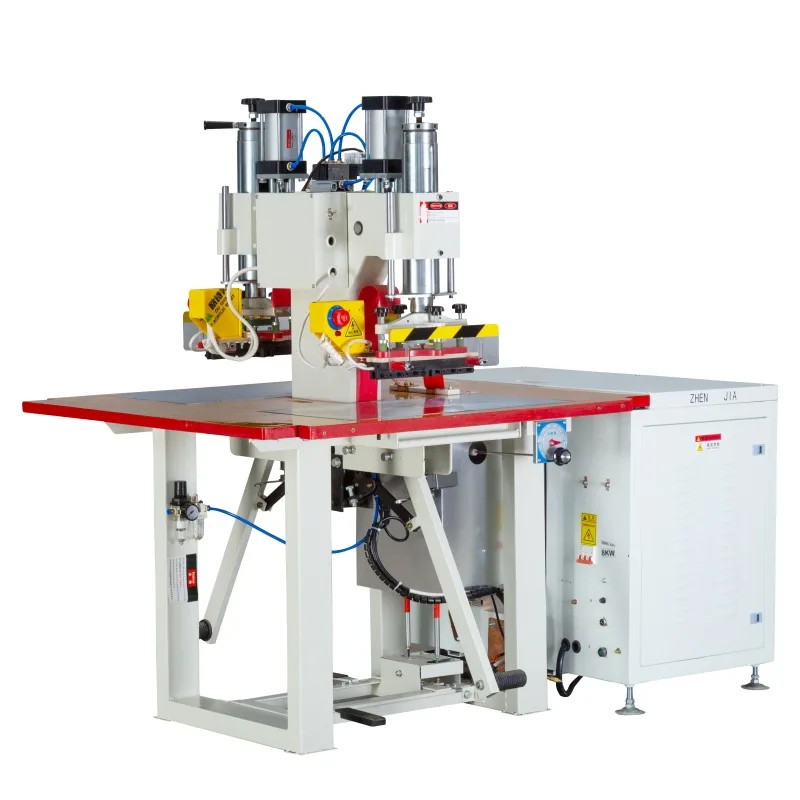
A manual high frequency welder built around a push plate configuration is the simplest and most adaptable HF welding system available. The operator places the material and the die onto a sliding tray. The tray is pushed into the press manually. The operator activates the cycle with two palm buttons. The press closes, the weld completes, the press opens, and the operator pulls the tray back out.
No conveyors feed material in. No pneumatic cylinders push finished parts out. The operator controls every step. For low-volume production, this manual control is a feature rather than a limitation. It allows the same machine to weld a thin PVC card holder at 2kW and a thick reinforced tarp seam at 8kW simply by changing the die and adjusting the settings.
Tooling changeover on a push plate machine takes minutes. The operator lifts out the old die, places the new die onto the tray, and loads the new recipe on the control panel. No automated guides need repositioning. No robotic pickup points need reprogramming. A small business that runs ten different products can switch between them as fast as the operator can physically change the tooling.
related product
The Investment Threshold: What an Entry-Level Machine Actually Costs
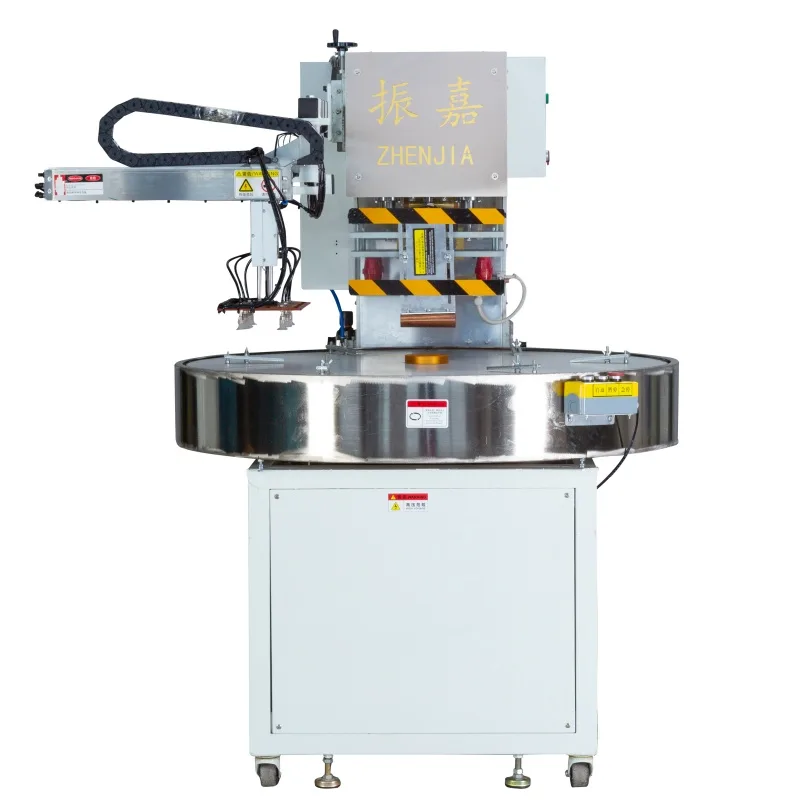
The entry level RF welding machine market starts at a price point accessible to small businesses and startups. A basic 5kW push plate HF welder from a reputable manufacturer typically ranges from $5,000 to $12,000. An 8kW unit, which offers more power for thicker materials and larger seals, ranges from $8,000 to $18,000. These prices include the generator, the press, and basic timer or PLC controls.
European-branded machines sit at the higher end of these ranges. Chinese-built machines sit at the lower end. The difference reflects component sourcing, certification levels, and brand positioning. A small business with CE certification requirements for export must factor certification into the budget.
Tooling costs add to the initial investment but remain manageable. A simple flat sealing die costs a few hundred dollars. A more complex tear-seal die with a cutting edge costs somewhat more. For a typical small business starting with three to five product types, total tooling investment stays well under the machine purchase price.
The total cost of ownership for a manual push plate machine rewards the budget-conscious owner. There are no oscillator tubes to replace if a solid state generator is chosen. There are no complex automation components to maintain. The electricity consumption is modest. A well-maintained manual machine delivers dependable service for decades with minimal additional investment.
Flexible Tooling: The Real Profit Center for Small Production
Flexibility determines profitability in low-volume manufacturing. A job shop that can accept a 500-piece order, set up the tooling in 10 minutes, and run the batch in an afternoon captures business that high-volume shops reject. The push plate machine is the tool that enables this agility.
Die storage and organization become important as the product range grows. A small business should budget for a die rack, protective covers for each die, and a clear labeling system. A die that takes an hour to find is a die that costs more in lost time than in original purchase price. A well-organized tooling library turns the manual high frequency welder into a multi-product production center.
The machine itself must accommodate different die sizes. The platen area should be large enough for the largest product the business reasonably expects to weld. A 300-millimeter by 400-millimeter platen handles most small to medium products. If larger products are part of the plan, specify a larger platen upfront. Retrofitting a larger platen later is rarely cost-effective.
Selecting Power, Controls, and Cooling for a Small Business Machine
Power selection follows the same principles described in the power selection chapter earlier in this series. A small business welding thin PVC films for stationery or light packaging will find a 5kW machine more than adequate. Adding automotive interior trim or heavier medical pouches pushes the requirement toward 8kW.
Controls matter even on an entry-level machine. A basic PLC with recipe storage eliminates setup errors and speeds changeovers. The operator selects the product name and the machine loads all parameters. This feature pays for itself quickly when multiple products run on the same machine. Manual tuning knobs require the operator to find the sweet spot by feel. Automatic tuning, available on some solid state machines in this class, removes that variable entirely.
Cooling demands attention even in low-volume use. A self-contained air-cooled machine suits intermittent operation perfectly. Water cooling becomes necessary when the duty cycle increases or when the machine runs for hours without pause. A small business starting with a few hours of welding per day can often operate successfully with air cooling and upgrade cooling capacity as volumes grow.
The Operator Factor: Skill, Training, and Safety
A push plate machine depends on operator skill more than an automated system does. The operator sets the material position, controls the cycle, and inspects the result. This dependence is a strength when the operator is well-trained. It becomes a weakness when training is neglected.
Every operator must complete safety training specific to HF welding. The risks of RF burns, crush injury, and electromagnetic exposure are real. The safety chapter in this series covers them in detail. A small business owner who also operates the machine must hold themselves to the same safety discipline as an employee would.
Skill development follows a natural curve. The first few hundred cycles build familiarity with the machine’s behavior. The operator learns how different materials respond to power and time adjustments. After a few thousand cycles, the operator develops an intuitive feel for what a good weld looks and sounds like. This accumulated skill is a genuine business asset. It allows the small shop to take on challenging materials and complex tooling that a less experienced operator would struggle with.
When a Small Business Should Consider Moving Up
A low volume HF welder serves a business well until the volume stops being low. The signal to upgrade is persistent pressure on production capacity. When the machine runs a full shift and cannot keep up with orders, a second manual machine or an upgrade to a shuttle configuration becomes the logical next step.
Adding a second push plate machine often makes more sense than replacing the first one. Two machines provide redundancy. If one machine needs maintenance, the other continues producing. Two machines also allow two different products to run simultaneously. This flexibility preserves the small-shop agility that built the business while increasing total output.
An upgrade to a shuttle machine offers higher throughput without full automation. The shuttle configuration uses two trays. The operator loads one tray while the other welds. This overlapping workflow nearly doubles output per operator hour. It is the natural next step for a business that has outgrown a single manual station but still values flexibility over dedicated automation.
The Right Start for the Right Price
A high frequency welding machine for small business does not need to be the most advanced machine in the catalog. It needs to weld your products correctly, change over quickly, and fit within a realistic startup budget. A push plate manual HF welder satisfies all three requirements.
The entry-level machine that looks modest on the specification sheet often becomes the profit center of a growing business. It takes on the small jobs that big shops reject. And It adapts to new products without engineering support. It teaches its operator the craft of HF welding through daily hands-on experience.
Start with the machine that fits your current products and your current space. Add tooling as new orders come in. Maintain it carefully. When the order book outgrows the machine, add a second one or step up to a shuttle system. The path from startup to established manufacturer runs straight through the manual push plate machine. It always has.