 TEL +86-13923172919
Rotary High Frequency Welding Machine: How It Works, Key Uses, and What to Look for in 2026
A rotary high frequency welding machine solves one of the biggest challenges in high-volume plastic welding: keeping the production line moving without sacrificing weld quality. Instead of stopping and starting between cycles, the machine uses a rotating turntable to move materials continuously through the welding station. The result is faster output, lower labor demand, and consistent welds across every shift.
This guide covers how rotary HF welding machines work, which industries rely on them, and what to look for before you buy.
What Is a Rotary High Frequency Welding Machine?
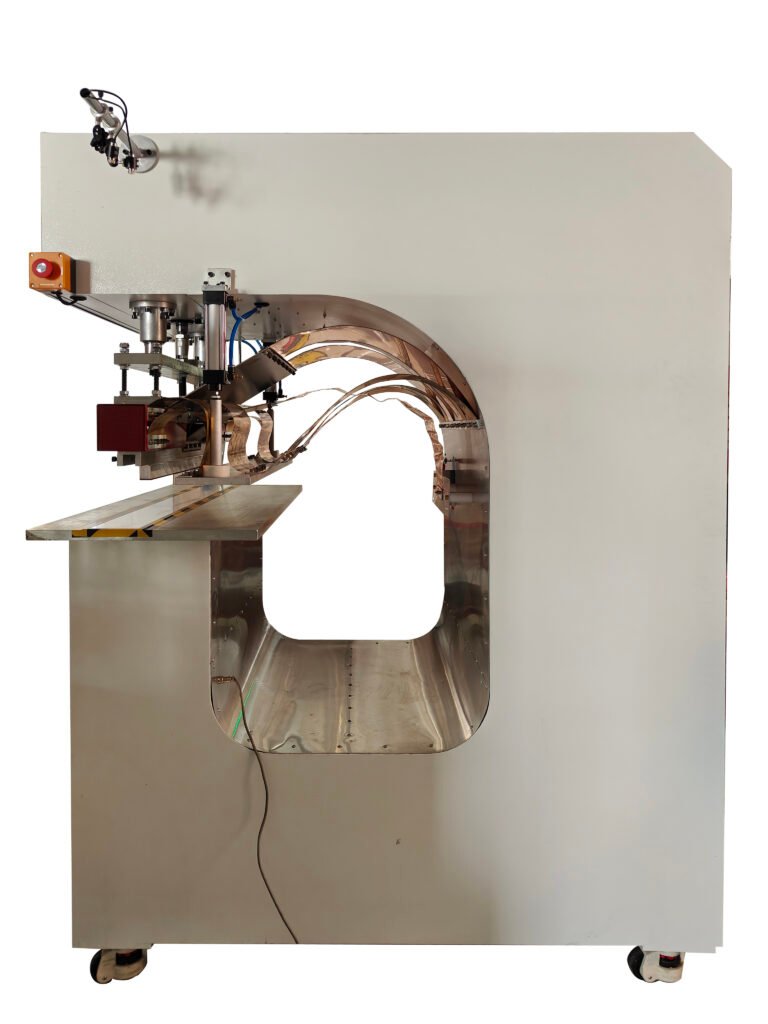
A rotary high frequency welding machine — also called an RF welding turntable machine or rotary table HF welder — is an automated version of standard high frequency welding equipment. It uses the same electromagnetic energy at 27.12 MHz to bond polar thermoplastics from the inside out. The key difference is the delivery system.
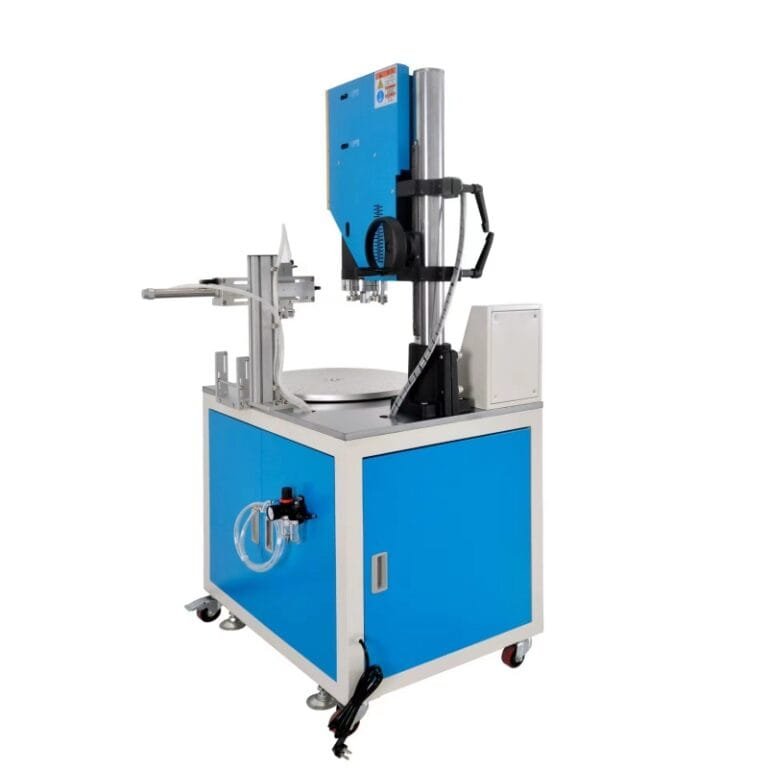
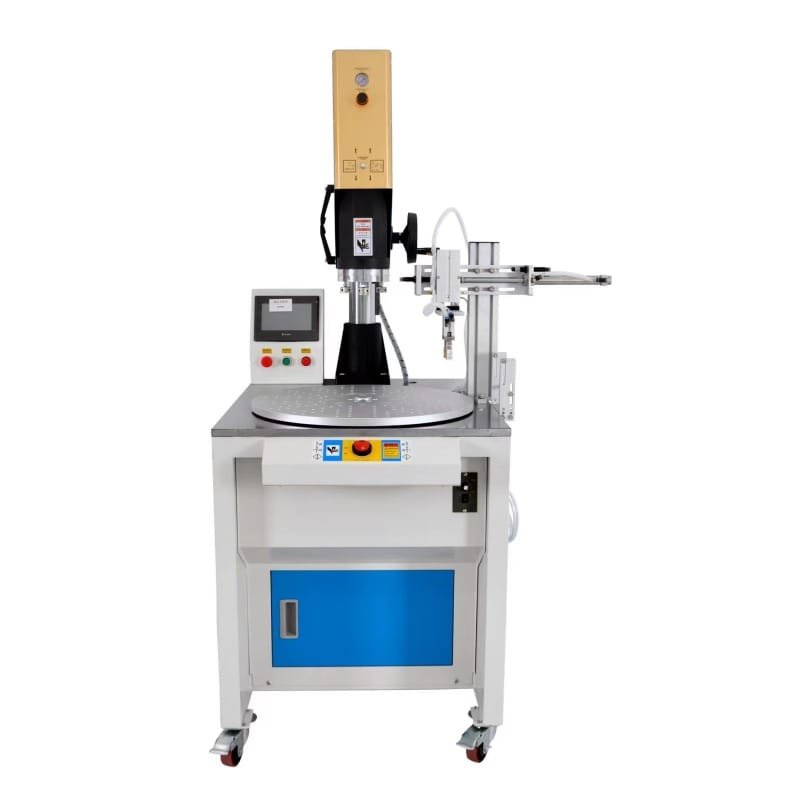
Instead of a single fixed press, the machine mounts multiple workstations on a rotating turntable. Each station holds a set of welding dies. As the table rotates, each station passes under the HF electrode in sequence. One station welds while operators load and unload material at other stations simultaneously. The machine never sits idle between cycles.
This design eliminates the downtime that single-station shuttle welders produce. It effectively doubles or triples output without requiring additional machines or floor space.
How Does a Rotary HF Welding Machine Work?
The process combines continuous rotary motion with precisely timed HF energy pulses. Here is how each cycle runs.
Step 1 – Material loading. An operator places thermoplastic materials into the die on one of the open stations. The turntable positions each station within easy reach, so loading stays fast and ergonomic.
Step 2 – Table indexes forward. A PLC-controlled indexing unit rotates the table one position. The loaded station moves under the upper electrode. Positioning is precise — an index mechanism locks each station accurately into the weld position every time.
Step 3 – Welding cycle begins. The pneumatic or hydraulic press drives the upper electrode down onto the workpiece. The HF generator activates and sends electromagnetic energy through the material. Polar molecules inside the plastic vibrate rapidly, generating internal heat. The layers fuse under pressure.
Step 4 – Cooling under pressure. The press holds the welded part in place while it cools. This step solidifies the bond and prevents distortion. The cooling time is programmable through the PLC control panel.
Step 5 – Table indexes again. While the weld cools, the table rotates the next loaded station into position. The cycle repeats continuously. At no point does the machine wait for an operator to remove a finished part before starting the next weld.
Step 6 – Unloading. The operator removes the finished part and reloads the station. Because multiple stations exist on the table, loading and unloading happen in parallel with active welding — not between cycles.
The number of stations on the turntable typically ranges from two to eight. More stations allow longer dwell time per station, which suits thicker materials or complex die shapes that need extended weld and cooling cycles.
Rotary vs. Shuttle HF Welding Machines
Shuttle and rotary machines use identical HF welding technology. The difference lies entirely in how they handle material flow.
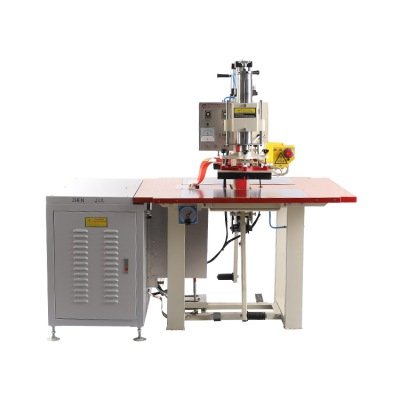
Shuttle HF welders use a flat plate that slides in and out of the welding station. The operator loads the die, slides it under the electrode, runs the weld cycle, then slides it back out to unload. Each cycle requires the press to stop completely before the next part can be loaded.
Rotary HF welders eliminate that stop-and-wait step. Because loading and welding happen at different stations simultaneously, the machine runs continuously. Cycle time per part drops significantly — often by 40 to 60 percent compared to equivalent single-station shuttle welders.
Shuttle machines suit lower-volume runs, prototype work, and products with long weld cycles that do not benefit much from parallel operation. Rotary machines suit high-volume mass production where output rate and labor efficiency are the priority.
Industries and Applications
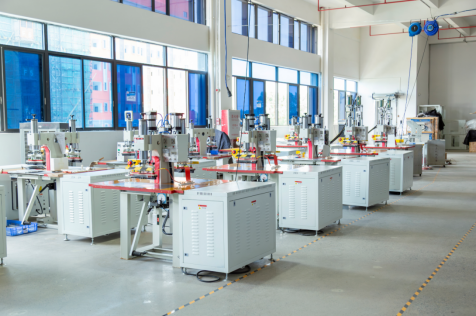
Rotary high frequency welding machines appear across any industry that needs fast, repeatable thermoplastic bonding at high volumes.
Stationery and office products. Ring binders, document wallets, file folders, and ID card holders all run efficiently on rotary HF welding lines. The consistent cycle time and accurate die positioning produce uniform products at high speed with minimal operator involvement.
Packaging. Blister packs, clamshell retail packaging, and promotional display packaging benefit from the rotary machine’s ability to sustain high output rates. The clean, precise seals the machine produces meet the aesthetic demands of retail-facing products.
Automotive interiors. Car seat covers, door panel inserts, sun visors, and decorative trim pieces require consistent, stress-resistant welds. Rotary HF welders produce these seams efficiently and hold tight tolerances across long production runs.
Medical devices. Blood bags, fluid pouches, and medical packaging require airtight seals that meet strict quality standards. The automatic rotary RF welder reduces human variability and supports validated, repeatable processes — both critical in regulated production environments.
Footwear and leather goods. PVC-coated synthetic leather used in shoes, bags, and wallets welds cleanly using HF technology. Rotary table welders handle the high volumes that footwear production demands without slowing the line.
Inflatable products and sporting goods. Inflatable toys, sports equipment, and promotional inflatables need airtight, high-strength seams. The continuous operation of rotary welders keeps pace with the volume requirements of these product categories.
Promotional and advertising items. Badges, embossed PVC products, and branded merchandise often run on rotary HF lines because the machine handles small, repeated items at high speed with minimal setup time between runs.
Key Features of a High-Performance Rotary HF Welding Machine
PLC control system. A programmable logic controller manages every aspect of the cycle — weld time, cooling time, table rotation speed, press force, and power output. PLC control makes it easy to store settings for different products and switch between jobs quickly.
Adjustable table speed. The rotation speed of the turntable must match the weld and cooling time required by each product. Good machines offer multiple speed settings and smooth, stepless adjustment. This flexibility allows one machine to run both fast, thin-film products and slower, thicker-material applications.
Multi-station design. More stations mean more parallel processing. A four-station rotary welder allows one station to weld, one to cool, one to unload, and one to load — all at the same time. This maximizes utilization of every second the machine runs.
Arc protection system. A sensitive spark suppressor cuts HF power instantly if arcing is detected. This protects the dies, the workpiece, and the HF generator components. It is especially important in continuous-operation machines where a single arc event could affect multiple parts in quick succession.
Automatic tuning system (ATS). An ATS continuously monitors and adjusts impedance matching between the generator and the electrode during operation. This stabilizes the weld process, reduces the risk of arcing, and ensures consistent power delivery to every part — regardless of minor variations in material thickness or die temperature.
Solid-state HF generator. Modern rotary HF welders increasingly use solid-state generators with IGBT or MOSFET technology instead of traditional vacuum tube oscillators. Solid-state systems offer up to 50 percent better energy efficiency, tighter frequency stability, and lower long-term maintenance costs. They reduce arcing risk through better power control — a significant advantage in a machine running continuous automated cycles.
Compatible materials. A well-built rotary PVC welding machine handles PVC, PU, TPU, PEVA, PET-G, EVA, nylon, and some ABS grades. Note that nylon and PET require preheating before the HF welding cycle begins. Always confirm material compatibility with the manufacturer before configuring the machine for a new application.
How to Choose the Right Rotary HF Welding Machine
Define your production volume first. Rotary machines justify their higher upfront cost when output volume is high enough to benefit from continuous operation. If you run fewer than a few hundred parts per shift, a shuttle machine may be more cost-effective. If your line runs thousands of parts per shift, a multi-station rotary HF welder is the right tool.
Match station count to your cycle time. Calculate your weld time plus cooling time per part. Then choose a station count that keeps the table moving efficiently. If your total cycle per part is 6 seconds and the table indexes every 2 seconds, a three-station machine keeps pace perfectly. Overbuilding station count wastes capital; underbuilding creates bottlenecks.
Confirm generator power output. Power requirements depend on weld area size and material thickness. Larger die surfaces and thicker materials need more power. Machines typically range from 5 kW to 30 kW for rotary applications. Ask the supplier to calculate the recommended power level for your specific product before you order.
Evaluate the indexing precision. The positioning accuracy of the turntable directly affects weld quality. Poor indexing causes the die to land off-center, producing inconsistent seams. Look for machines with mechanical index locks or servo-controlled positioning that deliver repeatable accuracy within fractions of a millimeter.
Check PLC flexibility and integration. A good PLC system stores multiple product programs, logs production data, and integrates with upstream or downstream automation — such as automatic feeders, vision inspection systems, or robotic unloaders. Ask whether the machine’s PLC supports standard industrial communication protocols if you plan to connect it to a wider production network.
Verify safety and compliance certifications. Machines sold into European markets must carry CE certification. Check for built-in HF leakage suppression, overload shutdown, and compliance with current electromagnetic compatibility standards. Proper shielding protects nearby equipment and meets workplace safety requirements.
Review after-sales support and spare parts availability. A rotary machine running 24/7 mass production cannot afford long downtime when a component fails. Choose a supplier that stocks critical spare parts locally or can deliver them quickly. Confirm that on-site technical support is available in your region.
Frequently Asked Questions
What is the main advantage of a rotary high frequency welding machine over a standard HF welder?
The rotary design allows loading, welding, and unloading to happen simultaneously at different stations. This eliminates the idle time that single-station machines produce between cycles and significantly increases output per hour without adding more equipment or floor space.
How many stations does a rotary HF welding machine typically have?
Most machines offer between two and eight stations. The right number depends on your weld and cooling cycle time. More stations allow longer processing time per station while keeping the machine running continuously — useful for thicker materials or complex die shapes that need extended cycles.
What materials can a rotary table HF welder process?
It works with all standard HF-compatible thermoplastics: PVC, PU, TPU, PEVA, PET-G, EVA, and certain grades of nylon and ABS. Nylon and PET require preheating before the weld cycle. Non-polar plastics such as polyethylene and polypropylene are not compatible with HF welding.
Can I change dies between different products on the same rotary machine?
Yes. Most rotary HF welders support quick-change die systems. You can swap dies between stations to run different product types on the same machine. Some designs also allow you to adjust the number of active stations to match shorter or longer product runs.
Is a rotary HF welding machine suitable for medical production?
Yes. The automatic rotary RF welder is widely used for medical bag manufacturing — including blood bags and fluid pouches — precisely because it delivers consistent, repeatable welds with minimal human variability. The PLC control system supports process validation and documentation requirements common in regulated production environments.
What is the difference between a solid-state and a tube-based rotary HF welder?
Tube-based machines use vacuum tube oscillators to generate high-frequency energy. They are proven and powerful but require periodic tube replacement and re-tuning. Solid-state machines use semiconductor technology to deliver more stable output, better energy efficiency, and lower long-term maintenance costs. For continuous automated operation, solid-state generators are the preferred choice in 2025.