 TEL +86-13923172919
High Frequency Welding vs. Ultrasonic Welding: Which Process Matches Your Material and Production Goals?
Choosing between high frequency and ultrasonic welding trips up many manufacturers. Both technologies join thermoplastics. Both promise fast cycles and clean seams. Yet they work on almost opposite sets of materials and suit very different weld geometries. Picking the wrong one guarantees weak bonds, slow output, and wasted capital.
A clear high frequency welding vs ultrasonic welding comparison cuts through the confusion. This guide walks you through the key decision points: material behavior under each process, how large a seam you can weld in one shot, relative speed and cost, and the real‑world products each technology builds. When you finish reading, the question of which welding method for PVC or any other plastic will have a straightforward, application‑specific answer.
How Each Process Heats the Joint
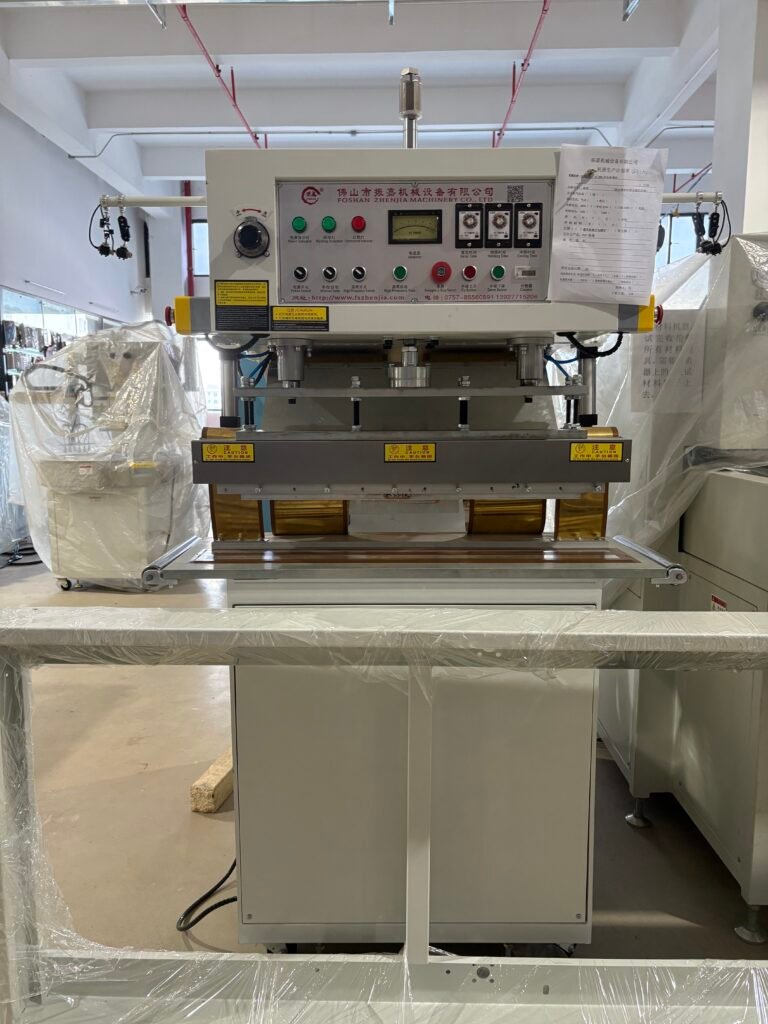
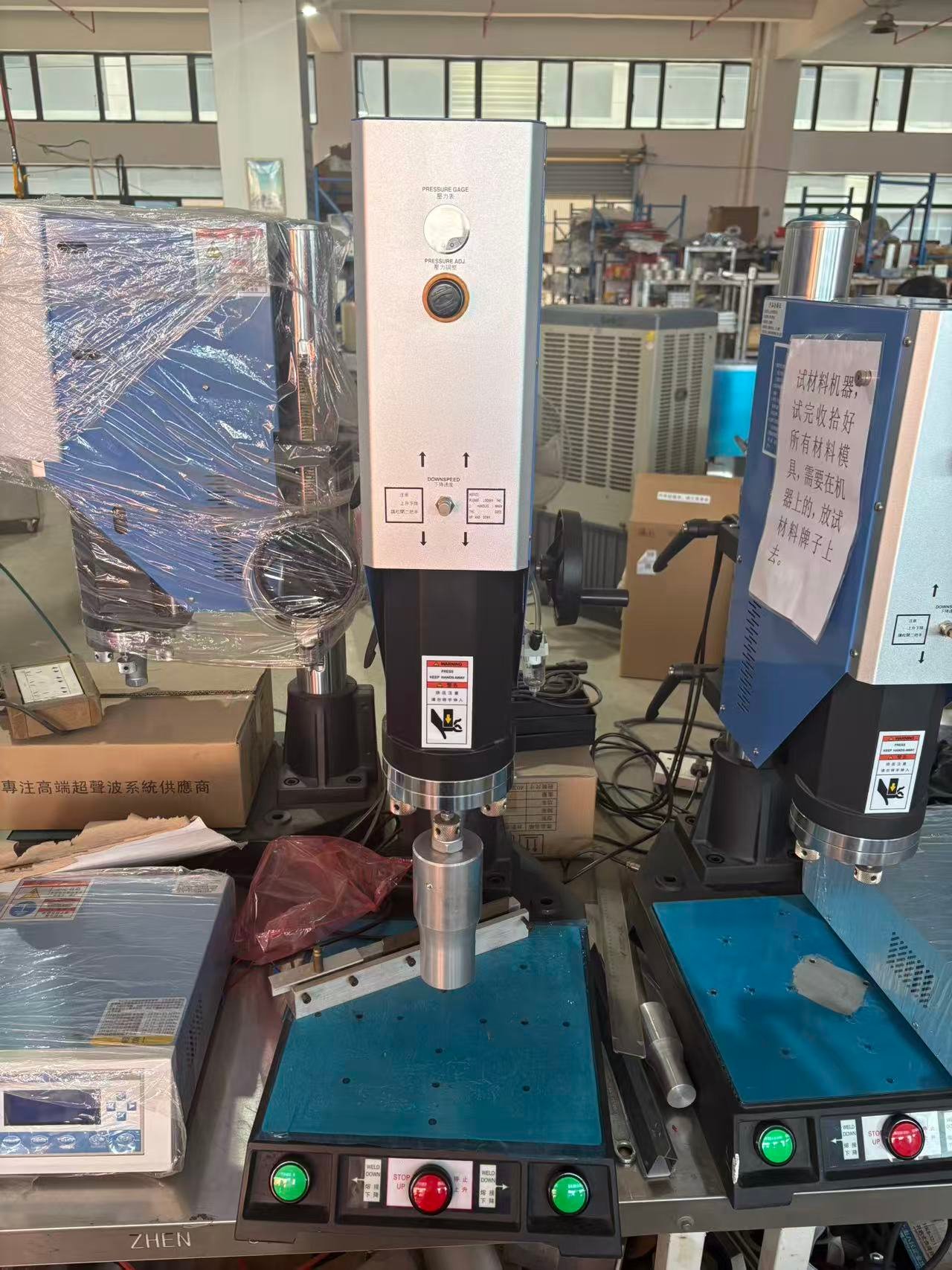
Start with the physics. High frequency welding, also called RF welding, places the material between two electrodes and applies a rapidly alternating electric field. Polar molecules inside the plastic vibrate and generate heat right through the thickness. The entire material stack warms up together. Ultrasonic welding, by contrast, presses a vibrating metal horn against the top layer. Friction at the interface between the two layers produces intense, localized heat. That heat then conducts outward from the joint line.
This basic difference dictates everything that follows. HF energy heats the whole cross‑section at once, which suits thicker stacks and continuous seams. Ultrasonic energy concentrates at the contact point, which works beautifully for spot welding but struggles when you need a long, airtight seal. Whenever you weigh RF welding or ultrasonic welding, return to this physical starting point.
Material Compatibility: The Decision Maker
More often than not, the material itself answers the HF vs ultrasonic plastic welding question before you check any other factor. The two processes handle nearly opposite material families.
High frequency welding demands polar thermoplastics. Flexible PVC is the star performer and sets the baseline for the whole technology. Polyurethane and TPU follow closely, needing a bit more power but delivering flexible, durable joints. EVA welds easily at lower temperatures. PETG responds well when you control the parameters tightly. Nylon and certain PET grades demand pre‑heating but remain within reach. Polyethylene, polypropylene, and polystyrene refuse to heat under RF energy, no matter how long you wait.
Ultrasonic welding thrives on rigid plastics that carry vibration efficiently. Polystyrene, ABS, polycarbonate, and acrylic fall into this camp. Polypropylene and polyethylene, the very materials HF cannot touch, join reliably with ultrasonics. Soft, flexible PVC and TPU absorb the mechanical vibration instead of passing it to the joint. They dampen the energy and starve the bond line of heat. That makes them poor ultrasonic candidates.
Draw a line through your bill of materials. If the product uses flexible PVC, PU, TPU, or EVA film, you need an HF welder. Parts molded from rigid polystyrene, ABS, polycarbonate, or polypropylene belong on an ultrasonic system. A company running PVC medical bags has no practical alternative to HF. One assembling polypropylene appliance housings has no alternative to ultrasonics. The material decides.
Weld Area and Geometry: Long Seams or Small Spots
A second sharp difference shows up when you examine weld size. This element of the HF vs ultrasonic welder comparison directly determines which products a machine can build economically.
High frequency welding handles continuous seams of nearly any length and shape that fit inside the press platen. One cycle welds the entire perimeter of a medical pouch, an inflatable boat tube, or a car door panel insert. Seal lengths measured in meters finish in seconds. The electric field heats the full die area evenly, so you can run a single cavity or a multi‑cavity layout with equal confidence.
Ultrasonic welding works best as a point‑contact or short‑line process. The horn delivers vibration across a limited footprint. Creating a long continuous seam requires either a rotating horn wheel that travels along the joint or multiple sequential spot welds. A 500‑millimeter seal that an HF machine finishes in one shot may need several ultrasonic cycles or a traversing system. Ultrasonic technology excels at spot welding, staking, inserting, and short linear welds. It does not replace HF for large‑area continuous sealing.
Cycle Speed and Real Throughput
Both technologies operate fast, but the comparison shifts depending on the job. High frequency welding delivers a complete seal area in a single 2‑ to 10‑second cycle. A standard PVC medical pouch welds in about 3 to 4 seconds, perimeter and internal dividers included. Thicker materials extend the time, but the whole part still finishes in one press stroke.
Ultrasonic spot welds happen in fractions of a second. A short linear seam might take half a second. Per‑weld, ultrasonic is quicker. When a product demands a long continuous seal, however, that per‑weld advantage fades. The ultrasonic system must either index and weld repeatedly or run a continuous feed, which brings the total processing time close to or past the HF cycle. Real throughput, measured in finished parts per hour, often favors HF for sealed pouches, bags, and inflatables.
Cost Comparison: Equipment, Tooling, and Operation
Your budget sees the two technologies quite differently, which makes cost a heavy factor in any HF vs ultrasonic welder comparison.
High frequency equipment costs more at the entry level. A basic 5kW push‑plate HF welder runs from $5,000 to $12,000. An entry‑level ultrasonic bench‑top unit starts between $2,000 and $5,000. The gap widens as you add power and automation. An automated HF cell carries a noticeably higher price tag than an automated ultrasonic station.
Tooling tells the opposite story. An HF sealing die is a machined block of brass or aluminum. An ultrasonic horn is a precision‑tuned resonant component that needs careful design and machining. Horns cost more than equivalent HF dies and are easier to damage through misuse. Over time, operating cost leans in HF’s favor for long continuous seams because one cycle does what would take multiple ultrasonic steps. Labor and energy per part drop as seam length grows. Ultrasonic operating cost dominates for spot welding and small‑part assembly where the lightning‑fast cycle boosts hourly output.
Real‑World Applications: Which Technology Goes Where
The final answer to which welding method for PVC and other materials plays out in factories every day. Specific industries belong naturally to one process or the other.
High frequency welding owns flexible medical packaging. Blood bags, IV bags, drainage pouches, and sterile barrier systems all depend on HF‑welded PVC and PU films. Long, continuous, airtight seals and proven regulatory acceptance put HF beyond ultrasonic’s reach in this space. Inflatable products follow the same logic. Air beds, life jackets, inflatable boats, and towables rely on leak‑proof perimeter seams that only HF can produce at production speed. Stationery goods such as binders, file folders, and ID card sleeves also sit squarely in HF territory due to their long seals and transparent PVC material.
Ultrasonic welding owns rigid plastic assembly. Automotive dashboards, appliance housings, consumer electronics, and medical device enclosures use ultrasonic spot welds, stakes, and inserts by the millions. The materials are rigid thermoplastics HF cannot weld. The welds are small and discrete rather than long continuous seams. Ultrasonics also dominate the nonwoven fabric world. Face masks, surgical gowns, and hygiene products join polypropylene nonwovens with ultrasonic energy. HF cannot touch polypropylene, so this massive industry belongs entirely to ultrasonics.
Many factories run both technologies side by side. A medical device maker might use HF for PVC fluid bags and ultrasonic for the rigid connectors that later assemble to those bags. Understanding both lets you pick the right tool for each component instead of forcing one technology to do a job it cannot handle.
A Decision Framework for Your Product
Work through four questions in order. The answers will point straight at the right technology.
Question one: what is the primary material? Flexible PVC, PU, TPU, or EVA points to HF welding. Rigid polystyrene, ABS, polycarbonate, polyethylene, or polypropylene points to ultrasonic welding. This single question resolves most cases instantly.
Question two: what does the weld look like? Continuous perimeter seals longer than about 100 millimeters favor HF. Spot welds, staking points, and short linear seams under 50 millimeters favor ultrasonics.
Question three: how many parts do you need to make? Low to medium volumes of varied products reward the flexibility of a manual push‑plate HF welder. High volumes of a single small rigid part reward an automated ultrasonic line.
Question four: what is your budget and facility setup? A startup with limited floor space often begins with an entry‑level HF welder for flexible film goods or a bench‑top ultrasonic unit for rigid parts. Let your budget and available power infrastructure guide the initial investment.
Two Technologies, Two Solutions
Think of high frequency welding vs ultrasonic welding as a division of labor, not a competition. Each technology solves problems the other leaves on the table. A factory that runs PVC medical bags needs an HF welder. One that runs polypropylene appliance housings needs an ultrasonic welder. The smart manufacturer understands both, invests in the one that fits today’s products, and builds a relationship with a supplier who can deliver the other when the product line expands.
Choose the process that matches your material. Size the machine to your weld area and volume. Then let the machine do what it was built to do. A well‑matched process produces strong, consistent joints year after year. A mismatched one delivers frustration and scrap from the very first cycle.