 TEL +86-13923172919
High Frequency Welding Machine Classifications: The Ultimate Guide for Manufacturers
What Is High Frequency Welding Technology
High frequency welding uses electromagnetic energy to make material molecules vibrate and generate heat.
The process heats materials from within rather than relying on an external heat source.
This method delivers fast welds, high strength, and excellent sealing.
Industrial HF machines split into two main camps: plastic dielectric welding and metal induction welding.
Knowing these categories helps you optimize your production line.
Primary Categorization by Material
This classification determines the required frequency and power of the machine.
HF Plastic Welders
Scope
These machines weld polar plastics such as PVC, TPU, and EVA, and synthetic leather that contains PVC.
How they work
An HF electric field polarizes plastic molecules and forces them to rotate rapidly. Friction between molecules produces heat and melts the material.
Typical products
Inflatable toys, medical blood bags, automotive sunshades, and blister packaging.
HF Induction Welders for Metal
Scope
These machines weld metal tubes and wires.
How they work
Electromagnetic induction creates eddy currents that heat the metal surface quickly to welding temperature.
Typical products
Longitudinal welds for steel pipes, brazing of metal blades, and welding kettle bases.
Classification by Machine Structure and Automation
Manufacturers choose machine structure based on required throughput and product size.
Single Head Sliding Table
Description
This entry level model uses a sliding table. Operators place material on the table and push it under the head for welding.
Advantage
Low cost and ideal for prototyping or small batch, multi‑variant production.
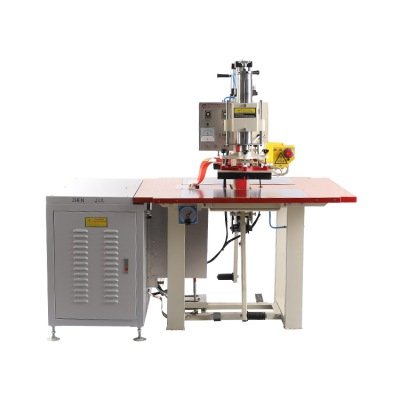
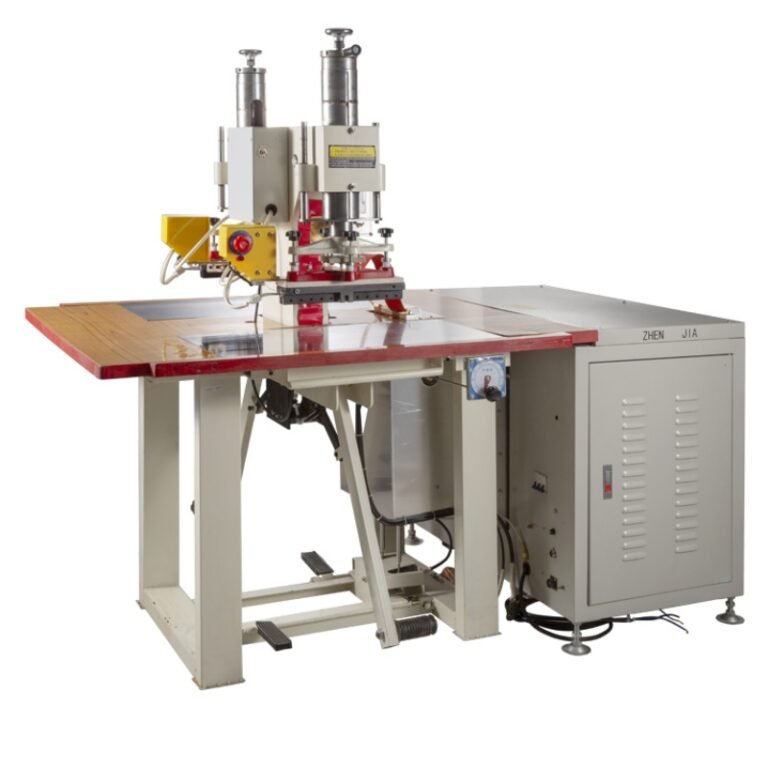
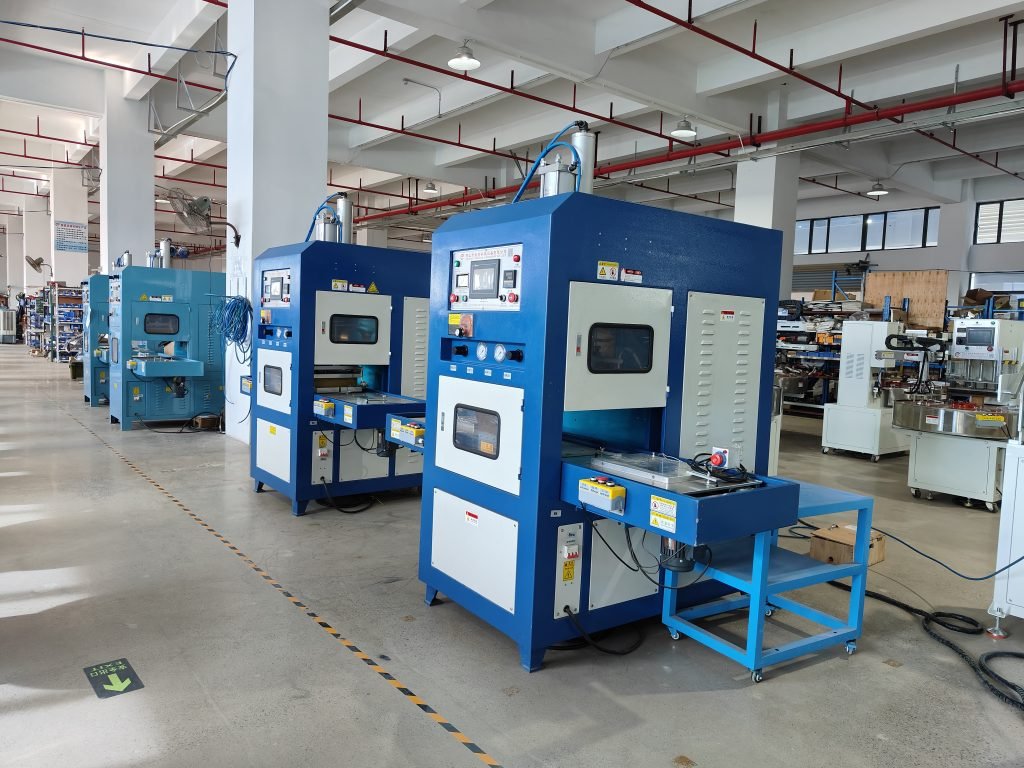
Double Head Pedal or Pneumatic
Description
Two heads work alternately and operate via foot pedal or pneumatic switch.
Advantage
Simple structure and easy maintenance. Well suited for raincoats, labels, and small parts.
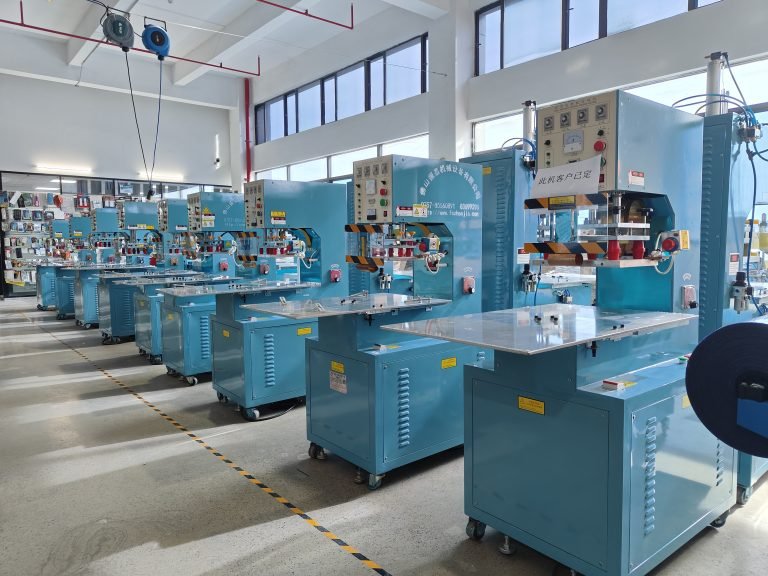
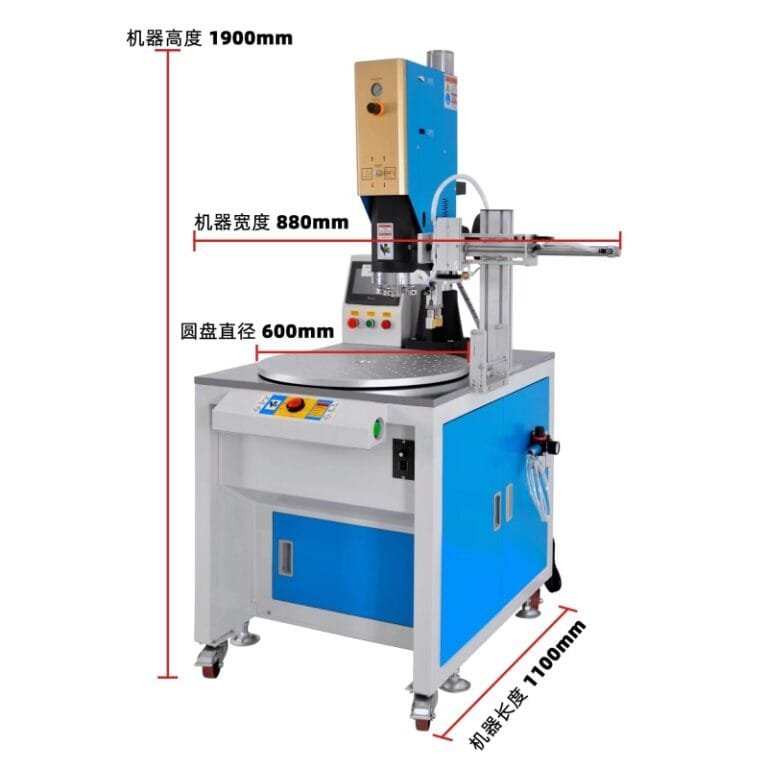
Rotary Table Multi Station HF Welder
Description
A rotating table provides three to six work stations.
Advantage
Welding, cooling, and unloading occur simultaneously. This design yields very high throughput and suits large factories.
Fully Automatic Production Line
Description
The line integrates automatic feeding, welding, punching, and winding.
Advantage
It suits large tents, awnings, and high volume packaging production.
Application Specific Machines
Manufacturers now offer many specialized HF machines for niche tasks.
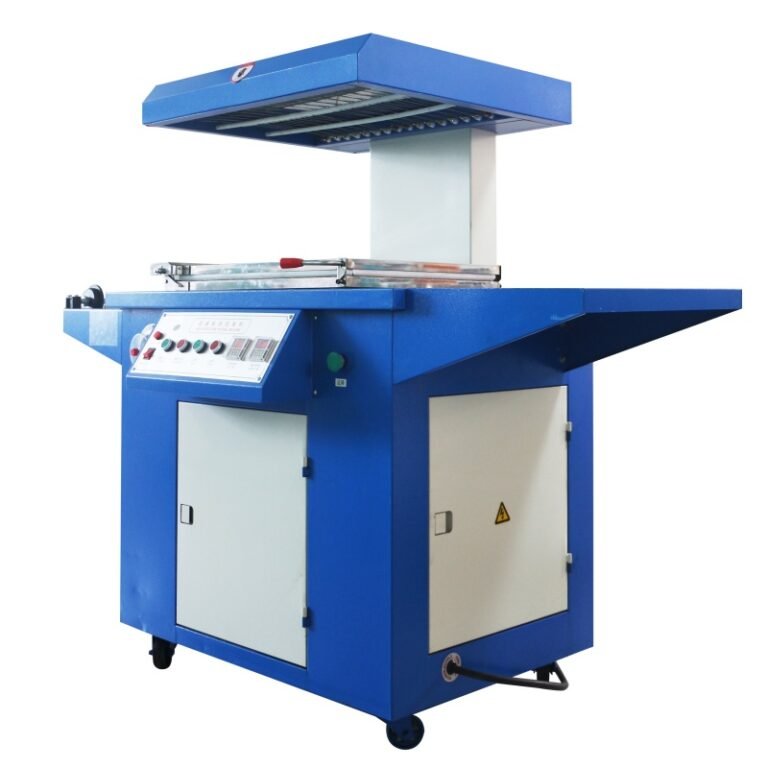
- HF Blister Packing Machine
Designed for sealing blister packs to card backing. Often includes automatic trimming. - HF Synchronous Fusing Machine
Welds and trims excess edge material under high pressure for smooth edges. Ideal for high‑end leather goods and garment accessories. - Large Power Canvas Welder
Built for very long or very wide flexible materials. Often uses a mobile welding head.
How to Choose the Right High Frequency Welder
Focus on three key dimensions when you select equipment.
- Material Properties
Confirm whether the material contains PVC or TPU. HF welding works poorly on nonpolar plastics such as pure PE and PP. Consider ultrasonic welding for those materials. - Product Size
Large products need higher power, typically above 15 kW, and larger press surfaces. - Frequency Stability and Protection
Choose machines with reliable frequency control and a sensitive spark protection system such as NL-5557 to prevent mold damage from overcurrent.
Summary
High frequency welding machines range from simple foot‑operated units to complex fully automatic rotary systems.
Each model fits specific product types and production volumes.
Choosing the right category improves throughput and reduces defect rates.
If you need a tailored equipment list, tell me your material and target daily output, and I will recommend matching machine specifications and a device list. Do you want me to do that?