 TEL +86-13923172919
Why Is My High Frequency Welding Machine Arcing? 6 Causes and How to Fix Each One
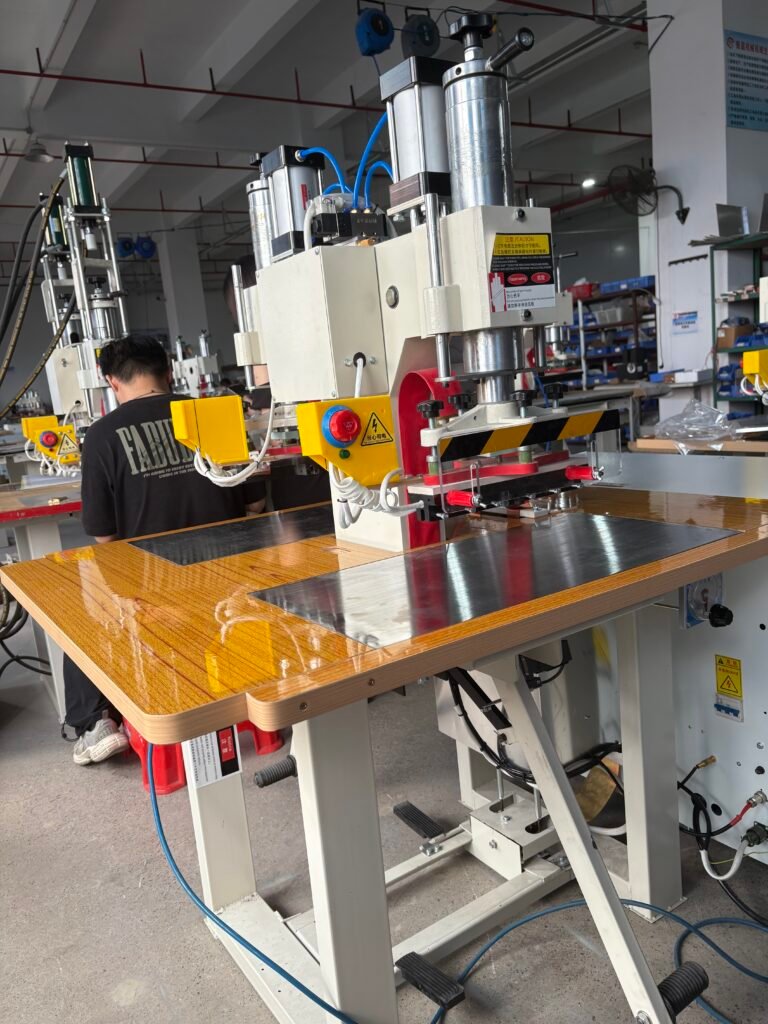
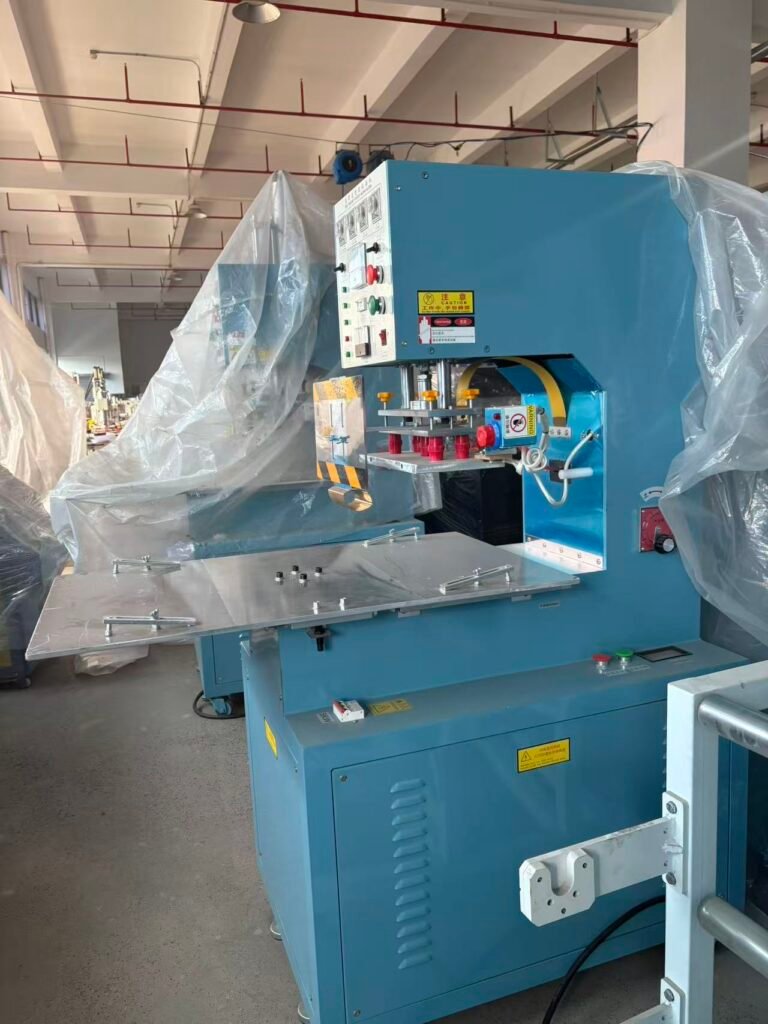
Arcing inside a high frequency welding machine is not a minor nuisance. It etches die surfaces, burns through material, damages generator components, and stops production. Every arc event represents a tiny lightning strike carving a conductive carbon track into expensive tooling. Left unaddressed, occasional sparks escalate rapidly into continuous flashover that shuts down the machine entirely.
The root cause of high frequency welding machine arcing always traces back to one thing: RF energy finding an unintended path to ground. Instead of passing evenly through the thermoplastic material, the energy jumps across an air gap, arcs through surface contamination, or tracks along a carbonized insulator. Your job is to identify which of the six common pathways opened up and close it permanently.
This guide presents the six most frequent causes of RF welder arc problem incidents. Each section explains the diagnostic signature, the physical mechanism, and the specific HF welder arcing fix that restores clean production.
1. Excessive RF Voltage from Detuned Generator or Incorrect Tap Setting
The most common trigger for persistent high frequency welding machine arcing is RF voltage climbing too high. A detuned generator pushes the output voltage far above the level the die gap can withstand. The air between the electrode and ground breaks down, and an arc jumps across.
You often hear this as a sharp, loud crack rather than a soft sizzle. The arc occurs at the same point in every press cycle, usually just as the press builds full pressure. Check your generator’s tuning meter. A pegged reading or a tuning point that drifts significantly from the center suggests the matching network is out of alignment.
How to fix it:
Return the generator to the correct tap setting for your die size and material load. Adjust the variable capacitor or auto-tuner until the grid or forward-power meter shows minimum reflected power. On a PLC controlled HF welder, check that the automatic tuning circuit is enabled and functioning. If the machine lacks auto-tuning, re-tune manually after every die change. A properly tuned generator keeps RF voltage within the dielectric withstand limit of your material stack and eliminates voltage-induced arcing entirely.
2. Contaminated Electrode Surfaces or Die Faces
Dirty electrodes cause more preventable RF welder arc problem events than any other factor. Every weld cycle deposits microscopic amounts of plasticizer, stabilizer, and degraded polymer onto the die face. Over hours of production, this residue bakes into a semi-conductive film. RF current concentrates at the film’s edges. The localized heating chars the residue further into conductive carbon. A carbon track now exists exactly where you need perfect insulation.
The arc signature is a quiet, persistent sizzle along the sealing edge rather than a single loud crack. You will see small blackened spots on the die surface or burn marks on the product adjacent to the seal area.
How to fix it:
Remove the die from the press. Clean the sealing face with a non-abrasive brass brush or fine Scotch-Brite pad. Wipe thoroughly with isopropyl alcohol and a lint-free cloth. For heavy contamination, use a specialized dielectric surface cleaner. Inspect the die edges under magnification. If you find pits or deep carbon tracks, the die requires professional re-grinding. Establish a scheduled cleaning interval based on cycle count, not on waiting for arcs to appear. This HF welder arcing fix alone resolves over half of all reported arc problems.
3. Poor Grounding or Inadequate HF Shielding
High frequency energy desperately wants to return to ground. If you do not provide a clean, dedicated low-impedance path, the RF finds its own way back through machine frames, building steel, or nearby equipment. This uncontrolled return path creates multiple opportunities for arcing at unexpected locations: between the die and the press frame, between the worktable and the floor, or between adjacent metal panels.
A classic symptom of high frequency welding machine arcing caused by grounding issues is random arc locations that shift between cycles. You might see sparks jumping from the upper platen to a nearby guard panel one cycle and from the lower die to the table edge the next.
How to fix it:
Inspect every ground strap connection in the machine. Tighten all bolted ground connections to the manufacturer’s torque specification. Replace corroded copper braid straps immediately. Ensure the machine connects to a dedicated earth ground rod, not shared with other large equipment. Check that all shielding panels are in place and their contact fingers make solid, oxidation-free contact. A ground resistance measurement between any point on the press frame and the earth rod should read less than 1 ohm. Proper HF welding spark protection starts and ends with a bulletproof ground system.
4. Excessive Power Setting for Material Thickness
Applying too much RF power to thin material forces the dielectric to break down. The material cannot absorb the energy as fast as it arrives. The surplus energy builds voltage across the dielectric until it punctures through. This type of RF welder arc problem frequently happens when someone increases power to reduce weld time without recalculating the material’s maximum voltage tolerance.
The arc appears as a sudden punch-through in the material rather than a surface spark. The weld area has a distinct hole, and the press may have jumped slightly upward at the moment of breakdown.
How to fix it:
Reduce the power setting to match the actual material thickness. Consult your machine’s power-versus-thickness chart. If your generator outputs in kilowatts and you previously welded 2mm PVC at 10kW, do not apply 10kW to 0.5mm film expecting to cut cycle time in half. Instead, adjust the weld time upward within the material’s safe power absorption range. A good HF welder arcing fix here is to measure the actual RF power delivered to the die with a calibrated power meter. Adjust the generator output until the power density across the seal area does not exceed the material’s published dielectric strength rating.
5. Failed or Carbonized Die Insulation
Every HF welding die contains an insulator that separates the live upper electrode from the grounded lower table. This insulator—typically phenolic laminate, glass-filled PTFE, or silicone-bonded mica—endures intense RF fields, mechanical pressure, and thermal cycling. Over thousands of cycles, the insulator surface slowly carbonizes. Once a carbon track bridges the insulator, the high frequency welding machine arcing follows that track on every cycle.
The diagnostic signature is predictable. Arcs always occur at the exact spot where the insulator presses against the die holder or the lower platen. You may see a darkened, crazed pattern on the insulator surface. In severe cases, the insulator is physically cracked.
How to fix it:
Replace the insulator. Surface cleaning cannot remove deeply carbonized paths that penetrate into the material’s structure. When replacing, specify insulator material rated for your machine’s maximum operating frequency and voltage. Install the new insulator with factory-specified torque on the retaining bolts. Over-tightening cracks the insulator; under-tightening creates an air gap where arcing initiates. Keep spare insulators on hand. Running a machine with a carbonized insulator risks flashover damage to the generator output circuit, a repair far more expensive than the insulator itself.
6. Misaligned Electrodes or Uneven Pressure Distribution
Parallelism matters at the micron level in HF welding. If the upper and lower platens are not perfectly parallel, one edge of the die contacts the material before the opposite edge. The RF energy rushes to that first contact point. The localized current density at that edge far exceeds the design limit, and an arc initiates before the full seal face makes contact.
This RF welder arc problem manifests as arcing consistently on the same side of the die, cycle after cycle. Measuring the weld seam width reveals a tapered profile: wide and overheated on the arc side, narrow and under-welded on the opposite side.
How to fix it:
Place pressure-sensitive film or carbon paper between the die and the lower platen. Cycle the press without RF power. Inspect the impression for even pressure distribution. Adjust the platen leveling screws until the film shows uniform contact simultaneously across the entire sealing face. Verify with a dial indicator that the upper and lower platen surfaces are parallel within 0.05mm across the die mounting area. On older machines, check for worn press guide bushings that allow the upper platen to tilt under load. Replacing worn bushings restores platen parallelism and eliminates this hard-to-diagnose arc source.
A Structured Diagnostic Flow for Arc Events
When a high frequency welding machine arcing event shuts down your line, follow this sequence before touching any settings. First, note where the arc occurred and whether it repeats at the same spot. Second, clean the die faces thoroughly and try again. If the arc stops, you had contamination. If the arc continues, inspect the insulator for carbon tracks and check platen parallelism with pressure paper. Third, verify generator tuning and ground strap integrity. Fourth, confirm that the power setting matches the material thickness per the manufacturer’s guidelines.
Documenting every arc event—location, frequency, cycle parameters—builds a diagnostic history that makes future troubleshooting faster. The most effective HF welding spark protection strategy combines scheduled die cleaning, regular insulator inspection, and training operators to report the first spark they see rather than waiting for the machine to trip. An arc that costs five minutes to fix today costs five hours if ignored until tomorrow.