 TEL +86-13923172919
Solid State HF Welding Machine vs. Vacuum Tube HF Welder: Why Solid State RF Welder Advantages Deliver Lower Costs and Higher Stability
Every manufacturer investing in high frequency welding faces a critical technology choice. The traditional vacuum tube oscillator has served industry for over half a century. The solid state high frequency welding machine represents the modern alternative, built around IGBT power modules and microprocessor control.
Both technologies deliver the 27.12 MHz or 13.56 MHz energy required for dielectric welding. Yet they differ fundamentally in how they generate that energy and what those differences cost in daily operation. This article examines the tube HF welder vs solid state comparison across four decisive factors: energy consumption, maintenance burden, arc-out risk, and frequency stability.
How Each Technology Generates RF Welding Power
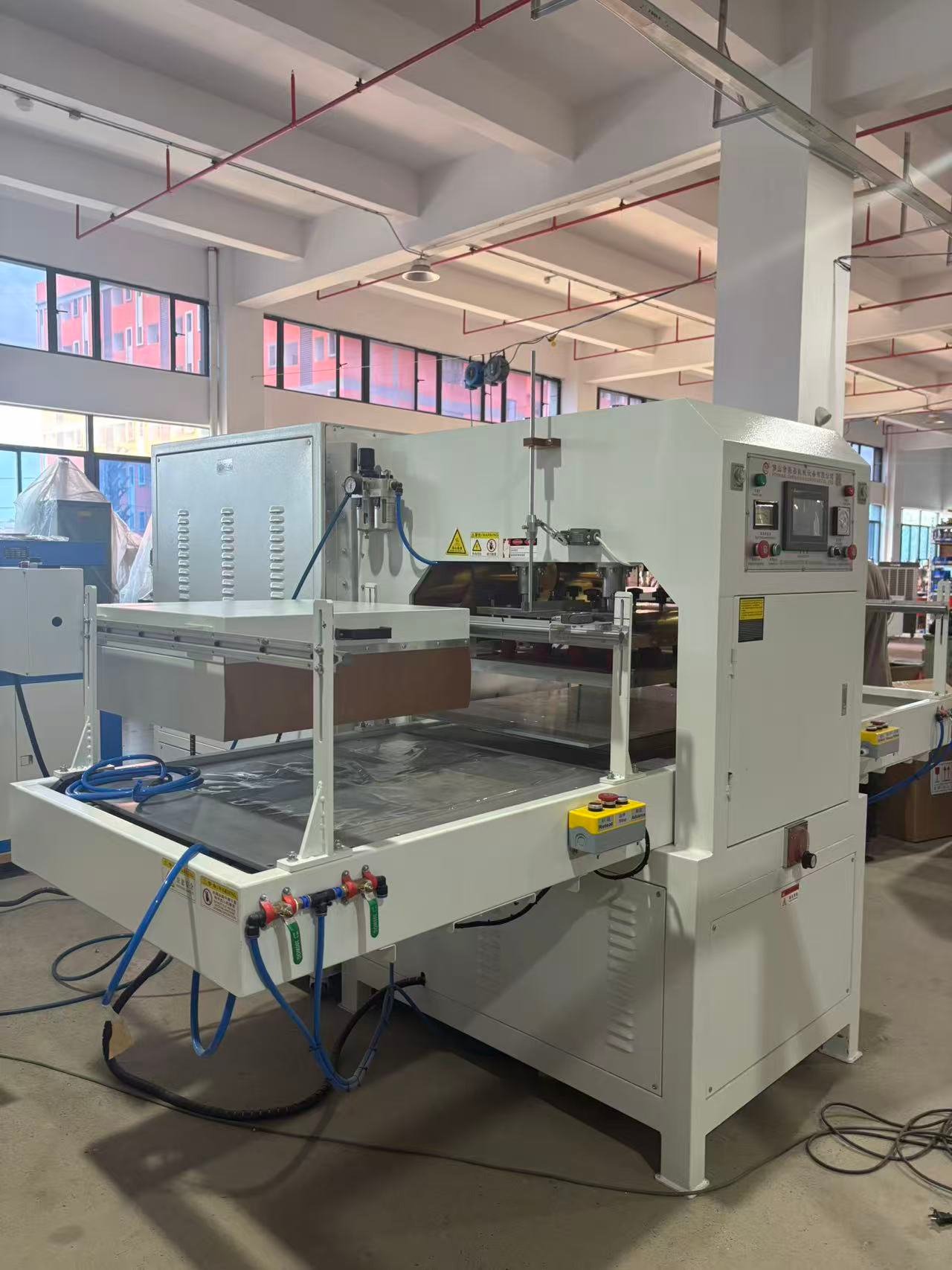
A vacuum tube HF welder operates much like a classic radio transmitter. The power supply steps up line voltage to several thousand volts. A large vacuum tube oscillator converts this DC power into radio frequency energy. The tube requires a heated filament to emit electrons, consuming power continuously even when the machine sits idle.
A solid state RF welder advantages begin at the power generation level. IGBT or MOSFET modules switch DC power at the welding frequency directly. The system eliminates the filament heater, the high-voltage DC supply, and the bulky oscillator cavity. Power conversion happens in compact, air-cooled modules that achieve over 90% electrical efficiency compared to 50-60% for tube circuits.
This fundamental architectural difference creates ripple effects through every aspect of machine performance and operating cost.
Energy Consumption: Solid State Cuts Power Bills Dramatically
Energy Efficient HF Welder Performance
An energy efficient HF welder based on solid state technology consumes significantly less electricity per welded part. The savings accumulate from three sources.
First, standby power drops to near zero. A tube machine draws 5-8kW just to heat the filament and maintain high voltage, even when no welding occurs. A solid state machine enters sleep mode, drawing under 200W. Over an 8-hour shift with 60% utilization, this idle consumption alone can waste over 25kWh daily.
Second, conversion efficiency converts more input power into usable welding energy. A tube oscillator operating at 55% efficiency demands 18kW of line power to deliver 10kW to the electrodes. A solid state generator at 92% efficiency needs only 10.9kW for the same output. The difference—7.1kW saved per hour of welding—translates directly to lower electricity bills.
Third, power factor correction in solid state machines brings the figure close to 0.98. Tube systems often run at 0.7-0.8 power factor, incurring utility penalties in many regions. Factories running multiple machines gain substantial savings by deploying IGBT HF welder technology across their production floor.
Typical annual energy savings for a single-shift operation exceed $3,000-$5,000 per machine when comparing a 12kW solid state system against an equivalent tube-type unit.
Maintenance Costs: The Hidden Expense of Tube Replacement
The solid state high frequency welding machine redefines maintenance expectations. Tubes represent the single largest recurring cost in traditional HF equipment. A high-power oscillator tube costs between $2,000 and $8,000 depending on power rating and manufacturer. Tube lifespan averages 5,000 to 8,000 operating hours under ideal conditions. Arcing events, voltage spikes, and filament fatigue can halve that number.
Replacing a tube requires a trained technician. The procedure demands careful handling, precise alignment, and a break-in period to condition the new tube. Each replacement costs not only the tube price but also 2-4 hours of production downtime.
Solid state modules contain no consumable components. IGBT power blocks typically carry rated lifespans exceeding 50,000 hours. When a module eventually fails, swap-out takes under 30 minutes with plug-in replacement parts. No conditioning period follows. The machine returns to full production immediately.
Annual maintenance budgets for tube machines typically run 3-5 times higher than equivalent solid state systems. Facilities operating three shifts with multiple welding lines see the maintenance difference compound into tens of thousands of dollars per year.
Arc-Out Risk: Protecting Tooling and Products from Destructive Flashover
Arc-over occurs when high-voltage RF energy finds a conductive path between electrodes through contaminated material or misalignment. In a tube-based system, the stored energy in the high-voltage power supply and oscillator tank circuit discharges violently through the arc. This flashover can burn die surfaces, destroy products, and damage the tube itself.
A solid state RF welder advantages approach handles arcing differently. Solid state amplifiers detect the impedance change of an incipient arc within microseconds. The control system instantly reduces power output before the arc fully forms. There is no high-voltage capacitor bank to discharge. The arc extinguishes with minimal energy release.
This arc management translates directly to lower scrap rates and extended tooling life. Dies operating in solid state machines maintain far sharper sealing edges over time. Production managers report 40-60% reductions in die refurbishment frequency after switching from tube to solid state equipment.
Automatic arc suppression also reduces the skill requirement for operators. A tube machine operator must recognize the sound and visual signature of harmful arcing and react within seconds. The solid state machine handles detection and suppression autonomously, maintaining consistent weld quality regardless of operator experience.
Frequency Stability and Automatic Tuning
Tube oscillators drift. As the tube ages, electrode spacing changes minutely and gas absorption shifts the vacuum characteristics. The oscillator frequency wanders, requiring periodic manual retuning. Seasonal temperature and humidity variations also pull the frequency off target.
Poor frequency stability degrades weld consistency. A machine tuned for morning conditions may deliver different energy transfer by afternoon. Multi-cavity tools suffer particularly, as the already narrow sweet spot for each cavity loses alignment.
IGBT HF welding machine controllers synthesize the welding frequency from a crystal oscillator. The frequency remains locked within ±0.05% across all operating conditions. Automatic load matching circuits adjust impedance in real time, compensating for material thickness variations and electrode temperature changes. This combination delivers identical energy transfer from the first weld to the last, shift after shift.
For applications with tight process windows—like medical device assembly or thin PETG packaging—this frequency precision eliminates the periodic adjustments and sample testing required with tube equipment.
Calculating Return on Investment
The purchase price difference between tube and solid state machines often creates hesitation. A new tube-based 12kW welder costs less upfront than an equivalent solid state system. Yet the total cost of ownership calculation tells a different story.
First Year Savings Breakdown
Consider a single-shift operation running 2,000 welding hours annually. The solid state machine saves approximately $3,500 in electricity, eliminates one tube replacement at $0 (vs. $4,000 for tube machine), and avoids two days of tube replacement downtime. Reduced scrap from arc-on protection preserves roughly $1,500 in materials and product.
The first-year operating advantage totals around $9,000-$10,000. Over a five-year period, the solid state machine often accumulates savings exceeding $40,000 per unit. Factories running multiple shifts recover the price premium within 12-18 months and operate the remaining years essentially cost-free compared to tube technology.
Environmental compliance adds another financial dimension. Solid state machines contain no beryllium oxide ceramics, no mercury vapor, and no leaded glass—all common in vacuum tubes. Disposal costs for end-of-life tubes continue rising as hazardous material regulations tighten.
When Tube Technology Still Makes Sense
Despite the overwhelming solid state RF welder advantages, tube machines retain valid applications. Extremely high-power requirements above 50kW remain more economical with tube generators, though solid state power combining is narrowing this gap rapidly. Some legacy production lines designed around specific tube machine form factors find replacement with identical footprints simpler than reconfiguration.
Repair simplicity in remote locations also favors tubes. A technician with basic tools can replace a vacuum tube in a remote factory. Solid state module replacement requires no special skills either, but diagnosing which module failed may demand manufacturer support. For operations in isolated regions with limited service access, this consideration carries weight.
For most manufacturers purchasing new equipment today, however, the decision strongly favors solid state. The energy savings alone justify the investment. The arc protection, stability, and maintenance advantages make the case unanswerable.
The Clear Winner for Modern Manufacturing
The tube HF welder vs solid state debate has reached its conclusion. Solid state technology delivers higher efficiency, lower operating cost, superior process control, and dramatically reduced maintenance burden. The solid state high frequency welding machine represents not just an incremental improvement but a generational shift in HF welding technology.
Manufacturers investing in new capacity or replacing aging tube equipment gain immediate operating savings and long-term competitive advantage. The question has evolved from whether solid state is worth the investment to whether tube technology can justify its continuing operational cost in any competitive production environment. For the vast majority of applications, the answer is clear. Solid state HF welding pays for itself and keeps paying.