 TEL +86-13923172919
RF Welding Life Jackets & Air Beds: How an HF Welder Delivers Zero-Leak Seams Through Optimized Die Design
Inflatable products demand one non-negotiable quality: seams that never leak. An air bed must hold pressure through eight hours of sleep. A life jacket must stay buoyant after weeks of immersion. An inflatable boat must survive sharp rocks and relentless wave impacts. Conventional sewing punctures the material, creating hundreds of potential leak paths. Solvent bonding introduces weak chemical layers that degrade under heat and moisture.
A high frequency welding machine for inflatable products solves these challenges at the molecular level. It fuses thermoplastic materials into a single, homogeneous structure without perforation. The process uses radio frequency energy to generate heat directly inside the material layers, creating hermetic seams that can exceed the strength of the surrounding fabric.
This article explores the critical factors behind reliable airtight inflatable welding. We cover material thickness-to-power matching, precision die edge design, and how airtight PVC seam welding outperforms all alternative joining methods for air beds, life jackets, and boats.
How HF Welding Creates True Airtight Seals Without Any Porosity
An HF welder for air beds works by applying high-frequency electromagnetic waves between a pair of electrodes. The alternating field excites polar molecules in materials like PVC and TPU. This molecular vibration generates intense, focused heat precisely at the interface where two layers meet.
The heat melts the material locally. Under controlled pressure from the die, the molten layers flow together and interlocks their polymer chains. When the RF energy stops, the material solidifies into a single, continuous cross-section. No adhesive sits between the layers. No thread holes break the surface. The resulting seam is completely monolithic.
This fundamental advantage allows HF-welded seams to consistently pass burst pressure tests of 0.4–0.6 MPa for air mattresses and even higher for marine safety gear. A well-tuned RF welding life jackets process achieves air tightness levels where leakage remains undetectable after 72 hours of sustained pressure.
Material Thickness and Power Matching: The Core of Consistent Weld Quality
Power output determines whether a weld penetrates fully or remains dangerously superficial. Matching power to material thickness and composition separates reliable production from catastrophic field failures.
The Thickness-Power Relationship
Thin PVC films of 0.3–0.5mm require lower power and short weld times. Applying excessive energy scorches the surface before the core melts. Thick materials above 1.5mm, common in inflatable boats, demand much higher power to heat through the entire cross-section.
Experience shows that 8kW machines handle most standard 0.3–0.8mm materials used in life jackets and air bed bladders. A 12kW system becomes necessary when welding heavy-duty 1.2–2.0mm boat fabrics or when fusing multiple thick layers simultaneously. The inflatable boat welding machine configuration typically operates at 12–15kW to ensure full penetration on reinforced PVC tarpaulin.
Practical Power Guidelines
| Material Thickness | Recommended Power | Typical Application | Weld Time |
|---|---|---|---|
| 0.3–0.5mm PVC | 5–8kW | Lightweight air beds, pool floats | 1.5–3s |
| 0.5–0.8mm PVC/TPU | 8–10kW | Life jackets, towables | 2–4s |
| 0.9–1.5mm reinforced PVC | 10–12kW | High-pressure air beds, kayaks | 3–6s |
| 1.5–2.5mm boat fabric | 12–15kW | Inflatable boats, whitewater rafts | 5–10s |
Beyond raw power, modern HF machines incorporate automatic load matching circuits. These circuits continuously adjust output to compensate for changes in material density, moisture content, and electrode spacing. The result is consistent energy delivery weld after weld, regardless of subtle material variations.
Die Edge Design: The Precision Engineering Behind Every Leak-Proof Seam
A weld is only as good as the die that creates it. Die edge geometry directly controls seal width, material flow, and ultimately airtight integrity.
Tear-Seal Edge Profile
The most common configuration for inflatable products uses a tear-seal design. This combines a sharp cutting edge that trims excess material with an adjacent flat sealing face that forms the weld. The cutting edge typically stands 0.8–1.2mm proud of the sealing face.
During the press cycle, the cutting edge first separates the article from the surrounding material. Then the flat face compresses the layers together under heat and pressure. The result is a clean edge with a welded seam running immediately adjacent.
For life jackets and safety products, the sealed width must measure at least 2.5–3.0mm. This width provides the necessary peel strength to prevent separation even under abusive conditions. Inflatable boats typically employ sealed widths of 4–6mm for maximum structural integrity.
Radius Edge for High-Pressure Seams
Sharp internal corners concentrate stress and initiate peeling. Dies designed for high-pressure bladders feature carefully calculated radius edges. These curved profiles distribute load evenly across the seam, preventing stress risers.
Radius edges prove especially critical on air bed corners and boat tube joints. The design increases seal longevity by 50% or more in cyclic loading tests compared to square-edged seals. Specifying a 1.5–2.0mm corner radius can transform a seam that fails at 5,000 cycles into one that survives 20,000.
Flash Trap Grooves and Material Flow Control
A common cause of weak seals is molten material squeezing out from under the die, leaving insufficient material in the weld zone. Precision die design incorporates flash trap grooves—shallow channels milled adjacent to the sealing face. These grooves capture excess melt flow and maintain optimal material thickness within the seal.
The groove depth typically equals 20–30% of the total material stack thickness. Too shallow a groove fails to capture flash, causing weld thinning. Too deep a groove starves the seal of material, reducing strength. Proper flash groove design increases process consistency by eliminating thin-spot defects that cause slow leaks.
Air Beds: Achieving All-Night Comfort Through Perfect Sealing
Modern air beds incorporate multiple air chambers, internal reinforcements, and flocked surfaces for comfort. Each component must bond without channels that leak air between compartments.
Multi-Layer Welding for Internal Structures
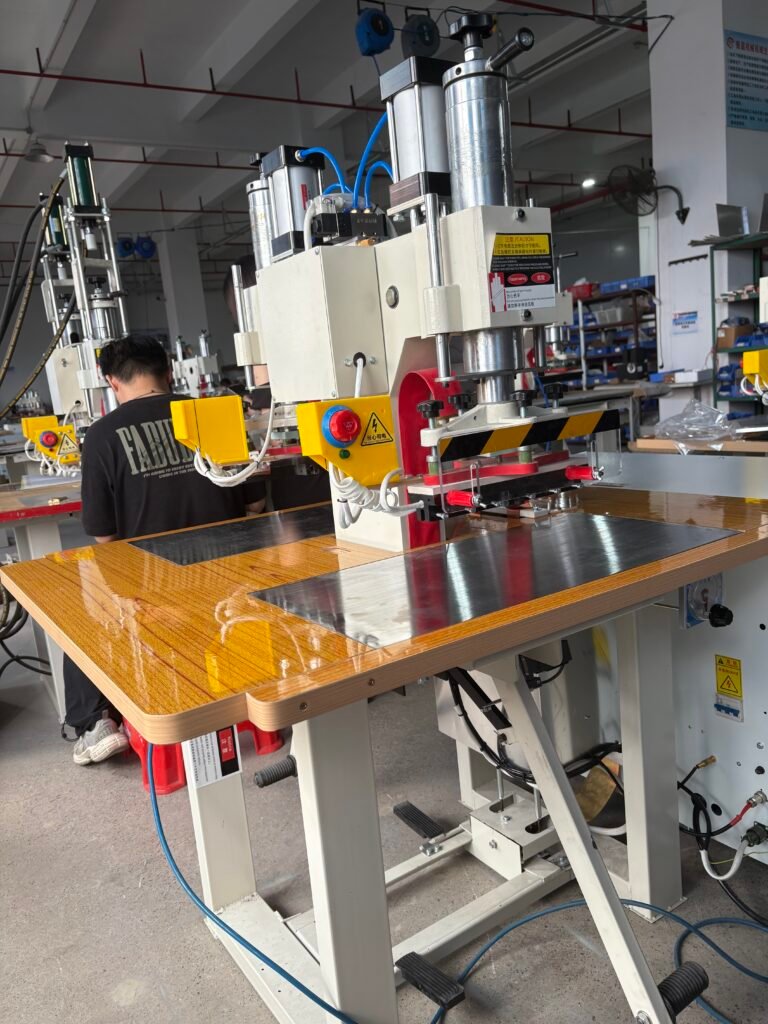
Air beds with internal coil beams require a push plate HF welding machine or shuttle system to weld the beam tops to the top cover and beam bottoms to the bottom cover. These welds must seal completely while maintaining flexibility. Power settings range from 8–10kW for single-layer beam attachment to 10–12kW when simultaneously fusing reinforcement patches.
Electrode tooling for air beds often spans 1.8–2.2 meters in length. The die must maintain parallelism within 0.1mm across this entire span. Any deviation creates weak spots that become slow-leak sources. Quality machines use precision-ground aluminum plates with thermal compensation to maintain flatness.
Flocked Surface Welding
Flocking adds comfort but introduces challenges. Flock fibers can insulate the surface and disrupt RF energy transfer. Pre-heating the electrode to 60–80°C helps melt flock locally before welding, ensuring full fusion of the underlying PVC layers. The process achieves peel strengths exceeding 30N/cm even on heavily flocked surfaces.
Life Jackets and Personal Flotation Devices: Safety That Never Fails
RF welding life jackets demands the highest reliability standards. A seam failure can mean the difference between life and death. Regulatory bodies require burst pressures exceeding 20kPa with zero pressure loss over 24 hours.
Welding life jacket bladders introduces unique material combinations. TPU-coated nylon fabrics offer superior cold-weather flexibility and chemical resistance. TPU requires slightly different RF tuning than PVC, typically welding at lower power for longer duration. Programmable power profiles ramp energy up gradually to prevent scorching the nylon backing.
Dual-seam designs further increase safety margins. Two parallel weld lines, spaced 3–5mm apart, create a fail-safe system. If one seam develops a defect, the second maintains integrity. This design is standard for SOLAS-approved life saving equipment.
Inflatable Boats: Marine-Grade Welds for Extreme Environments
An inflatable boat welding machine faces the harshest test of all. Boat seams must hold air at pressures up to 0.35 bar while surviving constant flexing, UV exposure, saltwater, and abrasion.
Thick Material and High-Power Welding
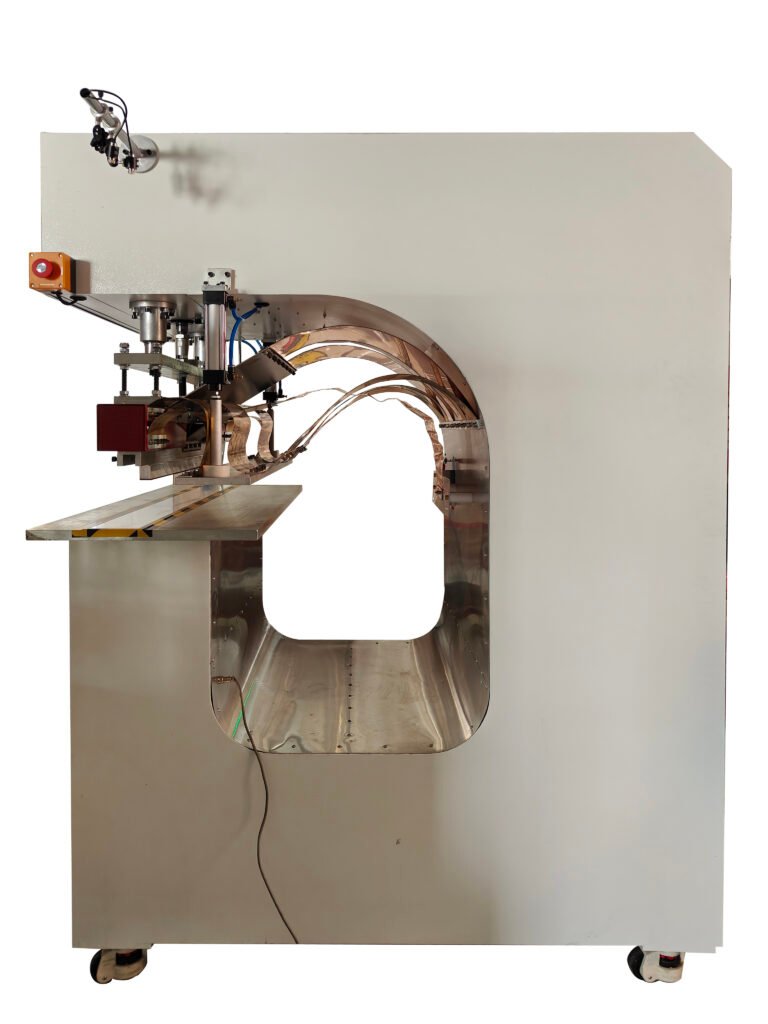
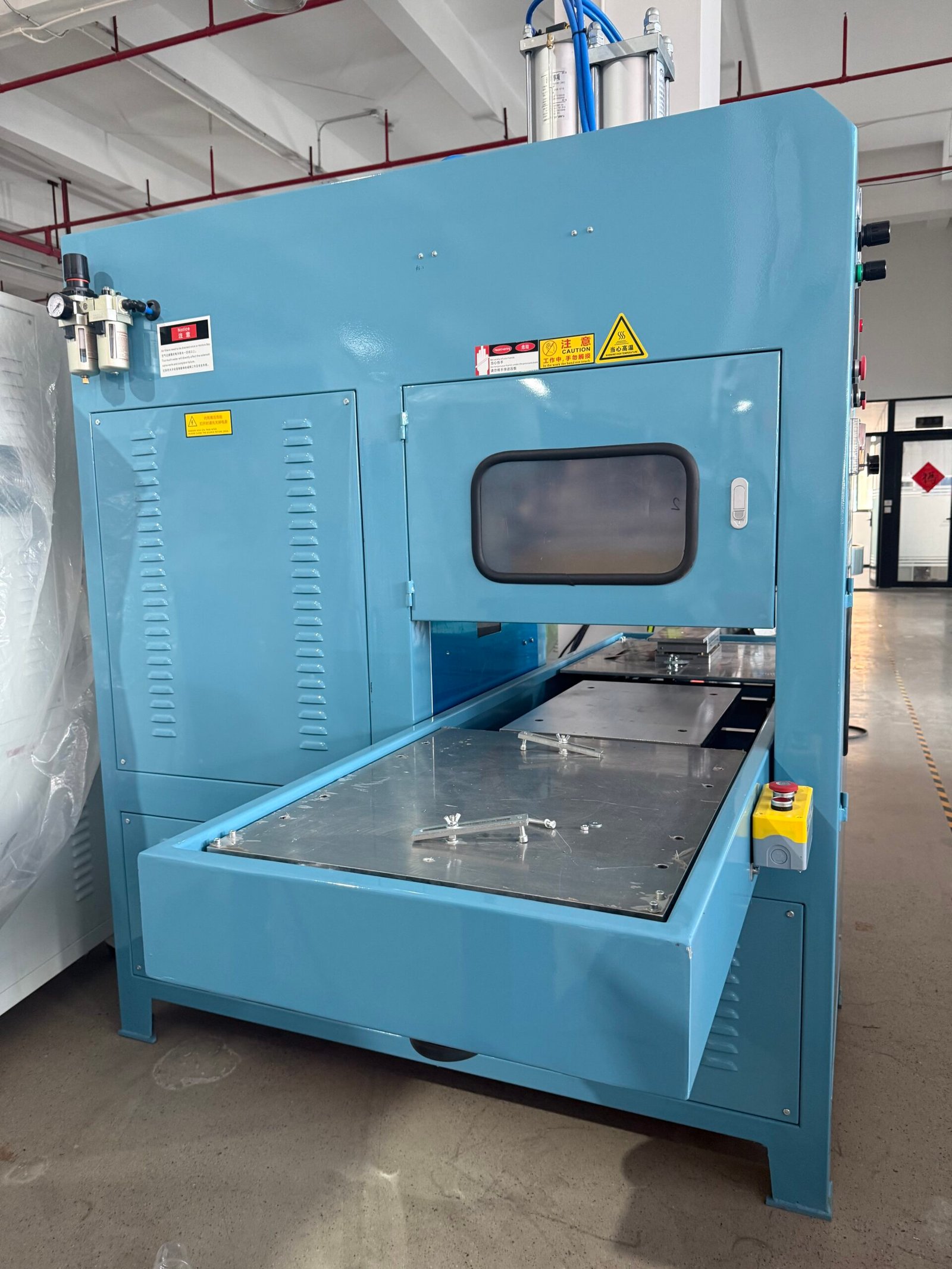
Boat fabric typically comprises a polyester or nylon woven core sandwiched between PVC layers total thickness 1.2–2.5mm. Welding this gauge demands sustained high pressure of 5–8 tons at 12–15kW RF output. The shuttle HF welding machine configuration excels here, allowing operators to position large, heavy fabric panels on one table while welding proceeds on the other.
Transom attachments, floor joints, and tube-to-tube connections all run through the same HF process. The machine uses interchangeable flat or curved electrodes to match hull contours. Weld quality verification involves ultrasonic scanning that detects any unbonded areas smaller than 1mm².
TPU Boat Welding Trend
The shift toward TPU fabrics for premium whitewater rafts brings new HF requirements. TPU demands precise temperature control, typically 150–180°C at the weld interface, compared to 120–150°C for PVC. Machines with closed-loop pyrometer feedback ensure consistent results. TPU boats exhibit superior tear strength and 30% lighter weight compared to PVC equivalents.
Equipment Selection: Push Plate vs. Shuttle HF Welding Machine for Inflatable Production
Push Plate HF Welding Machine
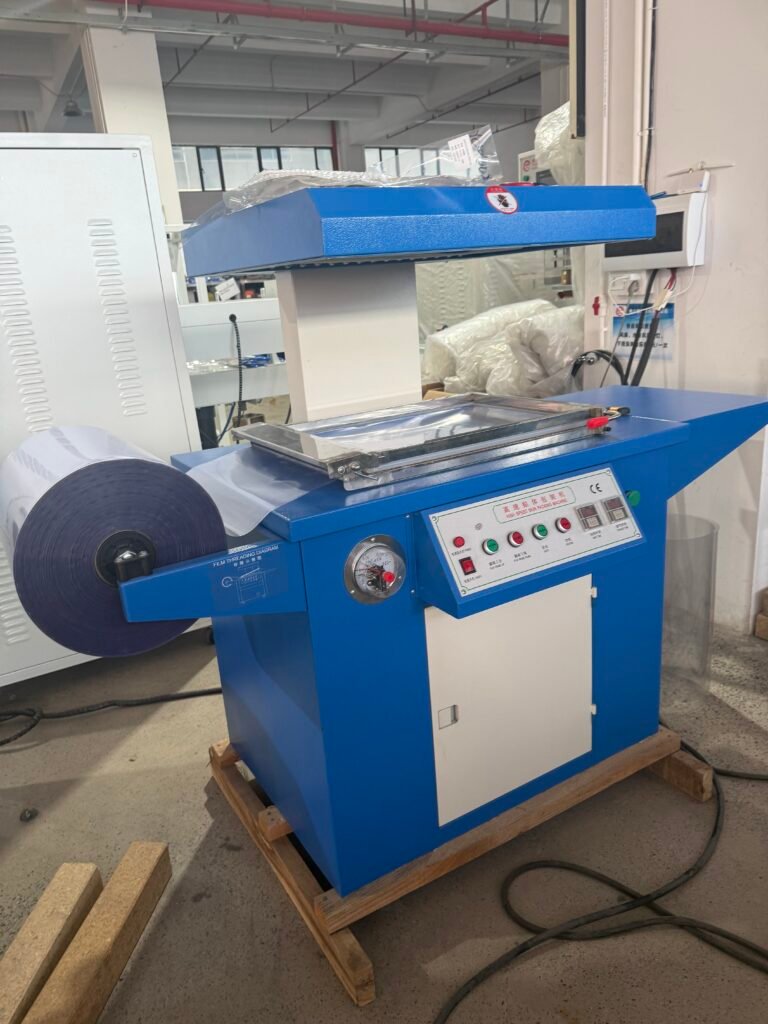
Push plate systems remain essential for prototyping, short-run production, and small inflatable items. A push plate machine can weld a life jacket bladder complete with valve attachments in a single day of tooling adjustments. Mold changeover takes under 10 minutes, making it economical for factories that produce multiple SKUs in low volumes.
These machines suit air bed seam welding where weld length does not exceed the platen dimensions. They also excel at adding reinforcement patches, logo embossing, and valve seat welding.
Shuttle HF Welding Machine
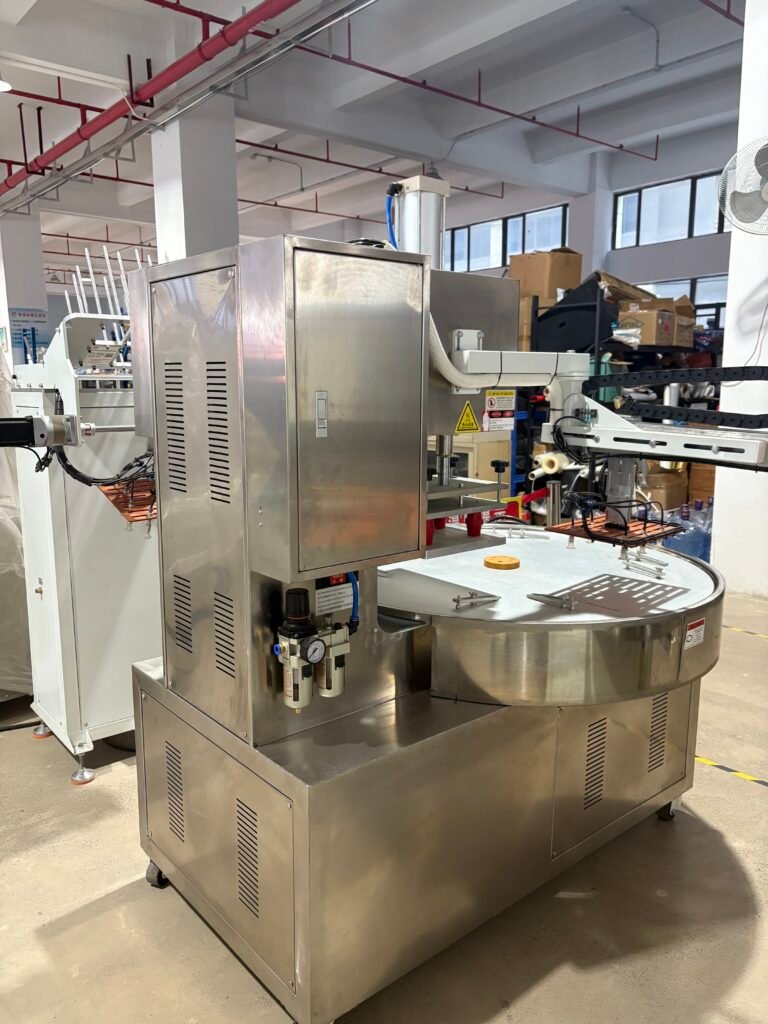
Shuttle systems address the production speed demands of mass-market inflatable manufacturing. Dual sliding tables allow continuous operation. As one table welds, the operator removes finished pieces from the other table and loads fresh material. This overlapping action boosts output by 35–45% over single-station machines.
Production facilities making 500 air beds per day or 200 life jackets per shift gain clear payback from shuttle machine investment. Boat manufacturers benefit from the ability to position unwieldy fabric rolls accurately on both tables without pressure to work against a running weld cycle.
Conclusion: The HF Welding Advantage Is Measured in Permanent, Leak-Free Joins
Airtight seam welding for inflatable products demands process precision at every level. Molecular understanding of RF-material interaction drives power selection. Mechanical precision in die edge geometry ensures seal integrity from the very first cycle. The combination of proper power-to-thickness matching, optimized cutting and sealing profiles, and automated flash control transforms thermoplastic sheets into high-performance safety products.
A high frequency welding machine for inflatable products delivers welds that consistently meet 0.5MPa burst pressures and zero-leak standards. For air beds, that means uninterrupted sleep. For life jackets, it means dependable buoyancy. And for boats, it means a vessel that stays rigid and sea-worthy mile after mile. The technology replaces compromise with confidence.