 TEL +86-13923172919
Push Plate High Frequency Welding Machine: The Complete 2025 Guide
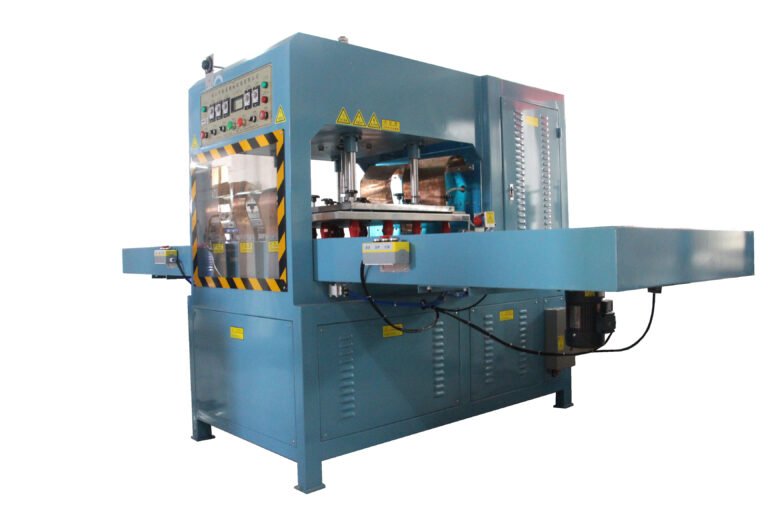
A push plate high frequency welding machine is one of the most reliable tools in plastic bonding today. It uses high-frequency electromagnetic energy to fuse thermoplastic materials from the inside out. The result is a strong, clean, and consistent weld — without glue, stitching, or external heat.
This guide covers everything you need to know: how the machine works, what industries use it, its advantages over other welding methods, and how to choose the right model for your production needs.
What Is a Push Plate High Frequency Welding Machine?
A push plate high frequency welding machine bonds thermoplastic materials using electromagnetic energy at 27.12 MHz. This frequency causes polar molecules inside the plastic to vibrate rapidly. That vibration generates heat from within the material — not from an external source.
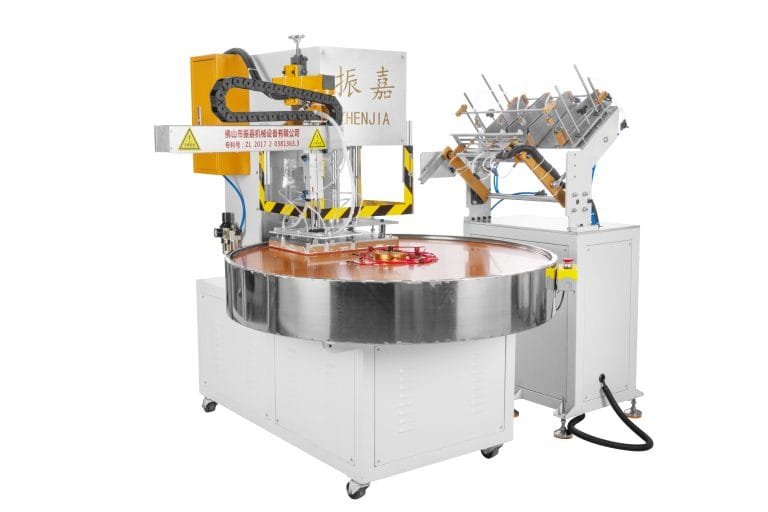
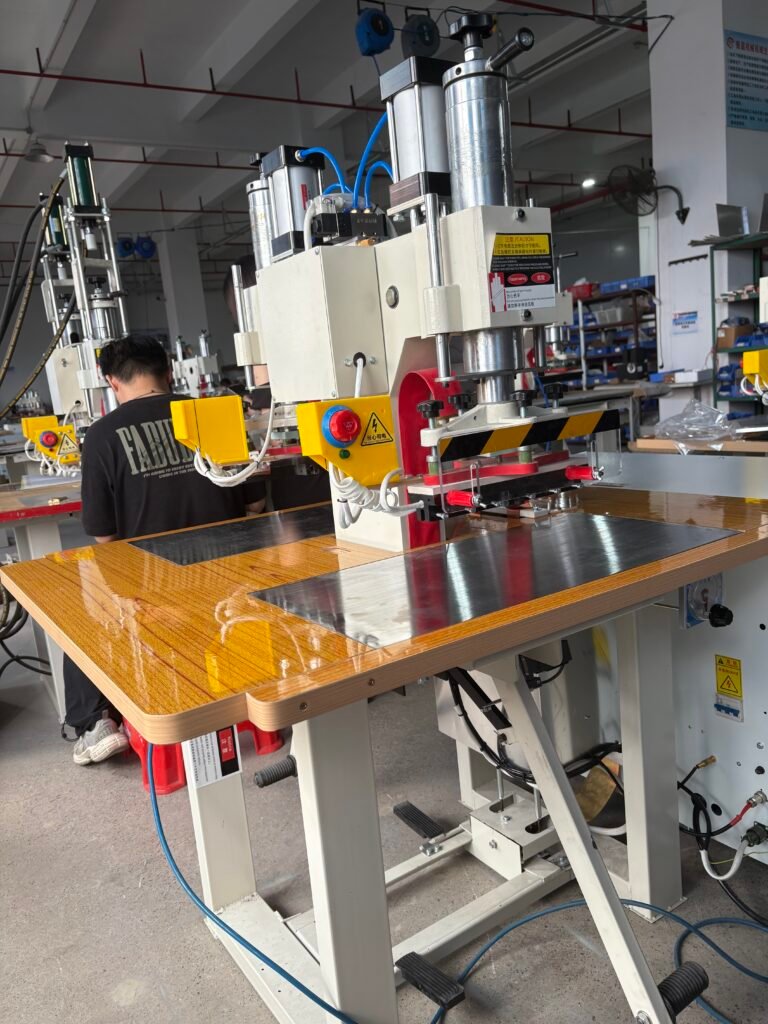
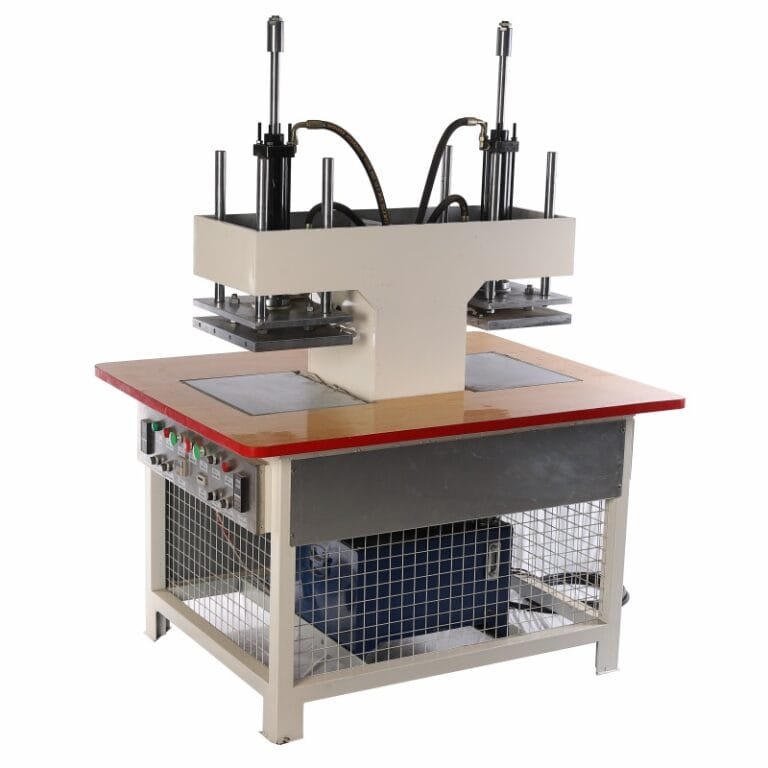
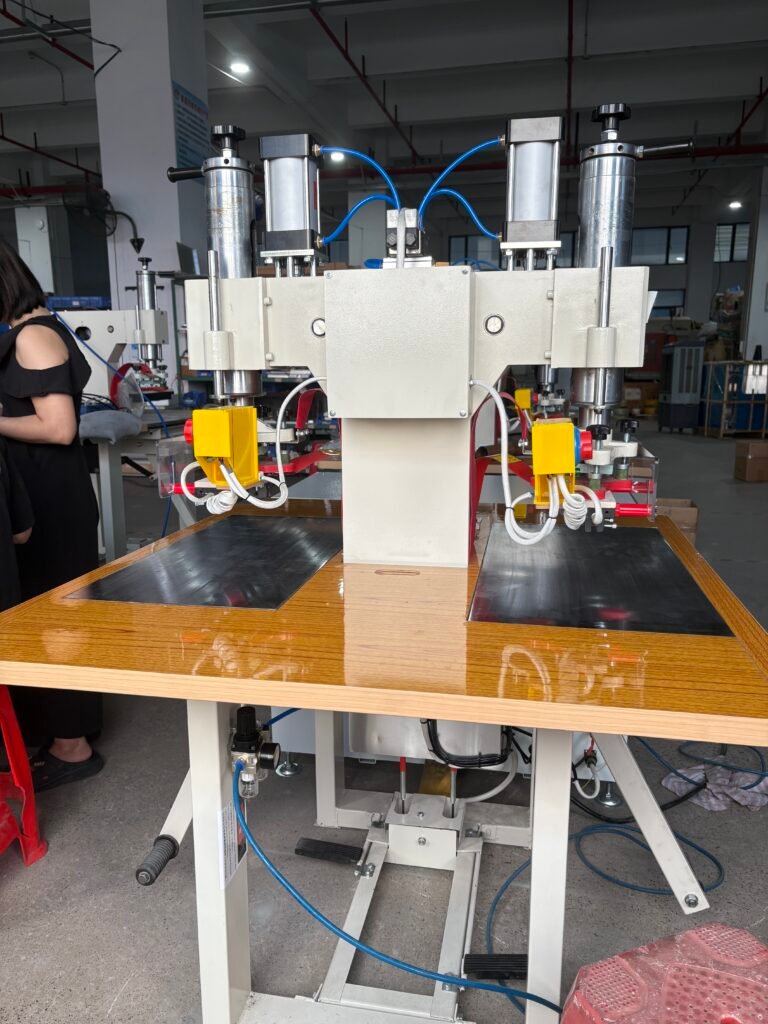
The “push plate” refers to the press mechanism. A plate descends onto the workpiece and holds it in place under controlled pressure. This pressure keeps the material layers in firm contact while the high-frequency energy does its work.
Manufacturers also call this technology RF welding, dielectric welding, or radio frequency sealing. All three names describe the same process. The key difference from traditional heat sealing is that heat builds up inside the material, which creates a deeper and more uniform bond.
The machine works best with polar thermoplastics. These include PVC, polyurethane (PU), nylon, EVA, and PET. Non-polar plastics like polyethylene and polypropylene do not respond to high-frequency fields and cannot be welded with this method.
How Does It Work?
The welding process follows a clear sequence. Understanding each step helps operators run the machine more consistently and troubleshoot problems faster.
Step 1 – Material placement. The operator places two or more layers of thermoplastic between the upper electrode (the push plate) and the lower bed plate. Alignment must match the product specifications before the cycle begins.
Step 2 – Press activation. A pneumatic cylinder drives the push plate downward. It applies a preset amount of pressure across the entire weld area. This uniform pressure is one of the main advantages of the push plate design.
Step 3 – High-frequency energy. The HF generator sends alternating current to the electrodes. The electromagnetic field causes polar molecules inside the plastic to oscillate millions of times per second. This molecular movement generates heat internally.
Step 4 – Fusion. The internal heat brings the material to its melting point. Under pressure, the two plastic layers fuse together at a molecular level. The bond is homogenous — it does not rely on adhesive or mechanical joining.
Step 5 – Cooling under pressure. The machine holds pressure while the weld cools. This step is critical. It allows the joint to solidify uniformly before the press plate lifts. Skipping or shortening this step produces weak or uneven seams.
Step 6 – Release. The press opens and releases the welded part. Modern machines include arc protection circuits that cut power automatically if a short-circuit occurs during any stage of the cycle.
A full cycle typically takes just a few seconds. This speed makes push plate HF welding machines well suited to high-volume production environments.
Key Features to Look For
Not all high frequency welding machines perform equally. These are the features that matter most when evaluating any model.
Adjustable output power. The machine should let operators select power output based on electrode size and material thickness. Precise power control reduces weld time and improves consistency across production runs.
Arc protection system. A high-sensitivity spark protection circuit cuts HF power the moment arcing is detected. This protects both the mould and the workpiece from damage.
Digital control interface. Advanced machines use microprocessor controls for precise adjustment of weld time, cooling time, power level, and press stroke. Digital settings are easier to replicate and share across shifts.
Frequency stabilizer. A built-in stabilizer and HF leakage suppressor prevents electromagnetic interference with nearby equipment such as monitors and communication devices.
High press force capacity. Better machines deliver up to 400 kg of press force. Greater pressure produces faster welds on thicker or denser materials.
Depth of sink control. This adjustment controls how far the push plate sinks into the workpiece. It is especially important for thin-film applications where seam thickness must stay consistent.
Solid-state vs. tube-based generator. Traditional machines use vacuum tube oscillators. They are powerful and proven but require more maintenance as tubes age. Solid-state machines use IGBT or MOSFET technology. They use up to 50% less energy, produce more stable output, and have lower long-term operating costs. Solid-state models are becoming the industry standard in 2025.
Industries and Applications
Push plate high frequency welding machines serve a wide range of industries. Any application that requires a strong, airtight, or watertight thermoplastic bond is a candidate.
Medical. Blood bags, IV bags, medical pouches, and orthopedic supports all rely on HF welding. The process creates seals that withstand sterilization cycles and maintain airtight integrity under pressure.
Automotive. Car seat covers, door panel inserts, airbag components, and sun visors are welded with this method. The seams must hold under heat, vibration, and long-term mechanical stress.
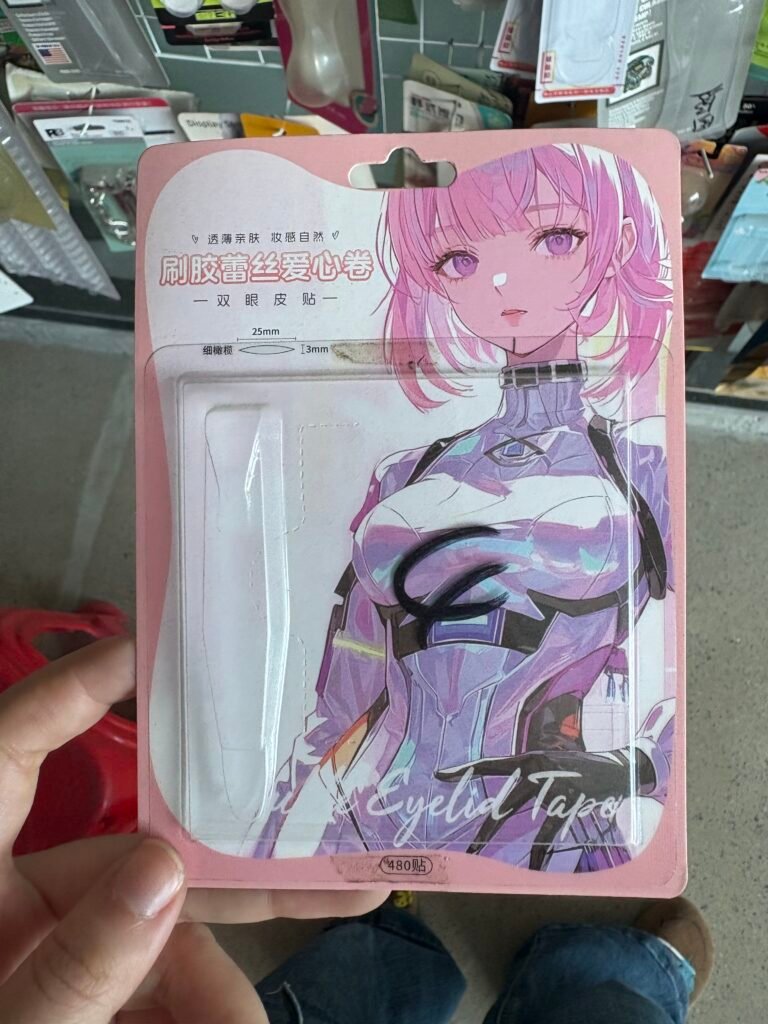
Packaging. Blister packs, clamshell packaging, and retail display packaging benefit from the clean, consistent seals that HF welding produces at high speed.
Textiles and apparel. Sports bags, rainwear, inflatable products, and outdoor gear use coated PVC or PU fabrics that weld cleanly with HF energy.
Stationery. Document pockets, ring binders, file folders, and ID card holders are common products made on push plate HF welding machines.
Construction and industrial. Geomembranes, inflatable shelters, heavy-duty canvas, and conveyor belts require large-area sealing that HF welding handles efficiently.
Safety equipment. Life jackets, rescue inflatables, and protective covers demand seals that hold under extreme conditions. HF welding delivers that reliability consistently.
Advantages Over Other Welding Methods
Manufacturers choose push plate HF welding because it outperforms many alternatives across several criteria.
Internal heat generation. The electromagnetic field heats the material from inside. This creates a stronger bond than surface-applied heat, which can cause surface deformation without fully fusing the layers beneath.
Fast cycle times. Each weld cycle completes in seconds. This speed supports high-volume production without sacrificing quality.
Clean finish. HF welding produces a smooth, seamless joint. There is no adhesive residue, no stitching, and no visible surface damage.
Consistent repeatability. Once parameters are set, the machine produces identical welds across every cycle. This makes quality control straightforward and reduces reject rates.
No consumables. The process requires no glue, solvents, or thread. Operating costs are lower than adhesive-based methods over time.
The main limitation is material compatibility. Push plate HF welding only works on polar thermoplastics. It does not work on polyethylene, polypropylene, or other non-polar materials. Custom dies are also required for each product shape, which adds upfront tooling cost.
Compared to hot air welding, HF welding generates heat deeper within the material and produces less surface discoloration. Compared to ultrasonic welding, it handles larger weld areas more efficiently and works better with flexible films and coated fabrics.
How to Choose the Right Machine
Selecting the right push plate HF welding machine comes down to matching its specifications to your materials and production requirements.
Confirm material compatibility first. Verify that your thermoplastic responds to HF welding. PVC and PU are the most common compatible materials. Nylon, EVA, and PETG also work. Polyethylene and polypropylene do not.
Calculate required output power. Power requirements depend on the weld area size and material thickness. Larger electrodes and thicker materials need more power. Machines typically range from 1 kW to 25 kW or more for industrial applications.
Check press force capacity. Make sure the maximum press force meets your application needs. Thicker materials and larger weld areas require greater pressure to produce a complete fusion bond.
Evaluate control features. Choose machines with digital controls for weld time, cooling time, power output, and pressure. Precise, repeatable settings make quality management easier across production shifts.
Consider tooling compatibility. Confirm the machine accepts your custom dies or electrodes. Quick-change tooling systems reduce changeover time if you run multiple product types.
Verify safety certifications. Machines sold into European markets should carry CE certification. Check for built-in arc protection, overload shutdown, and HF leakage suppression.
Review after-sales support. Choose a supplier that provides spare parts, technical support, and maintenance services. A machine without local support becomes a liability when problems arise.
Frequently Asked Questions
What materials can a push plate high frequency welding machine weld?
It works on polar thermoplastics including PVC, PU, nylon, EVA, PET, PETG, and some ABS grades. Non-polar materials such as polyethylene and polypropylene are not compatible.
What frequency does the machine operate at?
Most machines operate at 27.12 MHz. This is an internationally designated industrial frequency that minimizes interference with communication equipment.
How long does a welding cycle take?
A typical cycle completes in a few seconds. Exact time depends on material type, thickness, weld area, and power output. Operators adjust weld time, cooling time, and pressure to optimize each application.
Is the machine safe to operate?
Yes, when properly operated and maintained. Modern machines include arc protection, overload shutdown, and HF leakage suppressors. Operators should receive training on parameter setup and safety procedures before use.
What is the difference between a push plate and a foot pedal HF welding machine?
Both use the same HF welding principle. A push plate machine uses a pneumatic press that descends automatically with uniform force. A foot pedal machine lets the operator lower the electrode manually. The push plate design delivers more consistent pressure and suits automated or semi-automated production lines better.
How much does a push plate high frequency welding machine cost?
Entry-level machines start from around $3,000 to $8,000 USD. Mid-range industrial models with solid-state generators and digital controls typically cost $15,000 to $50,000 USD. High-power custom installations can exceed $100,000 USD. Solid-state models cost more upfront but reduce operating costs over time.